Search listings, return figures and machine reports each have limits when assessing venues and games.
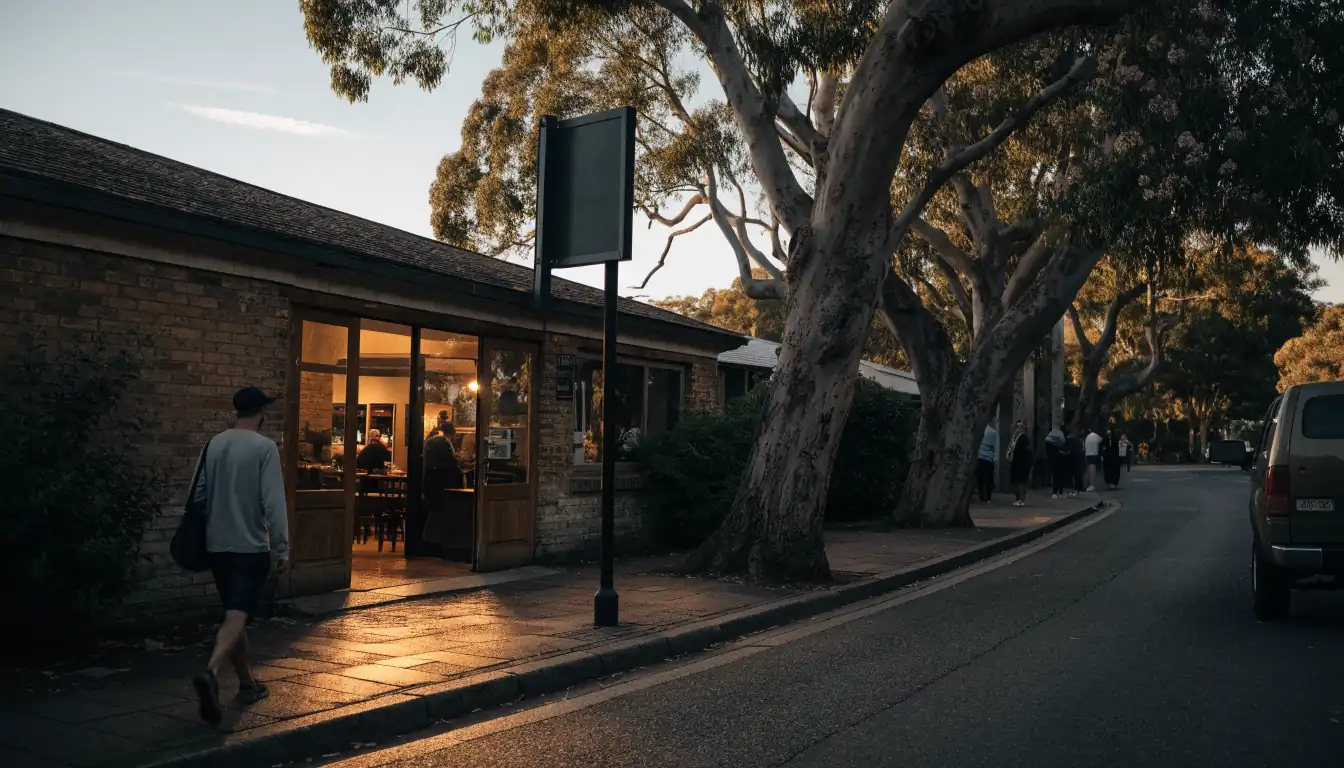
A venue appearing in a search result does not confirm that you can enter it now. The result may show ordinary trading information, a past update or a third-party listing that has not caught up with a change. Treat it as a lead, then check a channel controlled by the venue before travelling.
Start with the venue’s own website or official social media account. Look for a notice that applies to the date you plan to visit, rather than relying on a general hours panel copied into a search page. A recent post may announce a temporary closure, changed access arrangements or an event that affects entry. Check when the information was published and whether it refers to the relevant day. If the page gives no current notice, that is not proof that the venue is open; it simply leaves the status unresolved.
For a decision that depends on immediate availability, contact the venue directly. Use a phone number or contact method published on its official site, and ask a narrow question: whether the venue is open to patrons at the time you expect to arrive. If you need access to the gaming area specifically, ask whether that area is operating and accessible, rather than asking only whether the wider venue is open. A restaurant, bar or other part of a venue can have different access arrangements from its gaming area.
If you’re looking for pokies options to consider in Tasmania in 2026, this list gives you a concise starting point. Check each operator’s terms and suitability for you before making a choice.
Lucky Dreams
Lucky Dreams lists a minimum deposit of A$20 via POLi and a Curacao licence.
DragonSlots Casino
DragonSlots Casino is listed as licensed by the Curacao Gaming Authority, with Jumpman Gaming Ltd named as the operator.
Wild Tokyo
Wild Tokyo lists a minimum deposit of A$10. Its stated payout times are 30–60 minutes for crypto and 1–5 days for fiat.
MrPacho
MrPacho lists a minimum deposit of A$30. Its stated payout times are 30–120 minutes for crypto and 24–72 hours for fiat.
LevelUp Casino
LevelUp Casino lists a minimum deposit of A$15 and a Curacao eGaming licence, OGL/2023/174/0082, held by Dama N.V.
Playfina Casino
Playfina Casino lists a Curacao eGaming licence held by Hollycorn N.V., noted as in place since 2017. Its minimum deposit is A$20–30, depending on the offer.
Roby Casino
Roby Casino is listed as licensed by Curacao eGaming, with Roby Games Ltd named as the licence holder.
GoldenCrown
GoldenCrown is listed under Curacao Gaming Control Board licence OGL/2023/176/0095, held by Hollycorn N.V.
7Bit Casino
7Bit Casino is listed as operating under a Curacao licence, with Dama N.V. named as its operator.
Kingmaker
Kingmaker lists a minimum deposit of A$30. Its stated payout times are around 90 minutes for crypto and 1–5 days for fiat.
Be precise about timing when you contact staff. “Open today” can mean different things depending on the day and the time of your call. State when you intend to arrive and ask whether anything is likely to affect entry then. If you are calling well before arrival, ask whether the answer is based on the current schedule or on a live check of that day’s arrangements. A direct answer is more useful than an old listing, but it still describes the information available when you asked; circumstances can change.
If the venue does not answer, compare its own channels rather than treating silence as confirmation. Check whether its official site has a notice or whether its official account has posted a recent update. A third-party directory can help you identify contact details, but it should not settle the question: listings may be delayed, incomplete or based on information supplied earlier. If two sources disagree, give more weight to the venue’s latest direct communication and seek clarification before setting out.
Keep the question you are checking separate from the question of whether a particular pokie is available. Confirmation that a venue is accepting patrons does not establish that every part of the premises is open or that a specific machine is operating. If a particular facility matters to your visit, ask about that facility directly. Avoid reading a general “open” label as a guarantee about individual services or equipment.
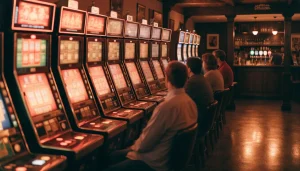 Pokies in Adelaide: Venue Hours, Access and Practical ChecksLearn how to verify gaming-room access, interpret venue listings, plan a CBD or airport route, and understand payment and online-pokies limits.
 Adelaide Casino: Venue, Hotel, Dining and Visitor GuideLearn how Adelaide Casino’s physical venue differs from online gambling and why opening and facility details should be checked before travelling.
A useful check has three parts: the source is controlled by the venue, the information is current for the intended visit, and the answer covers the part of the venue you plan to use. If one part is missing, do not fill the gap with an assumption. For example, a page with no closure notice may be useful background, but it is not equivalent to a confirmation that the gaming area is open at your intended arrival time.
You can also record when you checked and what the venue said, especially if you are planning around a particular time. If your plans change or there is a long gap between checking and travelling, check again. This is not because any single source is necessarily unreliable; it is because a status answer applies to a point in time, while your arrival occurs later.
When comparing several results, make sure they refer to the same venue and location. Similar names, outdated pages or map entries can lead you to check the wrong business. Follow the official site’s contact details rather than choosing a phone number solely because it appears beside a search result. If a result seems to refer to a named casino or another place outside Tasmania, do not treat its appearance alongside Tasmanian information as evidence of a Tasmanian venue.
The practical standard is simple: use public listings to locate the venue’s own information, then confirm the relevant access directly when the timing matters. A result saying “open” is a clue, not a live status check.
A pokie’s return figure describes a game setting, not a promise about what you will receive during a particular session. It is useful only when you know which setting applies to the version being offered. The title alone may not be enough to establish that.
A specialist review reports that some game providers let casinos choose between several return-to-player (RTP) settings for the same pokie. If that arrangement applies, two casinos can offer the same game title with different return percentages. The game’s name, artwork and visible features therefore do not, by themselves, confirm its configured RTP. A figure attached to one version should not automatically be treated as applying to every version elsewhere.
This distinction matters when you compare claims about the best-paying pokies in Tasmania. A comparison is meaningful only if it identifies the relevant game configuration and the source of the RTP information. If a figure is presented without showing which setting it describes, it cannot establish the return of every version with that title. Nor does a general statement about a provider’s games prove that a particular pokie has multiple settings; the reported point is that some providers offer this choice.
RTP is a return measure, not a forecast for your next spin. It does not tell you that a particular play will pay, how much it might pay, or when a return will occur. A return percentage is not a schedule in which winnings arrive at regular intervals. Treating it as one confuses a statistical description of a game setting with a prediction about an individual outcome.
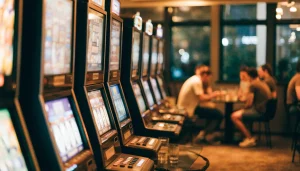 Best Pokies in Brisbane: Venue Hours and ChecksLearn how Brisbane venue hours differ from pokies operating times, what to verify on official pages, and why general opening hours may…
 Brisbane Casino: Hotel Stays and Visit PlanningPlan a Brisbane casino visit with guidance on hotel stays, facilities, dining and logistics. Room bookings do not automatically include casino access…
Each spin is generated as a separate random event by the game’s Random Number Generator (RNG). Because one result does not determine the next, a losing spin does not make a win “due”, and a recent win does not mean the following spin must lose. Looking at the outcomes in a short run cannot reveal a reliable sequence or make the next result predictable. The relevant mechanic is randomness at the level of each spin, not a pattern that a player can infer from the previous results.
That independence also explains why an RTP figure cannot be used to calculate what you will personally win during a visit. The figure does not specify the result of an upcoming spin, and it does not turn the sequence of spins into a guaranteed repayment plan. You can know that a version is configured with a particular return setting and still have no basis for predicting the outcome of your next play. A higher stated return, where accurately reported, does not remove that uncertainty.
When evaluating a claim, separate three questions. First, does the information identify the exact game version or setting? Second, does it say where the return figure came from and whether it applies to the version being discussed? Third, is the claim describing a long-run game measure, or implying that a player can expect a particular result? The first two affect whether the figure is relevant; the third reveals whether the explanation has overstated what RTP means.
Attention: An RTP figure is a statistical measure of a game setting, not a forecast or a guarantee of what you will win during a particular session.
This is especially important when a headline calls a game “best” or “best paying”. Such wording can suggest a ranking that the return information may not support. A title cannot be ranked reliably from its name alone if its RTP setting can vary, and a return figure cannot establish that a player will receive more in any individual session. Without a verified, version-specific setting and a clear basis for comparison, the label is not enough to demonstrate which game offers the higher return.
The same limits apply whether you encounter a pokie in Tasmania or read a general description of a game. Venue or game names do not override the configuration detail, and past spins do not provide a dependable guide to future ones. Read RTP as information about a setting, not as a promise of personal results. The RNG makes each spin uncertain on its own; the return figure cannot tell you how that uncertainty will resolve.
If you are travelling and want to visit a venue with pokies, plan around a confirmed destination rather than assuming that a venue is inside an airport or close to where you are staying. A phrase such as “near the airport” describes an area of interest; it does not establish that a venue is on airport grounds, within walking distance, or easy to reach from your arrival point.
Start by identifying the exact place you will be travelling from and the destination you intend to visit. Check that a map result refers to Tasmania, not another place with a similar name or a result elsewhere in Australia. This matters particularly when a broad location term is paired with “near me”: your device’s location settings and the map’s search area can affect which results appear. Check the venue’s address on its own listing rather than relying on the short label shown in a map preview.
Then assess the journey as a separate question from whether the venue has pokies. A route estimate can depend on your starting point, the time you travel and the transport method. Review the route for the actual arrival or accommodation location you will use, and check whether it involves walking, driving or another form of transport. Do not infer that a short distance on a map means the route is practical on foot; roads, access points and pedestrian paths may not follow a direct line.
If you are comparing places in different parts of Tasmania, use the same starting point and transport assumptions for each comparison. “Nearby” is relative: a place that suits someone staying in one area may not be convenient from another. Keep travel time, transfers and the location of your accommodation in view, rather than treating a region label such as northern Tasmania as a precise destination.
A result that mentions an airport, a city centre or a nearby suburb can still be only a broad location match. Read the full address and confirm which place the listing refers to before you build a journey around it. If the result does not clearly identify the venue and its address, do not treat the label alone as enough to plan a visit. The same applies when a map pin appears close to a terminal or a central area: the pin’s position does not establish the venue’s entrance or the route you would need to take.
Planning Your Visit
Identify the destination
Determine the exact venue and verify its address on the official listing to ensure it is in Tasmania.
Assess the journey
Calculate the route from your actual starting point, considering the transport method and practical access paths.
Confirm eligibility
Verify that all members of your party are 18 years or older to meet Australian gambling requirements.
Keep age requirements in mind when planning. In Australia, gambling is restricted to people aged 18 or older, including when the activity involves pokies. If you are travelling with someone who is under 18, do not assume they can enter a gambling area with you; check the venue’s conditions before setting out.
The practical sequence is straightforward: settle on a specific destination, verify its address, calculate the route from your actual starting point, and make sure the journey suits your transport plans. That keeps “nearby” tied to a real route and avoids confusing a search label with proof of location or access.
Oversight requirements describe how a venue is expected to respond to gambling-related concerns; they do not tell you which venue has the best pokies. A report by regionriverina.com.au says that, from 1 July, a venue operating more than 20 gaming machines must have a dedicated responsible gambling officer (RGO) on duty while those machines are running. The requirement links the officer’s presence to machine operation, rather than simply to whether the venue is open.
The same report describes a requirement for venues to maintain a gambling incident register. It is intended to record occurrences, including situations where a patron’s behaviour suggests they may be at risk of gambling harm or already affected by it. An incident record is therefore an operational safeguard: it documents a concern that staff have identified and gives the venue a way to record how such events arise.
These obligations can help explain what responsible oversight involves at a venue with pokies. They do not, by themselves, establish how often incidents occur, how a venue handles each one, or whether a particular machine is more likely to pay out. A register records events that meet the relevant criteria; it is not a measure of machine performance or a score for comparing venues.
The threshold also matters. The RGO requirement described in the report applies to venues above the stated machine count, and the officer must be on duty while the machines operate. You cannot infer from that rule alone that every venue has the same staffing arrangement or that a venue below the threshold has no other responsibilities. Nor does the existence of an RGO prove that a venue is currently operating or that its machines are available.
For someone comparing Tasmanian venues, these records and staffing rules provide context about oversight, not a ranking. They do not identify a best venue, confirm a specific venue’s compliance, or provide a public account of every incident. Unless a venue or regulator publishes a particular record, you should not assume that the register is available for general inspection.
Keep the distinction clear: machine-related oversight concerns how a venue responds to potential gambling harm while pokies are in operation. It cannot establish the quality of the machines, predict an outcome, or show that one venue offers better play than another. Treating an officer requirement or an incident register as evidence of a venue’s overall standing would ask those measures to prove more than they can.
Venues operating more than 20 gaming machines must have a dedicated responsible gambling officer (RGO) on duty while those machines are running.
A reference to pokies on the Spirit of Tasmania does not, by itself, establish that gaming machines are available aboard the ferry. The same applies to a search that combines a casino name with Tasmania: a name in a result is not confirmation that a particular venue exists, operates there or offers pokie access. Treat each claim as something to verify with the relevant travel or venue operator before making plans. Do not infer facilities from a headline, a directory entry or a page that uses similar names.
Online results require a different distinction. A page may use terms such as “no deposit” or “real money” to describe an offer, but those labels do not establish that the service is lawful for Australian customers. Under the Interactive Gambling Act 2001, companies cannot provide real-money online pokies to people in Australia without a domestic licence. No such licences have been issued, and Australia has no locally licensed online casino. A promotion or sign-up page cannot change that legal position.
This matters when a result places a Tasmanian location beside an online offer. A land-based venue reference and an internet service are separate claims, with different forms of access and oversight. One does not prove the other. Nor does a page become an official source because it includes a familiar travel brand, casino wording or a local place name. Check who operates the page and whether the statement is about a physical venue or an online service; do not treat their proximity in a result as evidence of a connection.
Be particularly cautious with bonus language. “No deposit” describes a promotional claim, not proof that an offer is available to people in Australia or that an operator may lawfully provide online pokies here. Avoid sharing personal or payment details on a page before establishing what service it represents. A polished design, local wording or a named destination does not establish regulatory approval.
For travel or venue access, use the named operator’s own current information to confirm what is actually offered. For online claims, assess the service against the Australian legal framework rather than relying on its branding or promotional wording. These checks answer different questions: whether a physical setting offers a stated facility, and whether an online operator may provide real-money pokies to customers in Australia. Neither a ferry reference nor a casino label is sufficient evidence on its own.
A listing that describes a Tasmanian venue as open around the clock is a claim about its stated hours, not proof that it is operating continuously now. The wording may refer to a venue generally, while the availability of pokies can depend on the hours those machines are actually in operation. Treating those as the same thing can lead you to assume more than the listing establishes.
“Open now” is also time-sensitive. A page may show a standard schedule or information that has not been updated to reflect a change. Even when a venue’s advertised hours cover the time you have in mind, that does not by itself confirm that its pokies are running then. The distinction is between a published schedule and the venue’s present operating status.
The same care applies to claims about 24-hour pokies venues. The phrase may be used as a broad description, but it does not establish that any particular Tasmanian venue keeps its gaming machines available without interruption. Nor does it tell you whether an advertised schedule applies to the whole venue, a particular service, or the machines themselves. Avoid treating a short label as a complete account of operating arrangements.
There is a relevant oversight rule for venues with larger machine floors. A report published by regionriverina.com.au says that, from 1 July, a venue with more than 20 gaming machines is required to have a dedicated responsible gambling officer (RGO) on duty whenever those machines are operating. The condition is tied to machine operation: it does not state that a venue must keep its machines running continuously, or that the venue itself is open around the clock. It also should not be read as confirmation of any individual venue’s hours.
This makes “24-hour” a description to verify, not a conclusion. A schedule can indicate what a venue advertises; it cannot, on its own, establish current availability or prove that pokies are operating at every hour shown. Likewise, the RGO requirement describes an oversight duty during machine operation at venues above the stated threshold. It is not a timetable and does not extend machine hours.
When comparing opening-hour statements, keep those claims separate: venue access, advertised hours and pokies operation are related, but they are not interchangeable. A claim about one does not automatically settle the others.
Broad descriptions of pokies in Tasmania can sound more specific than they are. A page may refer to a region, a type of venue or a feature people want to compare without identifying a particular machine or setting. Treat each claim according to what it actually names: a general description is not evidence of a specific game, and a mention of Tasmania does not by itself establish where a machine is available.
The word “best” also needs a defined measure. It might refer to a writer’s preference, a game feature or an advertised figure, but those are not interchangeable. Without a stated basis and evidence that applies to the particular game and setting, a ranking is an opinion rather than a dependable comparison.
The same care applies to searches about a town or a maximum bet or cash payout. A place name in a heading does not confirm that a venue or machine is located there. A number described as a maximum also needs context: what it applies to, where it applies and whether it concerns a bet, a prize or a payment arrangement. Do not treat a phrase in a title as proof of those details.
A useful way to assess any claim is to separate three questions:
That distinction matters because a pokie’s outcomes are not a sequence that can be read from previous spins. A Random Number Generator selects the result of each spin, and each result is separate from the one before it. A run of wins or losses therefore does not show that a particular outcome is due, nor does a ranking make future results predictable.
When you encounter a claim about a game or a limit, look for information that names the game and clearly explains the relevant setting. If those details are absent, keep the conclusion narrow: the claim has not established that feature for a particular Tasmanian machine. This approach lets you distinguish a general description from a verifiable comparison without turning an unsupported label into a promise about what you will find or win.
A website may present online pokies as available to someone in Tasmania, but that presentation does not establish that the service is lawful in Australia or that you have a local route for resolving a dispute. The legal distinction is between the operator and the player. Under the Interactive Gambling Act 2001, providing real-money online casino games to people in Australia is prohibited for operators; the law does not make an individual player liable simply for accessing an offshore site.
There is no Australian-licensed online casino. An offshore operator may still accept Australian customers, but accepting a deposit is not evidence of Australian authorisation or protection. The Australian Communications and Media Authority (ACMA) enforces the law and blocks access to illegal offshore gambling sites. An operator’s website being visible, or a payment appearing to work, does not change the legal status of the service.
This matters if a dispute arises. If an offshore casino refuses to pay winnings, Australian players have no legal recourse in Australia. That leaves you without an Australian process to require the operator to release the money. A claim on a site, or a support conversation with its staff, is not equivalent to a remedy enforceable under Australian law.
Before sending documents or money to any gambling service, distinguish its own account rules from protections available under Australian law. The required identity and address documents should be checked before a first withdrawal; do not assume you can provide them later and still receive a payout. This is a practical verification step, not a sign that an offshore operator is locally licensed or that a withdrawal is guaranteed.
BetStop has a limited scope: it applies to Australian-licensed operators and does not bind offshore sites. It therefore cannot be treated as a safeguard against gambling through an offshore casino. Likewise, a site’s claim that it supports a particular payment method does not demonstrate that it is authorised or that you can recover withheld winnings.
So whether you are looking for online pokies while in Tasmania or comparing claims about payouts, the key issue is not the wording of the offer. It is the operator’s legal position and the consequences if it fails to pay. Australia has no licensed online casino market, and the absence of local legal recourse against an offshore casino is a material risk, not a minor condition buried in account terms.
Legal Risk
There are no locally licensed online casinos in Australia. Using offshore sites means you have no legal recourse in Australia if an operator refuses to pay winnings.
A search for pokies in a Tasmanian CBD or at a club can point you towards a type of venue, but it does not establish that a particular location has machines, is operating, or offers a particular game. Nor does the word “best” provide a measurable basis for comparing venues. Treat claims about a named club or CBD venue as claims to check, not as confirmed details.
The useful distinction is between a venue’s identity and its oversight obligations. A report by regionriverina.com.au describes a requirement for venues with more than 20 gaming machines to have a dedicated responsible gambling officer (RGO) on duty while those machines are operating. That threshold concerns the number of machines at a venue; it does not identify which Tasmanian clubs or CBD venues meet it. The reported rule is therefore context for understanding venue oversight, not evidence that a particular venue has machines or an RGO on duty.
The same report describes a one-month grace period for venues to remove signage and introduce responsible gambling officers. A grace period is a transition arrangement, not confirmation that a venue has completed those steps. If you need to know whether a particular venue is covered or how it currently meets its obligations, seek confirmation from the relevant venue or regulator rather than inferring its status from a general report.
Self-exclusion is a separate consideration. It is a responsible-gambling tool, but its existence does not verify the location, machine count, or operating arrangements of a club or CBD venue. If you are considering self-exclusion, check which service or process applies to the gambling setting you want to avoid; do not assume that one arrangement covers every venue.
These distinctions keep the evidence in proportion: a general rule can explain what oversight may be required, while venue-specific claims need venue-specific confirmation. A CBD label, a club description, or a ranking alone cannot establish machine availability or the safeguards in place at a particular address.
PayID is a way to address a bank transfer, not a description of how a venue handles payments. It works as an alias linked to the New Payments Platform (NPP): a sender can direct a transfer using an email address, mobile number or Australian Business Number instead of entering the recipient’s account details. The NPP is available through all major banks and protects transfers with end-to-end encryption.
Those features concern the payment network. They do not establish that a Tasmanian venue accepts PayID, that its pokies operate without cash, or that a particular machine has a cashless payment function. A payment method’s name can appear in information about an online service without saying anything about the equipment or payment arrangements at a physical venue.
Keep the categories separate when assessing claims about cashless pokies in Tasmania. Evidence of a bank-transfer facility would need to identify the relevant venue and explain how the facility is used there. Evidence about a machine would need to describe that machine’s payment arrangements. PayID’s role as a transfer alias cannot supply either detail by itself.
The same distinction applies to references to Newcastle alongside Tasmania. A place name, or a statement that mentions cashless payments, does not verify a specific venue or game feature. Check whether the information directly identifies the location and the facility being claimed, rather than treating a general explanation of PayID as proof.
In practical terms, PayID tells you how a bank transfer can be addressed through the NPP. It does not tell you whether a venue has cashless pokies, whether a machine accepts a particular payment method, or whether any named location offers such a feature.