A practical comparison of SOL and USDC payments, offshore access, bonus turnover, game costs and the checks that shape casino use in Australia.

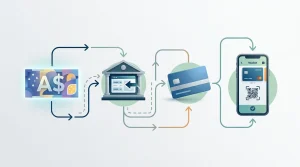
A SOL payment passes through separate services: an Australian exchange converts AUD into SOL, a wallet sends the tokens to the casino’s deposit address, and the casino credits the account after it recognises the transfer. Cashing out reverses the route. The casino first approves and sends a withdrawal; the receiving wallet then records the transaction on Solana. These are distinct steps, so a fast blockchain confirmation does not mean the casino has processed a request instantly.
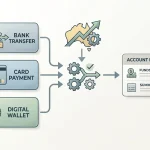
Most casinos that accept SOL do not take AUD directly by bank transfer or credit card. You generally need to buy SOL through an Australian exchange, then send it from an exchange wallet or a wallet you control to the deposit address shown by the casino. Swyftx, CoinSpot and Coinbase AU support AUD deposits through PayID or bank transfer. The exchange’s purchase and withdrawal steps are separate from the casino’s account-crediting process.
On-ramp services that convert AUD to SOL are subject to KYC/AML requirements. That means you may need to verify your identity with the exchange before buying or transferring funds. A withdrawal route that converts SOL back to AUD can involve the same kind of checks. The casino may also apply its own account checks, which are separate from the exchange’s requirements.
When comparing casino options for Australia in 2026, you should verify that the details relevant to your intended payment method are clear. The information below is limited to the stated licensing, deposit and payout details; it does not confirm Solana support.
Lucky Dreams
Lucky Dreams is listed with a Curacao licence and a minimum deposit of A$20 via POLi.
DragonSlots Casino
DragonSlots Casino is listed as licensed by the Curacao Gaming Authority, with Jumpman Gaming Ltd named as the operator.
Wild Tokyo
Wild Tokyo lists a minimum deposit of A$10. Its stated payout times are 30–60 minutes for crypto and 1–5 days for fiat.
MrPacho
MrPacho lists a minimum deposit of A$30. Its stated payout times are 30–120 minutes for crypto and 24–72 hours for fiat.
LevelUp Casino
LevelUp Casino lists a minimum deposit of A$15 and a Curacao eGaming licence, OGL/2023/174/0082, held by Dama N.V.
Playfina Casino
Playfina Casino is listed with a Curacao eGaming licence held by Hollycorn N.V. since 2017. Its minimum deposit is A$20–30, depending on the offer.
Roby Casino
Roby Casino is listed with a Curacao eGaming licence, with Roby Games Ltd named as the licensee.
GoldenCrown
GoldenCrown is listed with a Curacao Gaming Control Board licence, OGL/2023/176/0095, held by Hollycorn N.V.
7Bit Casino
7Bit Casino is listed as operating under a Curacao licence, with Dama N.V. named as the operator.
Kingmaker
Kingmaker lists a minimum deposit of A$30. Its stated payout times are about 90 minutes for crypto and 1–5 days for fiat.
Before sending a deposit, compare the address displayed by the casino with the address entered in your wallet. Check that you are sending SOL to a SOL deposit address and that the destination is complete and correct. Solana transfers are irreversible: if you send to the wrong address, the funds may be permanently lost. A transaction that has been confirmed cannot simply be cancelled through the network.
A specialist review reports Solana transaction confirmation in about 400 milliseconds, with balances updating immediately. Treat that as the network leg, not as a promise about when a casino will credit your account. The casino must detect the transfer and update its own records. If the account balance has not changed, check the transaction status in your wallet or on a Solana block explorer and compare the transaction details with the casino’s deposit instructions before sending again. A second transfer creates another transaction; it does not correct the first one.
After funds appear in the account, the casino’s balance is a record held by the operator, not a balance in your personal wallet. Playing changes that account balance according to the platform’s records. When you request a withdrawal, the casino may need to review or approve the request before broadcasting a transaction. Larger withdrawals or bonus cashouts may trigger KYC checks requiring ID verification. The casino’s review can therefore add time even when Solana itself is operating normally.
Withdrawal timing has two clocks. A specialist review describes native SOL withdrawals on competent platforms as taking 30–60 seconds to process, but casino-side processing can be longer: reported processing ranges from 5–15 minutes for automated operators to as long as 72 hours where requests are handled manually. These figures describe different platform processes, not a guaranteed payout time. Once a withdrawal has been sent, network congestion can also affect when the receiving wallet reflects it. The casino’s internal queue and approval process, rather than blockchain confirmation alone, may be the main source of delay.
Check the cash-out terms before depositing, not after a win. Look for the stated withdrawal method, processing conditions, fees and any requirements that could hold up a request. Some casinos add their own withdrawal fee, separate from any network cost; a specialist review reports fees of 0.1%–1% of the withdrawal amount at some platforms. The fee and the operator’s processing rules can affect the amount that reaches your wallet and when it arrives.
The route back to AUD adds another conversion step: SOL must be sent to an exchange or other off-ramp that can convert it to Australian dollars. That service may require KYC/AML checks before you can sell or withdraw the proceeds. SOL’s AUD value can also change between your deposit and cash-out. Even if the number of SOL in your balance rises, its value in AUD may fall before you convert it.
This sequence helps locate a delay: exchange processing occurs before the deposit, casino crediting occurs after the deposit reaches Solana, casino approval occurs before a withdrawal is sent, and network confirmation happens after it is broadcast. Checking which step is pending is more useful than treating every wait as a blockchain problem.
Solana Deposit Process
Asset Conversion
Use an Australian exchange to convert AUD into SOL via PayID or bank transfer.
Transfer to Casino
Send the SOL tokens from your exchange or personal wallet to the specific deposit address provided by the casino.
Casino Crediting
Wait for the casino to recognize the transfer on the blockchain and update your account balance.
A comparison of Solana casino platforms is useful only if each claim can be checked against the operator’s own terms or a verifiable game mechanism. Treat promotional descriptions as claims to test, not evidence of quality. No offshore platform should be presented as authorised to provide online casino games to people in Australia: the Interactive Gambling Act 2001 prohibits overseas operators from offering those services to Australian residents.
Find the operator’s published licensing details and check what they actually establish. Look for the licensing authority, the named legal entity and the scope of the stated authorisation. A logo or a sentence saying that a site is “licensed” is not enough to identify who is responsible for the service.
An offshore licence, even if genuine, does not amount to Australian authorisation. It also cannot remove the risks of dealing with an offshore operator. If an account is frozen or winnings are withheld, players have no legal protection under Australian law. Keep that limitation separate from any assessment of a platform’s presentation or features.
RTP, or return to player, is a theoretical measure of how much a game returns across a large number of plays. It is not a prediction of what you will receive in an individual session, and it does not ensure that a particular result will occur. Check whether the platform publishes RTP information for the games it offers and whether the details are accessible before you play.
Compare like with like: an RTP figure is meaningful only when you know which game and version it describes. If a platform gives a general figure without identifying the relevant game, or provides no way to find the underlying information, you cannot use that claim as a sound comparison point.
 EcoPayz Casino Sites in Australia: What to CheckLearn how to assess EcoPayz payment claims, check withdrawal conditions, and understand why Australian-facing access does not establish legal authorisation.
 Instant PayID Withdrawals in Australia: TimingLearn how casino approval differs from bank processing, and why PayID's real-time transfers through the Osko network do not remove operator delays.
A provably fair feature is intended to let you check the relationship between information used to generate a result and the result shown to you. Check whether the platform explains the verification process in practical terms, identifies what information you need, and provides a way to validate a completed round.
The label alone proves little. A tool that displays data without explaining how to check it does not give you a meaningful independent test. Nor does a verification tool establish that every part of the platform is fair: it addresses only the process it is designed to verify. Do not treat “provably fair” as a substitute for checking the operator’s terms or the game information.
Read the withdrawal rules before depositing, not after a win. Find out what KYC checks may apply, when the operator can request identity documents, and whether a withdrawal can be held while those checks are completed. Larger withdrawals or bonus cashouts may trigger ID checks. A platform’s policy should explain what it can request and what happens if you do not provide it.
Then check the conditions for cashing out: any minimums, fees, processing rules, account restrictions or bonus conditions stated by the operator. Do not assume a balance shown on screen is immediately withdrawable. A specialist review reports that some casinos add their own withdrawal fee, described as a percentage of the amount; confirm any fee directly in the current terms rather than relying on a review or promotional summary.
A headline bonus does not tell you how much of it you can convert into withdrawable funds. Read the wagering requirement and identify which balance it applies to, which games count towards it, any time limit, and any maximum cash-out cap. These conditions determine the work required to clear the bonus and whether winnings can be withdrawn at all.
Winnings generated from bonus funds must be wagered with real money before withdrawal. To compare offers, consider the playthrough, game contribution, time limits and cash-out cap together. A large advertised amount may have little practical value if only some games count, the deadline is restrictive, or the cap limits what you can withdraw. The terms should make those conditions clear before you accept the offer.
A useful comparison records the same checks for each platform: licensing details and their scope, accessible RTP information, usable provably fair verification, withdrawal KYC rules, complete cash-out terms and the conditions that determine bonus value. If one platform does not publish a detail, mark it as unavailable rather than filling the gap with an assumption.
Any partner link on a comparison page should be clearly identified as affiliate or promotional content. That disclosure helps you distinguish editorial information from a link that may generate revenue. It does not verify the platform’s claims, change the cash-out terms or provide protection if an offshore operator withholds funds.
 Instant Bank Transfers at Australian Casinos: PayIDLearn how PayID and bank transfers move funds, why NPP settlement does not guarantee an immediate casino balance, and what to check…
 Best Paying Online Pokies in Australia: Bitcoin GuideLearn how offshore licences differ from Australian approval, what Bitcoin transfers involve, and how bonus rules and verification can affect pokie payouts.
Buying, holding and transferring SOL are lawful activities in Australia. The legal issue arises when an offshore operator offers real-money casino services to people in Australia. The Interactive Gambling Act 2001 prohibits overseas operators from providing online casino services to Australian residents, including casino-style games played with cryptocurrency. Using SOL rather than Australian dollars does not change the nature of the service or remove the operator from the Act’s scope.
This distinction matters: owning a digital asset is not the same as using it to gamble on a service that is prohibited from operating here. A platform may accept SOL and be accessible through the internet, but neither fact makes its casino service authorised for Australian residents. A foreign licence, if an operator has one, does not override the Australian prohibition.
The Act is directed at the operator, not the individual Australian player. A person who uses an offshore casino is not directly penalised under this law simply for playing there. That does not make the activity legally safe. The absence of a player penalty is not approval of the service, and it does not create a right to have a balance returned or winnings paid.
The Australian Communications and Media Authority (ACMA) is responsible for enforcing the Act. Its measures include blocking access to offshore gambling websites that are not permitted to offer services in Australia. A blocked site may become difficult to reach, and its availability can change. Being able to open a page, create an account or send SOL is therefore not evidence that the operator is legally entitled to serve Australian residents.
Legal Protection Gap
Offshore operators are prohibited by the Interactive Gambling Act 2001, meaning you have no legal protection under Australian law if funds are withheld or accounts are frozen.
A website’s location, branding or stated terms also cannot change the Australian rule. The relevant point is that the service is being offered to a person in Australia. If an operator accepts Australian customers, the fact that it operates from overseas does not make the prohibition irrelevant.
If an offshore operator freezes your account, refuses a withdrawal or stops operating, Australian law does not provide you with the protections that would apply to a locally authorised casino service. In practical terms, you may have no effective route through Australian authorities to recover funds or compel the operator to resolve the dispute. The operator’s own support process or terms may be the only avenues it offers, and those do not guarantee a remedy.
This creates a gap between the legality of transferring SOL and the risks of sending it to a gambling platform. A transfer can be technically valid while the service receiving it is prohibited from offering casino games to Australians. If funds are withheld, the fact that the original SOL transfer was lawful does not itself give you a way to reverse it or recover the balance.
A Solana casino comparison should therefore not treat a platform’s accessibility, payment options or overseas credentials as proof of Australian approval. The central legal distinction is between a person’s lawful ability to own and move SOL and an offshore operator’s unlawful provision of online casino services to Australian residents. Although the Act does not directly penalise the player, using an offshore casino remains outside a protected Australian gambling framework.
 New PayID Pokies in Australia: Payment GuideLearn how PayID deposits move through banks and the New Payments Platform, what to check before paying, and how to assess site…
 Bitcoin Pokies in Australia: Payments and PlayLearn how Bitcoin relates to game credits, and how deposits, withdrawals, bonus rules and verification checks can shape online pokies play.
A free spin does not necessarily create withdrawable winnings. Its result may be placed in a bonus balance instead, where separate conditions apply. A specialist review describes an arrangement in which free-spin winnings carry their own wagering requirement, including a stated 50x condition. The key detail is what the multiplier applies to: the spin winnings, a bonus amount, or another defined base. Those rules determine the total stake required before any resulting funds can be cashed out.
Bonus funds can also be subject to a playthrough condition even when the balance appears alongside cash in your account. In that case, you must place bets with real money before withdrawing winnings generated from the bonus. A specialist review describes a 35x requirement calculated on the bonus alone. That wording matters: a multiplier on the bonus produces a different turnover target from one calculated on the bonus plus your deposit.
The arithmetic makes the scale easier to assess. One specialist review describes a 40x requirement attached to a 5 SOL bonus: meeting it means placing 200 SOL in bets before withdrawal. That is turnover, not a required loss or a promise that 200 SOL will be spent permanently. But every bet exposes funds to the game’s expected house edge, so the amount wagered is relevant even if the balance rises and falls during play.
Game contribution changes how quickly eligible turnover accumulates. Slots are described as contributing 100% of each qualifying stake. Table games such as blackjack or roulette may count for only 10–20%. If a bet contributes only part of its value, you need more total betting to register the same amount of progress toward the requirement. The bonus terms determine which games qualify and what share of each stake counts; the game’s label alone does not settle that question.
This is why a large multiplier can make a bonus poor value. The requirement creates substantial betting exposure, while the house edge means the expected result of repeated play favours the operator. If the required turnover is high relative to the bonus, the expected cost of completing it can exceed the bonus’s value. The precise result depends on the applicable game, its house edge, contribution rules, and any other conditions. A bonus can therefore have a positive headline amount yet a negative effective value.
Before accepting an offer, read the terms for the calculation base, eligible games, contribution rates, and whether free-spin winnings enter a separate bonus balance. Check any time limit or cash-out cap as well. These conditions determine whether the advertised reward can realistically become withdrawable funds, rather than merely increasing the balance shown during play.
A casino’s use of Solana does not, by itself, mean that it supports NFTs. Solana is a blockchain; an NFT is a distinct token recorded on a blockchain. A site may accept SOL without offering NFT deposits, NFT-based access, collectible items or any other NFT feature. Treat those as separate functions and look for a clear description of what the platform actually supports.
If a platform advertises an NFT feature, identify what the token does before connecting a wallet or transferring it. Does it represent an item, provide access, or serve another stated purpose? The terms should explain how the feature works, what rights the token gives you, and whether those rights depend on the platform continuing to operate. A token’s existence on a blockchain does not, on its own, establish that it can be redeemed, traded, or used for a particular benefit.
 Bitcoin Casinos That Accept BTC in AustraliaLearn how Bitcoin deposits move from network detection to casino credit, and what to check about payments, withdrawals, bonuses and game rules.
 Casino Sites That Accept BPAY in AustraliaLearn why familiar Australian payment habits do not confirm BPAY acceptance, and why a site's cashier is the evidence of its listed…
Check how the platform says NFTs are held and used. A wallet connection may allow a site to read token information or request transactions; it does not make every requested action safe. Review the transaction details before approving them, and do not assume that a familiar wallet connection proves the operator’s claims. If the description does not make clear what you would receive or what control you retain, do not treat the NFT label as evidence of value.
Separate technical claims from promises. An NFT does not establish that a game is fair, that a reward has monetary value, or that winnings can be withdrawn. Any reward or cash-out claim needs to be explained in the platform’s terms, including conditions that apply before funds can be withdrawn. Read those terms before depositing, not after a win. Larger withdrawals or bonus cashouts may also prompt KYC checks that require you to provide identification.
These checks do not change the Australian legal position. Under the Interactive Gambling Act 2001, overseas operators are prohibited from offering online casino games to Australian residents. An NFT feature does not create Australian authorisation or add consumer protection. Offshore operators can leave you without recourse through Australian authorities if they withhold funds or close the platform. Using a VPN may lead to account seizure and loss of funds; it does not make an offshore casino legally safe.
VPN Risks
Using a VPN to access offshore casinos may be treated as a breach of terms, potentially leading to the seizure or freezing of your account and funds.
For a reader looking for a casino with Solana and NFT functionality, the useful distinction is therefore between a stated feature and a verified one. Check the platform’s own terms for the exact NFT function, the wallet actions it requires, and any conditions attached to benefits or withdrawals. Do not infer those details from the chain it uses, its branding, or the word “NFT” in a promotion.
A Solana-based casino may accept SOL, or it may also allow deposits and play using USDC on the Solana network. A specialist review reports that some platforms support both. That distinction matters: using Solana as the network does not mean a casino accepts every token on it, and a USDC balance is not the same asset as a SOL balance.
Before transferring funds, check which token the casino accepts and which network it specifies. USDC on Solana and USDC on another network are not interchangeable destinations. Likewise, a SOL address or deposit option does not confirm that USDC is supported. A mismatch between the token, network and deposit instructions can prevent funds from being credited.
The two assets also create different exposure to price movements. If you deposit SOL, its value in Australian dollars can change while it is held at the casino or between a win and withdrawal. A winning balance measured in SOL may therefore be worth less in AUD when you convert it, even if the number of SOL has not changed. The reverse movement is also possible, but should not be treated as a dependable way to increase gambling returns.
Using USDC instead of SOL does not remove every form of currency risk. It changes which asset you hold and what conversion is needed to measure its value in AUD. Check the casino’s displayed balance and withdrawal currency, then consider how you would convert the funds back to Australian dollars. Do not assume that a token’s name or network determines the final AUD amount you receive.
There is also a tax distinction to keep in mind. Australian tax treatment can involve the crypto asset itself, not only the gambling result: the Australian Taxation Office regards cryptocurrency as an asset for capital gains tax, and gambling proceeds involving SOL can therefore have capital gains tax consequences. This is separate from the general treatment of recreational gambling winnings. Keep records of the asset, amount and relevant transaction values, and seek tax advice if you are unsure how your circumstances apply.
Choosing between SOL and USDC is therefore not simply a question of which deposit button is available. Confirm the supported token and network, understand how your balance may change in AUD, and account for the asset-related tax treatment before deciding how to hold funds.
When you assess a dice-style casino that uses Solana, separate the network’s performance from the game’s operation. Solana can settle transactions quickly, but that does not tell you how a particular game sets its rules, calculates an outcome or demonstrates fairness.
A specialist technical review reports that Solana transactions confirm in about 400 milliseconds, with balances updating immediately. That describes the blockchain layer: it records a transfer or other transaction and makes the resulting balance visible. It does not establish how quickly a casino accepts a bet, displays a result or credits a win. Those steps depend on the platform’s own software and procedures, not just on the network.
Network vs Platform
Fast Solana network confirmation (approx. 400ms) is separate from the casino's internal processing time for crediting accounts or approving withdrawals.
The fee is also a network cost, not a measure of the game’s quality. The reported average Solana transaction fee is USD $0.00025 per transaction, effectively a near-zero fee. A low fee can make repeated on-chain actions cheaper, but it cannot show whether a dice game uses a sound random process or whether its published rules match its implementation. Nor does quick confirmation mean that a game result can be reversed or disputed through the blockchain.
For a dice game, examine what the displayed rules actually specify: how a bet is formed, how the target or winning condition is determined, and what payout follows from each outcome. Then look for a way to verify that outcomes were generated as described. Network speed and fee figures cannot substitute for those checks. Do not infer that a platform’s dice games are fair simply because it uses Solana.
If a game places each action on-chain, the transaction fee may apply to each relevant network transaction; if the game handles play within its own system, the visible action may not correspond to a separate blockchain transaction. Check the platform’s explanation rather than assuming every roll produces an on-chain record.
Finally, SOL transfers are irreversible. Check the destination address carefully before sending; a transfer to the wrong address can mean permanent loss. Fast settlement makes address checking more important, not less: the network may confirm a mistaken transfer before you can act.
A wagering requirement measures eligible bets, not simply the amount of time you spend playing. The game’s contribution rate determines how much of each stake is credited towards the required turnover. As a result, two games played with the same stakes can move a bonus balance towards completion at different rates.
 Real Cash Online Pokies in Australia: Play ExplainedLearn how free-play outcomes differ from cash stakes, what Bitcoin game credits represent, and why a displayed result is not a cash…
 Casinos That Accept CashtoCode in Australia: What to CheckLearn how ACMA enforcement and Australia's online casino rules affect CashtoCode claims, and why a payment mention does not verify service access…
Slots generally contribute their full stake. If a slot has a 100% contribution rate, an eligible bet counts in full towards wagering. Blackjack and roulette may contribute only 10–20%, so only that fraction of each stake is counted. A lower contribution rate means more betting is needed to record the same amount of eligible turnover.
This distinction applies to the bonus terms, not to the game’s own rules or outcome. A bet can settle normally while counting only partly towards wagering. The casino’s progress display should reflect eligible turnover; the amount wagered and the amount credited are not necessarily the same figure.
Before playing, check which games count, their individual contribution rates and whether any restrictions apply to particular bets or features. Do not assume that every slot contributes fully or that every table game is excluded: the terms for the specific bonus control. If the rules are unclear, ask the operator to explain how a stake in your intended game will be counted, and keep the response with the bonus terms.
Game selection can therefore affect the pace of turnover even when the stake size does not change. A game with full contribution advances eligible turnover faster per unit staked than one with partial contribution. That does not mean it is a better choice: turnover is only one condition, and the contribution rate says nothing by itself about the chance of winning or the amount you may lose.
Treat any advertised bonus as conditional until you have checked the game-weighting rules. If a game contributes only partially, calculating progress as though every stake counted in full will overstate how much wagering remains complete. The useful comparison is the stated contribution for each game against the bonus’s own requirements, not a general label such as “casino games” or “slots.”
Two tax questions can arise when you gamble with SOL: whether a recreational gambling win is taxable, and how the ATO treats cryptocurrency used in the activity. These are separate issues. The general treatment of recreational gambling winnings does not, by itself, settle the tax treatment of a gain involving a crypto asset.
Recreational gambling winnings are generally not taxable in Australia. The ATO, however, treats cryptocurrency as an asset for capital gains tax purposes. Profits from gambling with SOL are subject to Capital Gains Tax, so a gambling result involving the token may have a tax consequence even where the activity is recreational. Do not assume that a win paid in SOL is automatically tax-free just because recreational gambling winnings are generally not taxed.
The practical distinction is between the gambling outcome and the asset outcome. A gambling win concerns what you receive from play; the crypto question concerns SOL as an asset for tax purposes. Keeping those concepts separate helps explain why the general rule for recreational winnings does not remove the stated CGT treatment of profits involving SOL. It also means that describing a result simply as “a gambling win” may not be enough to determine its tax treatment.
Losses require a different kind of caution. A tax-focused specialist review describes gambling losses as offsettable against gains only where the player is regarded as a professional gambler, a status that is difficult to establish. This is not a general way for recreational players to subtract losing sessions from taxable gains. Do not treat a losing bet, or a run of losses, as automatically cancelling a gain involving SOL.
If you use SOL for gambling, keep records that let you distinguish gambling results from the token-related amounts and transactions. The relevant tax treatment depends on those separate categories, so a simple net figure for deposits, wins and losses may obscure what needs to be assessed. Where the sums or circumstances are material, get advice from a tax professional familiar with cryptocurrency and gambling; do not rely on the assumption that all gambling-related proceeds share one tax rule.
“Solana” describes the blockchain a gambling platform uses; it does not mean the platform is authorised in Australia. The Interactive Gambling Act 2001 prohibits offshore operators from offering online casino games to people in Australia. Using SOL to access a site does not change that rule or create Australian consumer protections.
A specialist review has noted that Australia has not established a specific licensing framework for crypto-gambling operators. Whatever claims a platform makes about its location or credentials, an offshore casino is not made lawful for Australian customers simply by processing transactions on Solana.
If an offshore operator freezes your account, withholds winnings or closes, you have no legal protection under Australian law for recovering those funds. The fact that the law targets operators rather than directly penalising individual players does not make offshore gambling legally safe. ACMA can block unlicensed gambling websites, and access to a site today is not a guarantee it will remain available.
Read the cash-out terms before depositing. Larger withdrawals or requests to withdraw bonus winnings may trigger KYC checks and require you to provide identification. If you cannot meet the operator’s requirements, funds may remain inaccessible under its rules.
A VPN does not resolve the legal or financial risks. If an operator treats VPN use as a breach of its terms, it may seize or freeze the account and funds. Check the platform’s rules on location and VPNs before sending anything. SOL transfers are irreversible: verify the destination address carefully, because a transfer to the wrong address can result in permanent loss. Once funds leave your wallet, Australian authorities may not be able to recover them from an offshore platform.
You generally need to buy SOL through an Australian exchange, then transfer it from your exchange or personal wallet to the casino’s SOL deposit address. Check the address carefully before sending, as Solana transfers cannot be reversed.
For a deposit, you buy SOL, send it to the casino’s deposit address and wait for the casino to credit your account. For a withdrawal, the casino reviews and sends your request to your wallet; to cash out in AUD, you then send SOL to an exchange and sell it, which may involve KYC checks and exchange fees.
ACMA enforces the Interactive Gambling Act by blocking unlicensed offshore gambling websites and maintains a public Gambling Prohibition Register. This does not give you legal protection if an offshore casino freezes your account or withholds winnings.
Australians can legally buy, hold and transfer SOL, but using it at offshore online casinos is a legal grey area. The Interactive Gambling Act prohibits overseas operators from offering online casino services to Australian residents, while targeting operators rather than individual players.
Winnings from recreational gambling are generally not taxable in Australia. However, the ATO treats cryptocurrency as an asset, so profits from gambling with SOL may be subject to capital gains tax; gambling losses can offset gains only for professional gamblers, a status that is difficult to establish.
Solana transactions confirm in about 400 milliseconds, but casino crediting and withdrawal approval add separate processing time. Casino withdrawals may take 5–15 minutes with automated processing or up to 72 hours with manual processing, and network congestion can add further delay.
A native SOL withdrawal may process in 30–60 seconds on a competent platform, but the casino’s review can take longer. Reported casino processing ranges from 5–15 minutes for automated requests to as long as 72 hours for manual ones.