The label “Bitcoin pokies” describes a payment feature, not proof that a specific Aristocrat game is online or accepts Bitcoin.

“Bitcoin pokies” is a general description of digital slot machines that accept Bitcoin as a payment method. The phrase identifies a type of game and a payment feature; it does not, by itself, identify a particular title, developer, website or service. Nor does it establish that every online pokie can be used with Bitcoin.
Aristocrat is a name people may associate with pokies, but that association is not enough to identify a Bitcoin-accepting Aristocrat game. A title’s maker, whether it is offered online, and whether Bitcoin is accepted are separate details. They need to be established for the specific game and the platform offering it. A mention of Aristocrat alongside Bitcoin does not confirm that those details match.
This distinction matters when interpreting descriptions such as “Aristocrat online pokies” or “Aristocrat slot games.” Those words can express what someone is looking for, but they do not prove that a particular Aristocrat title is available online, accepts Bitcoin or belongs to a confirmed product range. Naming supposed examples would risk presenting an unconfirmed association as fact.
Choosing an Aristocrat pokies site in Australia means checking the operator details that matter to you before you play. Use this list as a concise reference when considering your options.
Lucky Dreams
Lucky Dreams lists a Curacao license and a minimum deposit of A$20 via POLi. Check whether those details suit your preferences before you play.
DragonSlots Casino
DragonSlots Casino is listed under the Curacao Gaming Authority, with Jumpman Gaming Ltd named as the operator. That licensing detail gives you a specific point to check when assessing the site.
Wild Tokyo
Wild Tokyo lists a Curacao license and a minimum deposit of A$10. Its stated payout times are 30–60 minutes for crypto and 1–5 days for fiat.
MrPacho
MrPacho lists a minimum deposit of A$30. Its stated payout times are 30–120 minutes for crypto and 24–72 hours for fiat.
LevelUp Casino
LevelUp Casino lists Curacao eGaming license OGL/2023/174/0082 under Dama N.V. and a minimum deposit of A$15. These details can help you assess whether it fits your requirements.
Playfina Casino
Playfina Casino lists a Curacao eGaming license held by Hollycorn N.V. since 2017. Its minimum deposit is A$20–30, depending on the offer.
Roby Casino
Roby Casino lists a Curacao eGaming license, with Roby Games Ltd named in the licensing details. You can use that information as a starting point for checking the operator.
GoldenCrown
GoldenCrown lists a Curacao Gaming Control Board license, OGL/2023/176/0095, under Hollycorn N.V. The license details are its key stated point of reference.
7Bit Casino
7Bit Casino is listed as operating under a Curacao license, with Dama N.V. named as the operator. This gives you a specific operator detail to consider.
Kingmaker
Kingmaker lists a minimum deposit of A$30. Its stated payout times are about 90 minutes for crypto and 1–5 days for fiat.
The term “Bitcoin pokies” also does not mean that Bitcoin is part of a game’s design. It refers to payment, not the symbols, rules or theme on the screen. The game remains a digital slot machine; Bitcoin is the currency accepted by the service handling the payment. Whether that payment option applies to a given game depends on the platform, not on the words used to describe the game.
A useful way to read a claim is to separate its parts. First, does it identify a specific title? Second, does it establish that the title is an Aristocrat game? Third, does it indicate that the game is offered online? Finally, does it establish that Bitcoin is accepted in connection with that title? If a description combines these ideas without clearly connecting them, it may be using related terms rather than documenting a single confirmed product.
That is why a broad label should not be treated as a catalogue. “Aristocrat” may be used as a brand reference, while “online” describes a format and “Bitcoin” describes a payment method. Putting those words together does not show that a particular machine exists in that form. It also does not establish a ranking: a phrase such as “best Aristocrat pokies” cannot be answered responsibly by naming titles unless the titles and relevant details are confirmed.
The same care applies to references to an Aristocrat casino. That wording may refer loosely to a casino said to offer Aristocrat games, rather than to a casino operated by Aristocrat itself. A reference to a game brand does not establish who runs a casino, who provides a game, or which payment options the casino supports. Those relationships should not be inferred from a shared name in a short description.
For clarity, “Bitcoin pokies” here means digital slot machines that accept Bitcoin as a form of payment. It does not establish that Aristocrat has a Bitcoin-specific product, that any named Aristocrat title accepts Bitcoin, or that an Aristocrat-branded online casino exists. The distinction keeps a general payment label from being mistaken for evidence about a particular game or operator.
Online pokies may be presented in free-play or real-money modes. The difference is not simply whether the screen looks the same or whether a game can be opened online. It is whether play involves money with financial value. A free-play mode uses play credits rather than money staked for a possible cash return. Real-money play involves money being put at risk, so wins and losses can have financial consequences.
In free play, credits function within the game rather than as a cash balance. They let you interact with the game’s features without placing a real-money stake. A displayed credit total, win animation or changing balance does not by itself show that money has been won. The important point is whether the credits can be converted into money or otherwise have financial value outside the game. Without that, the activity remains a simulation, not a cash transaction.
Real-money play is different because the stake is financial. A loss can reduce the amount of money available to you; a displayed win may be subject to the game or service’s rules before it can be treated as a cash return. A screen can look similar in both modes, but visual similarity does not make their consequences equivalent. The mode—not the graphics, sound or pace of play—determines whether money is at stake.
A free-play mode uses play credits rather than money staked for a possible cash return, meaning the activity remains a simulation, not a cash transaction.
This distinction matters when a page or game description uses terms such as “free,” “demo” or “practice.” Those labels are not interchangeable with a claim that a particular game is available without payment, nor do they establish that a real-money version exists. They describe, at most, a way of playing. You still need to distinguish a simulated balance from money that can be deposited, wagered or withdrawn.
The same care applies to Aristocrat-related wording. A phrase such as “free Aristocrat pokies” can sound like a claim that specific games are available to play online at no cost. The phrase alone does not establish that. A name in a heading, search result or promotional description is not proof of a game’s identity, availability or mode. Free play and real-money play are general categories; neither category verifies a particular Aristocrat title or product.
A free-play version should therefore be understood on its own terms. It may reproduce some parts of a game’s interface, but that does not show that its credits represent money. Likewise, seeing a game described as “online” does not establish whether the mode is free or involves a financial stake. The mode must be made clear, and claims about financial value should not be inferred from an on-screen balance alone.
The distinction also prevents a common misunderstanding: free play is not automatically a preview of real-money conditions. A simulation can demonstrate how buttons and features behave, but it does not, by itself, establish how a real-money version would operate or whether one is available. Nor does a real-money label turn an unverified title into a confirmed product. These are separate questions: what mode is being described, and what game or service is actually being offered.
For readers in Australia, describing these modes is not an invitation to use either one. In particular, a general explanation of real-money play does not mean that online casino games may lawfully be offered to people in Australia. A mode label cannot change the legal status of a service. The distinction here is conceptual: free play uses non-cash play credits, while real-money play puts money at stake. It should not be read as confirmation that either mode is available for any named Aristocrat game.
When evaluating a claim, focus on what “free” modifies. It could refer to a demonstration mode, a promotional label or simply the absence of an initial charge; those meanings are not identical. The useful question is whether the credits have monetary value and whether money is being risked. If the description does not make that clear, the mode should not be assumed from the wording or appearance of the game.
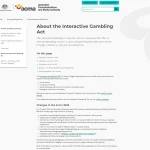
In Australia, the key legal distinction is not which payment method an online casino accepts. It is whether a service offers real-money casino games to people located in Australia. The Interactive Gambling Act 2001 prohibits operators from providing online casino-style games, including pokies, to customers in the country. Using Bitcoin rather than conventional currency does not change the nature of the service or remove that restriction.
Legal Prohibition
The Interactive Gambling Act 2001 prohibits operators from providing online casino-style games, including pokies, to customers located in Australia.
This means there is no locally licensed online casino route for Australian residents to play pokies for real money. A website’s presentation, the name of a game, or the currency shown in an account does not establish that the operator is authorised to provide the service in Australia. The legal boundary concerns the operator’s provision of real-money online gambling to people physically in the country.
The operators discussed in this context hold offshore licences, primarily from Curacao eGaming or the Anjouan Gaming Authority. Those licences are issued outside Australia. They do not amount to an Australian licence, and their existence does not make an offshore casino a locally authorised provider. The fact that an operator displays a foreign licence therefore answers a different question from whether it may legally offer real-money pokies to Australian residents.
This distinction matters when you encounter a claim about Aristocrat pokies online for real money in Australia. The phrase can describe what a site says it offers, but it is not proof of Australian authorisation or of a particular game’s availability. A brand reference and an offshore licence cannot override the Australian rule governing the provision of these services. Nor does using cryptocurrency create a separate legal category for online casino play.
The prohibition is directed at operators providing the service; it should not be confused with a statement that a player is subject to a fine or criminal prosecution simply for using an offshore casino. The legal frame here is about what operators may provide to people in Australia. That distinction does not turn an offshore service into a locally regulated one or give it permission to offer real-money pokies.
An offshore licence also should not be read as equivalent to Australian consumer protection. Australian consumer protection laws do not apply to the offshore operators discussed. So a licence issued elsewhere is not evidence that Australian rules govern the operator’s conduct or that an Australian regulator has approved its real-money casino service. The licensing jurisdiction and the location of the player are separate facts; neither should be treated as a substitute for the other.
If you are assessing a statement that a particular Aristocrat title can be played for real money, separate the claim into its parts: whether the title is actually identified, whether the operator holds a licence and where that licence comes from, and whether the service is lawful for Australian residents. An offshore licence may establish that an operator claims authorisation in another jurisdiction. It does not establish that the operator may provide real-money pokies in Australia, and it does not verify the title itself.
The practical legal boundary is therefore straightforward: real-money online casino games cannot lawfully be provided to people in Australia by a locally licensed casino, and the offshore licences held by the operators discussed do not create an Australian authorisation. This is a description of the regulatory position, not a recommendation to access an offshore service.
A page about Aristocrat pokies can describe a game brand, an operator’s catalogue, or an account process; those are separate claims. A brand name on a page does not establish that a particular game is available through a particular service, or that the service can lawfully offer it to people in Australia. Treat each claim according to what it actually says rather than assuming that one confirms the others.
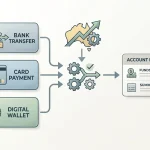
An account process, where a service offers one, generally begins with basic personal details and a password. Those details identify the account; they do not prove that the operator is suitable, that a game catalogue is accurate, or that a licence permits the service to operate in Australia. A password should be unique and difficult for someone else to guess. Before providing personal information, read what the service says about account handling and verification, and consider whether you are comfortable sharing those details.
Reviews can help describe how an operator presents its terms and services, but a favourable review is not a guarantee of performance or a substitute for checking the underlying conditions. Look for specific explanations of the review’s scope and for clear distinctions between observed details and promotional claims. A specialist review, for instance, may recommend considering user feedback, licensing and the range of pokies; that is a general assessment method, not proof that any particular operator meets those standards or is appropriate for Australian residents.
Licensing requires particular care in this market. A licence issued overseas does not make an online casino locally authorised to provide real-money pokies to people in Australia. The Interactive Gambling Act 2001 prohibits operators from providing real-money online casino games to people located in Australia. Therefore, a licence name or image should not be read as permission to serve Australian players. An account form, accessible web page or stated game list does not change that legal boundary.
Game selection is a separate question from both licensing and account setup. A broad catalogue does not establish that a named Aristocrat game is included, nor does a brand reference confirm the game’s version, features or mode of play. Read descriptions narrowly: distinguish a confirmed title from a general category, and a real catalogue entry from a marketing label. Avoid relying on a page’s headline alone to infer what its catalogue contains.
The same care applies when a page uses phrases such as “play Aristocrat pokies online” or refers to free play. The wording alone does not establish what is offered, where it can be accessed, or whether the claim relates to an actual game rather than a general description. This is especially important when a page combines brand names, account details and payment language: each concerns a different part of the service and should not be treated as evidence for the others.
In practical terms, separate the questions before drawing a conclusion: what information an account form requests; what a review actually assessed; what a licence does and does not authorise; and what the game catalogue specifically identifies. None of these checks turns an offshore real-money casino into a lawful option for Australian residents. Avoid treating setup instructions or positive reviews as an endorsement or an invitation to register.
A review can describe an offshore casino, but its wording is not proof that the operator’s claims have been independently checked. Treat statements about licensing, game availability or a connection to a particular game maker as claims to assess, not as confirmation. A confident tone, a detailed page or a prominent badge does not, by itself, establish what an operator is authorised to provide or what its catalogue contains.
Attention: Australian consumer protection laws do not apply to offshore operators, limiting the protections available if a dispute arises.
Rankings require similar care. A label such as “best” can reflect the reviewer’s selection criteria, commercial arrangements or editorial judgement; without a clear method, it does not tell you how the options were compared. A list headed as a guide to Aristocrat casino sites, for instance, would not itself verify that any listed service offers Aristocrat products. Nor does a review’s publication date guarantee that its information remains current. Operator pages and third-party reviews can change, and a description may not match the service currently presented.
Licensing claims also need to be read precisely. A stated offshore licence is not the same as Australian authorisation, and a licence claim alone does not establish that Australian consumer protections apply. Australian consumer protection laws do not apply to the offshore operators discussed here. That limits the protections available through those laws if a dispute arises; it is not a minor detail that a positive review can offset.
This page is affiliate material and may include sponsored links. Commercial links can create an incentive for a publisher to refer readers to an operator, so disclosure matters when you interpret recommendations, comparisons and rankings. The presence of a disclosure does not prove that a review is inaccurate, but it also does not make the review independent. Keep the two questions separate: what the page discloses about its commercial relationship, and what evidence it provides for each factual claim.
When reading a review, distinguish verifiable details from promotional language. A specific statement can be checked against the operator’s own terms or licensing information, while broad descriptions such as “trusted” or “top-rated” do not explain the basis for the judgement. Even where a page names a regulator, that name alone does not demonstrate the scope or status of the operator’s permission. The relevant detail is what the claim covers, not how prominently it is displayed.
No review, affiliate notice or ranking should be treated as a substitute for independent confirmation. If a page presents a machine list or describes a casino as connected with Aristocrat, the claim needs evidence beyond the heading. A review can help explain what its publisher says, but it cannot turn an unsubstantiated product claim into a verified one.
A request about Aristocrat online pokies in Australia in 2026 combines several separate questions: whether a named game is genuinely associated with Aristocrat, whether it is offered online, and whether it can lawfully be offered for real-money play to people in Australia. Those points should not be treated as interchangeable. A brand name in a description does not, by itself, establish a title’s identity, its online availability or the conditions under which it may be played.
The year in the wording also matters. Availability can change, so a statement about a product at one point in time would not automatically establish its status in 2026. The same caution applies to claims about an individual Aristocrat pokie: the name alone is not proof of its origin or present availability.
There is a separate legal limit for real-money play. In Australia, locally licensed online casinos are not permitted to provide real-money pokies to residents. This sets a boundary on what a claim about Australian availability can mean; it does not confirm that a particular Aristocrat product is offered, nor does it establish that a product described as online is available for real-money play in Australia.
When assessing a claim, keep its parts distinct. Does it name a specific game, or only refer broadly to Aristocrat? Does it say the game is online, or merely use a general brand label? Does it refer to free play or to real-money gambling? An answer to one of these questions does not settle the others. In particular, the word “online” is not enough to establish the play mode or the legal status of an offering.
This means that “Aristocrat pokies online Australia” should not be read as confirmation of a current, lawful real-money product for Australian residents. Nor can a broad reference to Aristocrat establish which titles, if any, are being discussed. The responsible answer to the 2026 wording is therefore limited: the Australian legal boundary for locally licensed real-money pokies is clear, while a brand-specific claim needs reliable evidence about the exact title and the particular availability being asserted. Without that distinction, a search phrase can sound like a factual product claim when it has not established one.
An offshore operator is based outside Australia. That distinction affects which consumer-protection rules apply if you have a dispute with the service. Australian consumer protection laws do not apply to the offshore operators discussed here, so you should not assume that the protections available in a dispute with an Australian business will cover an offshore casino.
This matters when a service makes a promise about an account, a payment or a game and then handles the issue differently from what you expected. The operator’s own terms may describe its procedures, but those terms do not make Australian consumer protections apply. Reading them can tell you what the operator says it will do; it cannot establish that an Australian consumer-law remedy is available if the operator does not follow through.
The same distinction matters when you encounter a site described as an Aristocrat casino online or see claims about Aristocrat-branded pokies. A name or game description does not determine what protections apply to a transaction. The operator’s location and the legal framework governing it are separate questions from the identity of a game or the wording used to promote a service. Do not treat a familiar brand reference as evidence that an Australian consumer-protection framework covers the operator.
This does not mean that every offshore operator behaves in the same way, or that a particular dispute will have a particular outcome. It means you should not rely on Australian consumer protections as a safeguard when dealing with the offshore operators discussed. Any assurance about support, account handling or dispute resolution needs to be understood as the operator’s own claim, not as proof that Australian protections apply.
If a payment or account issue arises, keep records of the relevant terms and communications. Records may help you describe what happened, but they do not change the operator’s offshore status or create consumer protections that do not apply. Treat claims about an online casino serving Australians with that limit in mind, whether the claim refers to Aristocrat, another game name or a general casino service.
A dependable catalogue needs more than a collection of titles carrying the Aristocrat name. Each entry would need to be identifiable as an Aristocrat product, and its availability would need to be confirmed for the relevant setting. Without that distinction, a list can mix genuine products with unverified names or imply that a title is currently accessible when that has not been established.
A dependable catalogue requires each entry to be identifiably an Aristocrat product with confirmed availability. Without this, lists risk mixing genuine products with unverified names or implying accessibility where it has not been established.
The same problem applies to requests for a complete list or recommendations for the best Aristocrat machines. “Best” requires a stated basis for comparison, such as a measured feature that can be checked across the titles. A list without that basis is not a ranking; it is simply a set of names.
The term *Bitcoin pokies* describes digital slot machines that accept Bitcoin as payment. It does not identify a manufacturer, confirm that a particular machine accepts Bitcoin, or show that a named Aristocrat title is offered online. Those are separate claims and each needs its own support.
This distinction matters when you assess a page that presents an Aristocrat machine list. Check whether it identifies the individual products and explains what the listing establishes. A title’s appearance in a list alone does not establish its maker, payment options or online availability. A catalogue that does not make those boundaries clear cannot reliably answer which Aristocrat machines can be found in a particular context.
“Free play” and “real-money play” describe different ways an online game may be offered. A free-play label means the play mode does not involve wagering money; a real-money label means money is at stake. The presence of one mode does not establish that the other is available.
This distinction matters when you see a claim about playing Aristocrat games online at no cost. A page may use phrases such as “free online play” to describe a mode, but that wording alone does not confirm that a particular Aristocrat title is accessible, or that it is offered by a particular service. The same applies to claims about real-money access. A game name or brand reference is not proof of a current product listing.
Keep the mode, the game and the access claim separate. A free-play claim concerns whether money is wagered. A title claim concerns whether a named game exists in the relevant catalogue. An access claim concerns whether that game can be reached through a particular service. Evidence for one does not establish the others.
Free play should also not be treated as a preview of real-money conditions. The mode label does not tell you whether the same game, features or rules apply when money is involved. Nor does it establish that a free version can be converted into real-money play.
When interpreting a claim about free Aristocrat pokies, look for clear identification of the game and an unambiguous description of the mode. Avoid treating general wording as confirmation of availability. Without those details, the claim does not establish which game is offered or whether the play is free or involves money.
A specialist review describes Bitcoin as offering a degree of anonymity compared with traditional payment methods. That is a relative claim, not a promise that a person’s identity or activity is completely private. The payment method alone cannot establish who controls an account, what information an operator collects, or how that information is handled.
Treat privacy language as a description of one feature, not as proof that a service is confidential or safe. It also does not verify claims about Aristocrat pokies: a Bitcoin payment option would say nothing about whether a particular Aristocrat game is available, authorised or genuine. Those are separate claims and require separate evidence.
Bitcoin’s perceived anonymity should not be treated as a reason to use an online casino. In Australia, real-money online casino services are prohibited when provided to people physically in the country, and offshore operators are not covered by Australian consumer protection laws. Privacy wording does not change those conditions or remove the risks of sharing personal or payment information with an operator.
Before accepting any claim, identify exactly what it covers: the payment method, the account, or the operator’s handling of data. A statement about one should not be read as a guarantee about the others.