A practical overview of spin outcomes, access considerations, offer terms, account checks and payment steps for Australian players.

An online pokie is software, not a physical machine with moving reels. The images on your screen are part of an interface: they show the result selected by the game’s underlying program. Modern online pokies use a Random Number Generator (RNG) to determine outcomes. The animation may make a spin feel like a sequence of events, but the visual motion is not what decides whether symbols form a winning combination.
When you press the spin button, the game processes that action and uses its RNG to select an outcome. The program then displays that outcome through symbols and animations. The exact design differs between games, so you cannot infer the internal process of a particular title from its appearance alone. What matters is that the result is generated by software rather than by a physical wheel slowing to a stop.
The RNG produces values that the game maps to possible outcomes. Those outcomes may be represented on screen as reel positions, symbol arrangements, or other game elements. A set of rules determines how the selected outcome is displayed and whether it meets the game’s conditions for a win. The interface presents the result; it does not make the result more or less likely by showing a particular animation.
This distinction helps explain why a spin can appear to pass through near-misses. The symbols moving across the screen are part of the presentation. Their apparent order or speed does not show that the game was still deciding as the animation played. Nor does a visual pattern reveal what the RNG will produce on a later spin.
Each spin is an independent event. The result of the previous spin has zero influence on the next one. If a game has just shown a particular symbol, that does not make the symbol more likely—or less likely—to appear on the following spin. A run of wins does not make a loss “due”, and a run of losses does not make a win due.
 Golden Pokies Australia: Accounts, Bonuses and BankingLearn how registration, sign-in and identity checks relate, plus what to examine in bonus terms, game mechanics and payment timing.
 Quickspin Casinos in Australia: Games and PlayLearn how Quickspin slots work, what game rules panels explain, and how to assess mobile play, bonuses, demos, offshore availability and real-money…
This can feel counterintuitive because people naturally look for patterns in sequences. A short run may look meaningful, especially when the same symbols appear repeatedly or a win narrowly misses a feature. But the sequence alone does not change the conditions of the next spin. Treating past outcomes as clues to a future result confuses a record of what happened with a mechanism that predicts what will happen.
Independence also means that a game does not need to “pay back” a particular player during a session. The RNG determines each outcome separately; it does not track how much you have won or lost and adjust the next result to balance your account. A session is simply a limited sequence of outcomes. It can differ substantially from the long-run statistical measure used to describe a game.
RTP means return to player. It is a theoretical percentage describing how much of all money wagered on a pokie the game is expected to pay back to players over an infinite number of spins. It is a long-run measure, not a forecast of what you will receive from a particular set of spins.
The phrase “over an infinite number of spins” matters. No individual player can play an infinite sequence, and a real session is only a small sample compared with that theoretical horizon. As a result, your session outcome may be far above or below the RTP figure. The percentage does not mean that the game returns that proportion of your own stake within a session, nor does it specify when a return will occur.
RTP also does not tell you which outcome will come next. It summarises a theoretical pattern across a very large number of wagers. The RNG still selects each spin independently, so the long-run measure cannot be used as a timing tool. A game may have an RTP figure, but that figure does not identify a winning spin or guarantee a particular result.
Attention: RTP is a long-run theoretical measure and does not guarantee a particular return or identify a winning spin within an individual session.
When you play an online casino game, the controls and graphics are the visible layer; the RNG and game rules determine the result beneath it. Buttons, sound effects, reel movement, and celebratory animations can make the process feel continuous, but they do not provide evidence that outcomes are following a visible cycle.
The same principle applies whether you access a game on a computer or a mobile device. A different screen layout can change how the controls and graphics are presented, but it does not make previous spins predictive. If you are considering a House of Pokies online casino game, distinguish what the interface shows from what the game’s random process determines. The display explains the outcome after it is selected; it cannot tell you what the next spin will be.
Understanding RNG and RTP therefore gives you two separate ideas. Independence explains why the past spin does not affect the next. RTP describes a theoretical return across an unlimited number of spins, not the result of an individual session. Keeping those concepts apart prevents animations, short runs, and remembered near-misses from being mistaken for reliable signals about what will happen next.
If you’re looking for a house of pokies casino in Australia in 2026, this list gives you a concise reference for the available operator details. Use the stated licensing, deposit and payout information to help assess what matters to you.
Lucky Dreams
Lucky Dreams lists a Curacao license and a minimum deposit of A$20 via POLi. You can use those details as a starting point when checking whether its payment options suit you.
DragonSlots Casino
DragonSlots Casino is listed under the Curacao Gaming Authority, with Jumpman Gaming Ltd identified as the licensee. This makes its licensing information the main verified detail available here.
Wild Tokyo
Wild Tokyo lists a minimum deposit of A$10. Its stated payout speeds are 30–60 minutes for crypto and 1–5 days for fiat.
MrPacho
MrPacho lists a minimum deposit of A$30. Its stated payout speeds are 30–120 minutes for crypto and 24–72 hours for fiat.
LevelUp Casino
LevelUp Casino lists a minimum deposit of A$15 and a Curacao eGaming license, OGL/2023/174/0082, held by Dama N.V. You can check these details when considering the operator.
Playfina Casino
Playfina Casino is listed under Curacao eGaming, with Hollycorn N.V. identified as the licensee since 2017. Its minimum deposit is A$20–30, depending on the offer.
Roby Casino
Roby Casino is listed under Curacao eGaming, with Roby Games Ltd identified as the licensee. That licensing detail is the key verified information available for this operator.
GoldenCrown
GoldenCrown lists a Curacao Gaming Control Board license, OGL/2023/176/0095, held by Hollycorn N.V. You can refer to this licensing information when assessing the operator.
7Bit Casino
7Bit Casino is listed as operating under a Curacao license, with Dama N.V. named as the operator. The supplied details focus on its licensing and operator.
Kingmaker
Kingmaker lists a minimum deposit of A$30. Its stated payout speeds are about 90 minutes for crypto and 1–5 days for fiat.
The legal distinction in Australia is between the business that provides an online casino service and the person who uses it. Under the Interactive Gambling Act 2001, offering real-money casino-style games to people in Australia is prohibited. The category includes pokies, roulette, blackjack and poker. The restriction is directed at operators: it does not make an individual player’s decision to use an offshore site an offence under the Act.
That distinction matters when considering House of Pokies in Australia. A site may be based overseas, but its location does not change the nature of the service it offers to someone physically in Australia. The law concerns the provision of prohibited interactive gambling services to people here, rather than only services run by Australian-based companies. An offshore operator is not made lawful for the Australian market simply because it is outside the country.
The rule is also different from a system in which a local gambling licence authorises online casino play for residents. Real-money online casino games are prohibited services in Australia.
The Act places the compliance burden on providers. An operator that makes prohibited casino games available to people in Australia may be acting contrary to the law. Players, by contrast, are not the target of the Interactive Gambling Act merely because they use an offshore service. This legal distinction should not be confused with an endorsement of the service or a statement that every practical risk has been removed.
The rule applies to the type of activity, not just to the label used on a website. If an online service lets customers in Australia play real-money pokies or casino table games, calling it a gaming club, entertainment site or international casino does not alter the relevant question. The important issue is whether the operator is providing a prohibited interactive gambling service to people in Australia.
The minimum age for gambling is 18, but meeting that age requirement does not change the operator-side restriction. Age and the legality of a provider’s service are separate matters: one concerns who may gamble, while the other concerns whether a business may offer online casino games to people in the country.
Legal Status
Under the Interactive Gambling Act 2001, offering real-money casino-style games to people in Australia is prohibited.
The Australian Communications and Media Authority, or ACMA, administers enforcement of the Interactive Gambling Act 2001 and oversees compliance with federal rules for interactive gambling. Its work is directed at prohibited services and their availability in Australia. That role is not the same as approving offshore casinos for local play.
One enforcement tool is website blocking. ACMA can ask Australian internet service providers to restrict access to websites that provide prohibited interactive gambling services or advertise them in Australia. The request is a measure aimed at limiting access to the service from within the country. It does not convert the underlying offer into a permitted one, nor does the fact that a page can be reached prove that the operator is authorised to serve Australians.
ACMA’s reported enforcement figures show the scale of this activity. Since November 2019, it has blocked more than 1,455 illegal gambling and affiliate websites following enforcement action. Blocking is one part of a broader response; another reported outcome is that services have left the Australian market after enforcement began in 2017.
Published accounts give different totals for those withdrawals: one reports more than 210 services, while another reports more than 190, both counting services that withdrew from Australia since 2017. The difference does not change the legal rule or ACMA’s stated enforcement role.
Access and legal status are related but distinct. A website that remains reachable at a given time has not thereby received Australian approval. Conversely, a block can prevent an Australian connection from reaching a service without changing the operator’s location or the legal category of the games it offers. ACMA’s blocking action concerns availability through Australian internet providers; the underlying prohibition concerns providing the service to people in Australia.
For someone searching for the House of Pokies casino in Australia, the practical point is that an offshore site’s presence online is not evidence that Australian law permits it to offer real-money casino games locally. The law targets the provider, while ACMA can act to restrict access to prohibited services. These are separate parts of the same framework: one defines what operators may not offer, and the other gives the regulator a means to respond when prohibited services or their advertising are accessible in Australia.
This regulatory context does not establish that a particular site is safe, that its terms are fair, or that an Australian authority will resolve a disagreement with it. It explains only the division of legal responsibility and ACMA’s enforcement tools. When assessing any offshore casino, do not treat a functioning webpage, an overseas address or continued availability as proof that the service is permitted for Australian customers.
A useful review of House of Pokies should separate what you can observe in a free-play session from what would require real-money activity to assess. A demo can show how the games and the site interface behave on your device. It cannot establish how a real-money account, payment or withdrawal will work, nor can it show what results you would get in a later session.
If free play is available, treat it as a limited inspection rather than a forecast. Look at whether the game loads correctly, whether its controls are understandable, and whether the information displayed on screen is legible. Notice how you move between games and whether the instructions explain the available features. These are observations about the trial experience itself; they do not prove that every game, account feature or payment function will behave in the same way during real-money play.
Start by checking the practical details that are visible without staking money. Can you find the game rules before starting? Are the buttons and labels clear? Does the interface respond consistently when you select a game or change its settings? Does the session work on the device and browser you are using? Recording those observations gives your review specific content instead of relying on a general impression.
You can also assess whether the presentation is easy to follow. For instance, consider whether the screen makes it clear what action you have selected and whether important game information is accessible. If something is confusing, identify the exact point: a label, instruction or control that was difficult to interpret. That is more useful to another reader than saying only that the site felt good or bad.
A demo is not a test of whether a game will pay out in real-money play. It may let you see the sequence of play, but its outcomes do not establish what will happen when money is involved. A run of wins or losses in free play is not evidence that a later session is likely to repeat or reverse that pattern.
Each spin is independent. The result of an earlier spin has no influence on the next one. A sequence that looks like a pattern—such as several similar outcomes in a row—does not make a different result due, and a win in free play does not make another win more likely.
This matters when assessing a House of Pokies review based on free play. A reviewer can describe what appeared during the observed session, but that observation is not a prediction of future results. The same limit applies if your own trial session seems unusually favourable or unfavourable. The previous outcome is history, not information about the next spin.
Free play can therefore help you judge presentation and usability, but not future results or the likelihood of a particular return. Keep those categories separate when reading reviews: a detailed account of the interface is an observation; a claim that a short run proves how the game will perform later is not.
When comparing House of Pokies reviews, look for descriptions that make clear what was actually tested. A review may discuss the appearance of the site, navigation or a particular free-play session. Those details are more informative when the writer distinguishes direct observation from assumptions about real-money play.
Be cautious with statements that turn a brief trial into a broad conclusion. Free-play outcomes cannot demonstrate how a real-money session will go. Nor does a review’s description of one person’s experience establish what another person will encounter. Consider whether the review explains its basis and whether its claims stay within that basis.
The same distinction is important when a review discusses free spins or a free chip. Those terms may sound like a way to try real-money play without risk, but the label alone does not explain the conditions attached to an offer or the status of any winnings. A free-play session is not automatically the same thing as a promotion, and neither should be treated as proof of how a real-money account operates. Check the specific terms of any offer separately rather than assuming that a demo session answers those questions.
The question of whether House of Pokies is “real” can refer to different things: whether a site with that name can be reached, whether its games can be opened, or whether a particular account or payment process works. A free-play session may help you observe the first stages of an interface, but it cannot by itself verify every part of a real-money service or settle a question about an individual account.
For a careful review, state the scope plainly. Describe what you could observe in free play, distinguish it from anything not tested, and avoid treating an isolated result as proof. That gives readers a grounded account of the trial experience without presenting it as a guarantee about real-money play.
A no-deposit offer is a promotion that advertises bonus credit without requiring an initial deposit. “Free chips” is another label you may encounter for promotional credit; the wording alone does not tell you whether the credit can be withdrawn, what conditions apply, or whether the offer is current. Treat the terms attached to a specific promotion as the deciding information, not its headline.
The key distinction is between bonus funds and cash. A specialist review describes winnings from no-deposit spins as being credited as bonus funds rather than cash, with a separate wagering requirement that may be higher than the requirement attached to other bonus funds. That is a reported description, not a rule you can assume applies to every promotion. Check the offer’s own conditions to establish how winnings are credited and what must happen before they can be withdrawn.
A displayed balance can therefore contain funds with different statuses. Promotional credit is not automatically equivalent to withdrawable money, even if it appears alongside other funds in an account. Before relying on a no-deposit offer, establish whether it is available to you, what activity qualifies, how any resulting winnings are treated, and what restrictions apply. If those details are unclear, the headline does not resolve them.
The same care applies to offers described as no-deposit codes. A code is a way to identify or apply a promotion; it does not, by itself, prove that the offer is active or that you qualify. Read the conditions associated with the promotion rather than assuming that a code found elsewhere gives you a particular benefit. Keep this separate from the question of whether the advertised credit can become cash: those are related but distinct parts of the terms.
Sister-site claims need a different kind of check. The phrase implies a business relationship between separate gambling websites, but similar names, graphics, or promotional language do not establish common ownership or operation. A claim of affiliation should be supported by clear information linking the businesses, not by branding resemblance alone. Without that link, treating another site as a sister brand could lead you to assume that its account rules, promotions, or policies also apply to House of Pokies when they may not.
Names such as “House of Fun” can also create confusion when they appear near references to pokies or slots. A similar phrase is not evidence that two products or operators are connected. Check the exact product and business named in the material you are reading, and do not transfer terms from one to another merely because their names sound related.
For any offer, the useful question is not simply whether it is called free. Identify what is credited, how that balance is classified, and which conditions govern the resulting funds. For any claimed sister site, look for an explicit, credible connection rather than inferring one from a shared-sounding name. These checks help separate promotional language and branding from the terms that actually apply.
A sign-up bonus is not defined by its headline amount alone. Before accepting an offer, establish what action activates it, which players qualify, and what must happen before bonus-derived winnings can be withdrawn. These details determine whether the offer applies to your account and how much betting turnover it requires.
Start by checking whether the promotion is a deposit bonus or a no-deposit offer. A deposit bonus depends on a qualifying deposit; a no-deposit offer does not require that deposit, but may still have eligibility rules or withdrawal conditions. Do not assume either type is available simply because it is described in promotional material. Confirm that the terms are current and apply to the specific offer you are considering.
Activation is a separate condition from eligibility. The terms should explain when the promotion becomes attached to an account and what action is required before play. Read this before proceeding: an offer that has not been activated in the required way may not be credited, and a later request to apply it may not change that. The wagering requirement should also state which funds it applies to. A multiple applied to bonus funds produces a different turnover target from the same multiple applied to a deposit and bonus combined.
One specialist review gives a worked example of a 35× wagering requirement on a $100 bonus. That calculation means $3,500 in total bets must be placed before winnings derived from those bonus funds can be withdrawn. This is an illustration reported by that review, not confirmation of a current House of Pokies promotion or its terms. The figure also describes turnover, not a required loss: the total value wagered is counted, while the balance remaining can change as bets settle.
Wagering Calculation
Identify the base
Determine the bonus amount, for example, $100.
Apply the multiplier
Multiply the bonus by the wagering requirement, such as 35×.
Calculate total turnover
Determine the total amount of bets required, which in this example is $3,500.
Before accepting any offer, read the wording for the requirement’s calculation base, the eligible play that contributes to turnover, and any conditions that can affect withdrawal eligibility. If the terms do not clearly say whether the multiple applies to the bonus alone or to a combined amount, the resulting target cannot be calculated reliably. Do not infer the answer from the promotional headline.
Treat the bonus as conditional credit rather than immediately withdrawable money. Work out the required turnover from the stated base and multiple, then decide whether those terms are acceptable before activation. If the promotion’s conditions are unclear, do not proceed on the assumption that a familiar sign-up offer works the same way.
A code described as a House of Pokies bonus code is not enough, by itself, to establish what you will receive. A code is an instruction used to identify a promotion; the promotion’s terms determine whether it applies to your account and what action is required. Read those terms before depositing, while you can still decide whether to proceed.
Start by checking that the code is current and that the promotion is available to you. Then identify how it must be applied: the terms may specify whether to enter it during registration, before making a deposit, or in a promotion field. If activation must happen before a deposit, depositing first could leave the promotion unapplied. Do not assume that a code will attach automatically.
Next, compare the promotion conditions with the transaction you intend to make. Check whether a qualifying deposit is required, whether the offer is limited to particular players, and whether any games or payment methods are excluded. Follow the written conditions rather than relying on a code listed in an old message or copied from an unrelated page. If the code is rejected or the terms do not explain how to use it, pause before depositing and seek clarification through the site’s stated support channel.
Also distinguish the type of reward. A code may refer to bonus funds or spins, and those are not necessarily equivalent to cash available for withdrawal. A specialist review reports that winnings from promotional spins are credited as bonus funds rather than cash and carry their own, often higher, wagering requirement. Treat that as the report of one review, not as a rule for every promotion. Check the specific offer’s terms to see how any reward is credited and what restrictions apply.
Keep a record of the code and the conditions shown when you activate it. That gives you a point of comparison if the bonus does not appear as expected. The key is sequence: verify the offer, understand its activation instructions, and apply the code as directed before making a deposit. A code’s presence on a page does not prove that it is valid for your account or that the associated promotion suits your plans.
A failed attempt to reach a House of Pokies login page does not, by itself, show that your account has been closed or that your details are incorrect. The connection can fail before the page loads, so the error may relate to access to the website rather than to the account.
In Australia, access to offshore gambling sites can be affected by ACMA enforcement. ACMA may ask internet service providers to block websites that provide prohibited interactive gambling services or advertise them in Australia. As a result, a site may be unavailable through a particular connection even when you have previously visited it. Similar access issues can affect other offshore casinos, not just one brand.
Use the distinction between a site-access problem and an account problem carefully. If the page does not load, changing passwords or repeatedly submitting login details will not resolve a connection block. If the page loads but rejects your credentials, that is a different symptom, though it still does not establish the cause. An error message alone cannot confirm whether an account remains active.
Do not treat a login link found in an unsolicited message, an unfamiliar search result or a social post as trustworthy. A page can imitate a casino login screen and collect the details entered there. Avoid unverified login pages and numbered mirror networks; a different address is not proof that a page is genuine or safe. Do not enter account or payment details unless you can establish that the page is authentic.
If you cannot reach the site, stop rather than trying a succession of unverified addresses. Keep any existing account correspondence, and use contact details only when their authenticity can be checked independently. A connection failure is not evidence that your balance or account has been removed, but it also does not establish that access will return. When assessing casinos like House of Pokies, the same caution applies: availability can be affected by blocking, and a working page does not itself verify the site or the protections available to you.
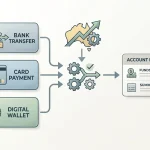
A House of Pokies withdrawal involves two separate stages: the operator’s review and release of the request, followed by the payment provider’s processing. A delay can occur at either stage, so the payment method alone does not determine when funds arrive.
Identity verification is generally handled once, often before your first withdrawal. You may need to submit identity documents and proof of address; the operator may also ask for evidence that you own the payment method used. If requested documents are incomplete or unclear, the review may take longer. Check that the details on your account match your documents before submitting them.
A specialist review reports these processing windows for payment methods: e-wallet withdrawals are listed at 1–24 hours, card withdrawals at 3–5 business days, and bank transfers at 5–7 business days or longer. These are reported estimates, not guaranteed arrival times or a confirmed timetable for every request. The actual wait can also depend on account checks and the provider’s own processing.
To assess a stated withdrawal time, distinguish the operator’s handling period from the time required for the payment to reach you. Look for whether the estimate starts when you submit the request or only after it has been approved, and whether it is expressed in hours or business days. A request awaiting verification has not necessarily entered the payment provider’s processing stage.
Processing Times
Estimated windows include 1–24 hours for e-wallets, 3–5 business days for cards, and 5–7 business days or longer for bank transfers.
Keep a record of the request and any verification messages. If the stated period passes, contact the operator through its published support channel and ask which stage is pending and whether further documents are required. Do not assume that a displayed estimate applies to every payment route: the available method and its conditions can affect the timeline.
A free spin and a spin funded with your own money can look identical on screen, but the balance credited after a win may have a different status. A specialist review describes free-spin winnings as bonus funds rather than cash, with a separate wagering requirement that may be higher than the one attached to other bonus funds. That is a reported arrangement, not a rule that can be assumed for every promotion.
The distinction matters when you assess an offer. A displayed win does not necessarily mean the same amount is immediately available to withdraw. If the win is credited as bonus funds, its use and eventual withdrawal depend on the promotion’s conditions. Check the terms for the specific free-spin offer before activating it, and establish whether the balance is bonus credit or withdrawable cash. Do not treat a result shown during a spin as proof that the funds are ready to cash out.
Free spins are also different from real-money play because you are not staking your own balance on each qualifying spin. That does not make the resulting winnings equivalent to cash: the bonus conditions can still apply to them. In contrast, a real-money spin uses funds in your cash balance, though any separate promotion attached to that play may have its own rules.
If you are considering free spins associated with House of Pokies, focus on the written terms rather than the label alone. Confirm what happens to winnings, how the wagering requirement applies, and what conditions must be met before bonus funds can become withdrawable. A code or promotional banner is not a substitute for those terms. If the conditions are unclear, do not assume that the advertised spin value is cash or that the winnings can be withdrawn without restriction.
This distinction is especially relevant when comparing free spins with real-money play: the key issue is not simply how the spin is funded, but how any resulting balance is classified. Read the promotion conditions before relying on a displayed win as money you can withdraw.
A request for identity documents is an account-checking step, not a safety certificate. Verification, often called KYC, can establish whether the details supplied match documents such as an ID and proof of address. An operator may also ask for evidence that a payment method belongs to you. These checks concern identity and account information; they do not independently confirm that a site is reliable or that a complaint will be resolved in your favour.
Treat claims about verification narrowly. A completed check does not prove that every other part of an account or service is secure, and it does not create a promise of consumer protection. Nor does the presence of an identity-check process settle what recourse is available if a dispute arises. Those are separate questions, so do not use a KYC badge or document request as a substitute for assessing the risks of using an offshore gambling service.
Age is another separate condition. You must be at least 18 to play. Meeting that threshold makes you old enough; it does not establish that a particular site is safe, remove other risks, or guarantee a remedy if something goes wrong.
Before sending sensitive documents, consider what information is requested and whether the page handling it is the genuine service rather than an imitation. Avoid submitting identity or payment records through links from unsolicited messages. Keep the distinction clear: age relates to eligibility, verification relates to identity, and neither one alone answers whether using the service is safe.