A practical framework separates licensing, payment security and dispute options from guarantees an offshore casino cannot establish.

“Safe” is not a single status that an offshore casino either has or lacks. It can refer to different things: whether an operator follows the rules of the place that issued its licence, whether account and payment systems are protected, whether game outcomes are handled as described, or whether you have meaningful ways to resolve a dispute. Evidence about one of these areas does not establish the others. A licence, for instance, identifies a regulatory framework; it does not by itself prove that every part of a service is reliable or that Australian protections apply.
The legal setting matters before any other safety claim. Under Australian law, a casino licensed locally cannot offer real-money pokies to people in Australia. The Interactive Gambling Act 2001 treats online casino-style services, including pokies, as prohibited when supplied to customers physically located in the country. This means that seeing the word “licensed” does not show that an online casino is licensed to provide real-money play in Australia. The location and scope of the licence are essential to understanding what it means.
The operators discussed here hold licences issued offshore, primarily by Curacao eGaming or the Anjouan Gaming Authority. Those licences belong to regulatory systems outside Australia. They may describe the obligations an operator has in the licensing jurisdiction, but they do not turn the operator into an Australian-licensed casino, nor do they make the service subject to Australian consumer protection laws. For a reader, the distinction is practical: an offshore licence and Australian legal protections are not interchangeable forms of oversight.
That difference places a limit on what a safety assessment can establish. You may be able to find information about an operator’s licence or stated policies, but that information cannot establish that Australian agencies supervise the service or that Australian consumer remedies are available. Australian consumer protection laws do not apply to the offshore operators discussed. If a disagreement occurs, the existence of an overseas licence does not mean that the usual domestic protections for a locally supplied service will apply.
The word “safe” can therefore mislead when it is used without qualification. A service may make claims about its safeguards, but a claim is not the same as independent verification. A licence may be relevant evidence about the operator’s regulatory arrangements, but it does not prove that every complaint will be resolved in your favour. Nor does it establish that an Australian authority can require the operator to provide a particular remedy. These are separate questions, and they should not be compressed into a single label.
It is also important to distinguish the safety of a technical process from the safety of choosing a service. A website can use account security measures while still operating beyond the protections available under Australian consumer law. Conversely, a concern about the legal or consumer-protection position does not, by itself, show that a specific technical system has failed. The available evidence needs to be matched to the claim being made. A statement about data handling, for example, cannot answer whether a dispute has an effective remedy in Australia.
For the same reason, promotional language such as “trusted” or “secure” needs context. Ask what the word refers to: a documented licence, a stated security practice, or simply the operator’s own description. Even a well-supported claim about one feature should not be treated as proof of overall safety. The relevant boundary remains: an offshore regulatory arrangement is not Australian authorisation, and it does not supply Australian consumer protections.
This distinction should shape how you interpret any material about Australian-facing offshore services, including this page. It is affiliate material and may contain sponsored links. That disclosure does not make a service safer or amount to a recommendation; it tells you that commercial links may be present. You should treat descriptions and claims as information to assess, not as an assurance that an operator has been endorsed by an Australian regulator or that you will have a particular outcome.
Real-money gambling is for adults aged 18 or older. Meeting that age condition does not change the legal or consumer-protection position of an offshore service. If you are considering what “safe” means in this context, keep the categories separate: an offshore licence concerns oversight in another jurisdiction; technical claims concern particular systems; and Australian consumer protections do not extend to the operators discussed. None of those points, on its own, can be used as a blanket guarantee.
Legal Warning
Under the Interactive Gambling Act 2001, online casino-style services, including pokies, are prohibited when supplied to customers physically located in Australia.
A review, a licence statement and a catalogue of games are pieces of information to examine, not a combined proof that an operator is safe. Each answers a different question, and each has limits. Treating them separately helps you see what a page actually establishes—and what it leaves unresolved—without turning a comparison into an endorsement.
Start with the provenance of a review. A specialist review may recommend looking at player feedback, licensing information and the range of pokies, but the recommendation itself does not verify the operator. Check who published the review, whether it discloses affiliate material or sponsored links, and whether its claims point to evidence you can inspect. An affiliate relationship does not automatically make a statement false; it does give you a reason to distinguish reporting from promotion. A positive verdict without a clear basis tells you less than a specific claim you can independently check.
Player comments can add detail about individual experiences, but they are not a complete record. A comment may describe one account, one interaction or one outcome; it cannot establish how the operator handles every customer. Look for what the writer actually reports, rather than relying on a general label such as “safe.” A cluster of similar accounts may identify a question worth investigating, but comments alone do not authenticate a licence or establish that a particular experience will be repeated.
 Aristocrat Online Pokies in Australia: Bitcoin ClaimsLearn how Bitcoin pokies differ from Aristocrat titles, why game availability and payment methods require separate verification, and how free play differs…
 Casinos That Accept Neosurf in Australia: What to CheckLearn how to verify Neosurf at checkout, distinguish deposits from withdrawals, and understand the Interactive Gambling Act 2001's limits on online casino…
Licensing information needs the same separation between claim and evidence. First identify what the operator says its licence is and which authority it names. Then check whether the licence details can be matched to information published by that authority. A logo or licence number on a website is a claim to verify, not verification by itself. The operators discussed in this context hold offshore licences, primarily from Curacao eGaming or the Anjouan Gaming Authority. Finding a licence record can clarify whether an operator appears under that authority’s oversight; it should not be treated as a guarantee about every dispute, payment or account decision.
Also distinguish the regulator’s identity from the protections you may expect in Australia. A foreign licence is information about the operator’s stated regulatory arrangement; it is not the same as an Australian endorsement. The check therefore has a narrow purpose: to assess whether a licensing claim is consistent and traceable. It cannot, on its own, settle whether you can obtain help or a remedy if a disagreement occurs.
The game catalogue is another limited check. A broad selection of pokies tells you about the material presented on the site, not about the quality of the operator’s decisions or the outcome of a customer dispute. A catalogue can be described as diverse without showing that every listed game is available under the same conditions. Treat game names and categories as descriptive claims, rather than as evidence of reliability. This check is useful for understanding what the site offers; it is not a safety test.
Compare the language used in a review with the evidence it presents. If a page calls a platform “trusted” but does not explain what that means, the label has little analytical value. If it says that licensing was checked, see whether it identifies the authority and provides enough detail for you to check the claim yourself. If it discusses player feedback, notice whether it distinguishes reported experiences from independently confirmed information. These distinctions make the page easier to assess without asking you to accept its verdict.
Keep the checks independent. A polished site, a positive review and a licence logo may all appear together, but one does not validate the others. The review’s conclusion is not proof of the licence; the licence record is not proof of a particular customer experience; and a varied catalogue is not evidence about either. When details conflict or cannot be traced, record that uncertainty rather than filling it with an assumption.
The result of these checks should be a clearer account of what is known, not a declaration that an operator is safe. Reviews can show how a publisher frames its assessment. Licensing information can help you examine a regulatory claim. Game selection can describe the available catalogue. None of these checks converts an offshore operator into an endorsed service, and none can guarantee how an individual account will be handled. Use each item only for the question it can answer, and do not treat a confident recommendation as a substitute for evidence.
PayID and Bitcoin are different payment methods, so their transfer steps are not interchangeable. A Bitcoin payment moves between cryptocurrency addresses: for a deposit, the casino displays an address and the player sends Bitcoin to it from a wallet. For a withdrawal, the direction changes. The player enters a wallet address in the casino’s withdrawal form, and the casino sends Bitcoin to that destination.
These steps describe the movement of funds, not whether a casino is safe or authorised to provide real-money games in Australia. Real-money online casino games are prohibited for operators serving people in Australia. This material is affiliate content and may include sponsored links. Real-money gambling is for adults aged 18 or older.
A deposit begins with the casino displaying an account address for receiving Bitcoin. The player copies that address and uses a wallet to create a transfer to it. The wallet submits the transaction to the Bitcoin network; the casino does not receive funds simply because an address has been copied or a transfer has been started.
The amount sent, the destination address and the network fee are separate parts of the transaction. Bitcoin transfers incur miner fees, which vary over time. A specialist review describes those fees as minuscule, but that description is not a fixed price: the fee can change with network conditions. The amount ultimately credited may also depend on the casino’s own deposit handling, which is separate from the blockchain transfer itself.
A Bitcoin address is a destination, not a user name or a payment reference. The transfer directs funds to that address. The casino must then associate the incoming transaction with the relevant account. If the transaction has not yet been detected or credited, that does not by itself show whether the cause lies in the network transfer or the operator’s processing. Keep the transaction details available so the payment can be identified if needed.
Depositing Bitcoin
Obtain Address
Copy the account address displayed by the casino for receiving Bitcoin.
Create Transfer
Use a cryptocurrency wallet to create a transfer to that specific address.
Submit Transaction
Submit the transaction to the Bitcoin network, including the amount and the network fee.
A withdrawal reverses the direction of payment, but the player does not send Bitcoin to the casino. Instead, the player copies a receiving address from their own wallet and enters it in the casino’s withdrawal form. That address tells the operator where to send the funds once it processes the request.
There are therefore two distinct events: the casino’s handling of the request, and the Bitcoin transaction it later creates. The operator may need to approve or prepare the withdrawal before any transaction is sent. Only after a transaction has been broadcast can it move through the Bitcoin network. A delay before that point is not a slow blockchain transfer; it is time spent before the operator sends the payment.
A specialist review reports that most Bitcoin withdrawal transactions are completed within an hour. That statement concerns the transaction stage and should not be read as a promise that every withdrawal request will be approved or sent within that period. The operator’s internal handling can add time before a transaction exists on the network.
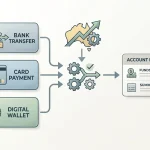
When assessing a payment timeline, identify the event being timed. A deposit can be initiated from a wallet, transmitted to the network, detected by the casino and then credited to an account. A withdrawal can be requested, handled by the operator, sent as a Bitcoin transaction and then received at the wallet address. These are different stages, controlled by different parties.
Miner fees apply to Bitcoin transfers, and their cost varies rather than staying fixed. A fee affects the network transfer; it does not determine whether an operator approves a withdrawal request. Likewise, a transaction-time estimate does not establish how long the operator will take to act. Keeping those distinctions clear makes it easier to understand whether funds are still with the operator or have already been sent through the network.
When choosing safe online pokies in Australia for 2026, you should check the licensing information and payment details available for each site rather than treating a listing as a guarantee of safety. Use these details as a starting point for your own checks.
Lucky Dreams
Lucky Dreams lists a Curacao license and a minimum deposit of A$20 via POLi.
DragonSlots Casino
DragonSlots Casino is listed under the Curacao Gaming Authority, with Jumpman Gaming Ltd named as the operator.
Wild Tokyo
Wild Tokyo lists a Curacao license and a minimum deposit of A$10. Its stated payout times are 30–60 minutes for crypto and 1–5 days for fiat.
MrPacho
MrPacho lists a minimum deposit of A$30. Its stated payout times are 30–120 minutes for crypto and 24–72 hours for fiat.
LevelUp Casino
LevelUp Casino lists a Curacao eGaming license, OGL/2023/174/0082, held by Dama N.V., and a minimum deposit of A$15.
Playfina Casino
Playfina Casino lists a Curacao eGaming license held by Hollycorn N.V. since 2017. Its stated minimum deposit is A$20–30, depending on the offer.
Roby Casino
Roby Casino lists a Curacao eGaming license held by Roby Games Ltd.
GoldenCrown
GoldenCrown lists a Curacao Gaming Control Board license, OGL/2023/176/0095, held by Hollycorn N.V.
7Bit Casino
7Bit Casino is listed as operating under a Curacao license, with Dama N.V. named as its operator.
Kingmaker
Kingmaker lists a minimum deposit of A$30. Its stated payout times are about 90 minutes for crypto and 1–5 days for fiat.
A ranking can make a choice look settled, but “best” is a judgement, not a test result. A page describing an option as safe may be expressing an editorial view, summarising user comments or reflecting the criteria its publisher chose. None of those labels, by itself, establishes how an operator will handle a particular account or dispute.
Reviews can help you identify questions worth checking. Read beyond a score or headline: look for specific descriptions of account terms, customer support and how complaints were handled. Separate detailed reports from unsupported praise, and note whether several independent accounts describe the same issue. Reviews may be incomplete, out of date or based on a limited set of experiences, so agreement between reviewers still does not prove that a future transaction or complaint will be handled well.
A specialist review may suggest assessing an operator’s reviews, licence details and range of pokies. Those are screening points, not a certificate of safety. A licence entry can tell you which authority an operator says oversees it; it cannot, on its own, show how effectively a complaint will be resolved or what practical remedy will be available to you. Likewise, a broad game selection describes choice, not the reliability of account administration or the treatment of a disputed outcome.
An offshore regulatory arrangement is not Australian authorisation and does not provide Australian consumer protections.
Be precise about what a claim means. “Licensed” is not a universal quality rating, and a large selection is not evidence of stronger safeguards. When a page combines these signals into a single “best safe” verdict, check whether it explains the evidence behind each part of that verdict. If it does not, the label gives you little basis for comparing risk.
There is also a difference between a site’s editorial content and its commercial interests. This article is affiliate material and may include sponsored links. A commercial relationship does not automatically make a statement false, but it is relevant context when a page ranks or praises services. Treat promotional language as a claim to examine, not as independent confirmation.
For Australian readers, an offshore operator’s licence or a positive review should not be read as Australian endorsement. Australian consumer protection laws do not apply to the offshore operators discussed. Any real-money play is for adults aged 18 or older; this explanation is not a recommendation to use an offshore casino.
The practical conclusion is limited: reviews, licence information and game selection may help you assess what is being claimed, but they cannot turn a ranking into a guarantee. A “best” label cannot remove uncertainty about how an operator will act, and it should not substitute for understanding the limits of the evidence presented.
A Bitcoin withdrawal has two separate stages: the casino must handle your request, and a transaction must then be sent to the blockchain. A delay before the transaction is broadcast is different from a delay in the network confirming one that has already been sent. Checking which stage you are waiting on helps narrow down what may be holding things up.
Before a transaction is sent, the request may be waiting in an operator-side approval queue. Staff may need to review the withdrawal or resolve an account check before authorising it. If the request has not been approved, the absence of a blockchain transaction does not, by itself, show that the Bitcoin network is delayed.
Processing may also depend on business hours. An operator that handles withdrawals in batches may leave a request pending until its next processing period, rather than sending each request as soon as it arrives. Incomplete KYC—identity or account verification—can also pause handling while the operator requests or reviews information. These causes can overlap: a request might enter a queue and then remain on hold while a check is outstanding.
If the account shows a pending withdrawal, look for a status message or a request for information, then contact support through the account’s stated channel. Ask whether the request is still awaiting approval or whether a transaction has already been broadcast. If it has been broadcast, request the transaction reference so you can distinguish a network-side wait from an operator-side hold.
Do not deposit more money to unlock, release or speed up a stuck withdrawal. A demand for an additional deposit is not a reason to send more funds; keep records of the request and any messages instead. A delay alone does not establish why the operator has paused processing, so avoid treating an estimate as a confirmed payment time.
Attention: Do not deposit more money to unlock, release, or speed up a stuck withdrawal.
This page is affiliate material and may include sponsored links. That disclosure does not verify an operator’s handling of withdrawals or guarantee that a pending request will be paid.
Bitcoin’s security comes from blockchain technology: transactions are recorded and validated across a distributed network, making the payment record difficult to alter after it has been accepted. That protection concerns the integrity of the record. It does not confirm that you entered the right destination, that the recipient is trustworthy, or that a payment can be cancelled if you change your mind.
The distinction matters because a valid transaction can still be a mistake. If you send Bitcoin to an incorrect address, the network can process it exactly as instructed. There is no central payment provider that can reverse the transfer and return the funds. Bitcoin and Ethereum transfers to incorrect addresses are generally unrecoverable, so checking the destination before confirming is essential.
Security at the transaction level also does not establish that an online pokies service will handle funds fairly. A blockchain can show that a transfer occurred, but it cannot compel a recipient to return it or resolve a dispute about what the recipient promised. The payment record is evidence of movement between addresses, not a guarantee about the conduct of the people or service involved.
 Best Paying Online Pokies in Australia: Bitcoin GuideLearn how offshore licences differ from Australian approval, what Bitcoin transfers involve, and how bonus rules and verification can affect pokie payouts.
 Apple Pay Casinos in Australia: What Acceptance MeansLearn why Apple Pay working in shops does not confirm casino acceptance, and why an instant deposit does not establish an instant…
Treat the address as the critical detail: compare it carefully with the intended destination before authorising a transfer, and do not assume a familiar-looking address is correct. If the address is wrong, the transaction’s strong security works against reversal as much as it protects the record from tampering. The network does not distinguish between an intentional payment and one sent after a copying error.
So, are online pokies safe because Bitcoin transactions are secure? No single payment feature can establish that. Blockchain security protects the integrity of transactions; it does not protect you from choosing the wrong address or from the actions of the recipient.
A Bitcoin deposit can leave your wallet without appearing in the casino account straight away. That does not by itself show that the transfer has failed: the operator may not yet have detected or matched it. Deposit recognition is a separate process from sending the transaction, so a delay on the account does not necessarily mean the Bitcoin is still in your wallet.
One possible cause is address reuse. If an address has been used before, the operator’s system may not associate a new payment with the right account or deposit record promptly. The transfer may be visible on the blockchain while the casino balance remains unchanged. In that situation, the problem is recognition by the operator, not a withdrawal hold: a withdrawal hold concerns a request to send funds out, whereas a missing deposit concerns crediting funds that were sent in.
A deposit may not appear if the operator has not yet detected or matched the transaction. This can happen due to address reuse or if the amount received does not meet the operator's stated requirements.
An underpayment can also prevent a deposit from being recognised. If the amount received does not meet the operator’s stated requirement, its system may not credit the account automatically. Check the transaction record against the deposit instructions and confirm that the address and amount match what you intended to send. Avoid sending another payment simply because the first one is not showing; a second transfer does not establish what happened to the first and may create another unresolved deposit.
The most consequential error is sending Bitcoin to an incorrect address. Blockchain transactions cannot be reversed after they are sent, so a transfer to the wrong destination is generally unrecoverable. Check the destination carefully before confirming a payment. If the address was correct but the casino account has not updated, contact the operator with the transaction details and ask it to investigate the deposit. Do not share wallet credentials or a recovery phrase.
These checks can help distinguish an address mistake from delayed detection or an amount mismatch, but they cannot guarantee that an operator will credit a payment. This material is affiliate content and may contain sponsored links. Real-money gambling is for adults aged 18 or older; Australian consumer protection laws do not apply to the offshore operators discussed.
Identity checks may happen before you can withdraw, even if registration required little more than basic details and a password. An operator may request stage-two verification at your first withdrawal or once your cumulative deposits reach a threshold somewhere between AUD 2,000 and AUD 5,000. The trigger depends on the operator, so do not assume that completing registration means every check is finished.
Stage two can involve documents confirming your identity and address. A separate crypto check may ask you to prove control of the wallet used to deposit. One specialist review describes two possible forms of proof: signing a message from the deposit address, or providing a wallet screenshot that shows the sending transaction. These are examples of what an operator might request, not a standard requirement across all services. Check what is requested and make sure any screenshot shows only information needed for verification.
Completing the available checks before requesting a withdrawal can remove verification as one possible reason for a hold. A specialist review recommends completing later verification stages before the first withdrawal, but that should not be treated as a guarantee of prompt payment or approval. The operator may still need to assess the request, and completing checks does not settle any separate dispute about account activity or withdrawal eligibility.
Keep the information you provide consistent with your account details, and use the wallet involved in the deposit if the operator asks you to prove ownership of that address. If you cannot access that wallet, ask the operator what alternative evidence it will accept before submitting documents. Avoid sending extra personal or wallet information that has not been requested.
Verification is a process to establish who controls the account and, for a crypto-specific check, the relevant wallet. It does not make an offshore service safe or independently confirm that a withdrawal will be paid. This material is affiliate content and may include sponsored links. Real-money gambling is for adults aged 18 or older.
Online pokies may be available in free-play mode or real-money mode. The screen can look similar in both, but the basis for play differs: free play does not involve staking money, while real-money play does. That distinction affects what is at stake, not whether the two modes are interchangeable.
Free play lets you use game credits without wagering real money. It can show how a game presents its features and how its controls work, but it does not reproduce the financial consequences of staking money. A result in free play is not a real-money win or loss, and it does not establish what would happen in a paid session.
Real-money play involves funds being put at risk. A game outcome can therefore have a financial consequence, rather than being limited to the use of free credits. Anyone choosing real-money play must be at least 18 years old. Free play avoids that monetary stake, but the label “free” describes the mode of play; it should not be treated as a general guarantee about a site or its practices.
If your purpose is simply to explore how a game works, free play keeps that activity separate from wagering money. If you move from free to real-money play, the change is substantive even if the interface appears unchanged: your decisions now concern funds, and outcomes carry financial consequences. Treating a free session as a preview of the experience does not remove that difference.
The choice between these modes is therefore a choice about whether money is involved, not a safety rating. Free play is not real-money gambling, and real-money play is not just free play with a different label. Keep the distinction clear when deciding what kind of activity you are engaging in.
This is affiliate material and may include sponsored links.
Bitcoin pokies are digital slot machines that accept Bitcoin as a payment method. The term describes the game and payment arrangement; it does not establish that a site is safe, that a payment will be accepted, or that a withdrawal will be paid. This explanation is informational, not a recommendation to use a gambling service. The page is affiliate material and may contain sponsored links.
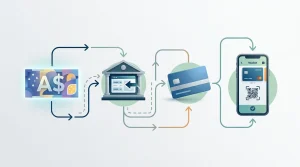
The payment chain starts outside the game. You acquire Bitcoin through a cryptocurrency exchange, using fiat currency to make the purchase. You then hold it in a wallet, which is software or a service used to manage Bitcoin and send transactions. To fund an account, the general process is to copy the receiving address supplied by the service and send Bitcoin to it. The payment passes through the Bitcoin network; what happens after that depends on the service’s handling of the deposit.
A specialist review describes Bitcoin deposits and withdrawals as near-instant compared with the waits associated with traditional banking. Treat that as a description of the payment method, not a promise about an individual transaction. A transfer on the network and an operator’s processing of a request are separate events, so the method alone cannot establish when an account will be credited or a withdrawal released.
Bitcoin can offer a degree of privacy relative to conventional payment methods, as a specialist review notes, but it is not the same as anonymity. A transfer is recorded on a public blockchain, and an exchange or service may request information about the account or transaction. Do not assume that paying in Bitcoin prevents identification or removes verification requirements.
The same specialist-review account characterises Bitcoin transaction fees as lower than those associated with conventional payment methods. Actual costs can vary; they are not a fixed saving. Bitcoin also has a specific risk: a transfer sent to an incorrect address is irreversible and generally unrecoverable. Check the address and amount before confirming any payment.
If you are considering real-money gambling, you must be at least eighteen. Bitcoin changes the payment route, not the nature of the activity or its risks. A payment feature cannot by itself establish that a service is safe, suitable, or able to resolve a dispute.
You can use Bitcoin to deposit with casinos that accept it, but the operators discussed are offshore, not Australian-licensed. Australian law prohibits locally licensed online casinos from offering real-money pokies to people in Australia, and Australian consumer protections do not apply to the offshore operators discussed.
Some operators discussed hold offshore licences, but that does not make them Australian-licensed or guarantee that a dispute will be resolved in your favour. Check what the licence covers, and do not treat it as Australian consumer protection.
You may be asked to complete further verification at your first withdrawal or after cumulative deposits reach AUD 2,000–5,000, depending on the operator. Crypto checks may include signing a message from your deposit address or showing a wallet screenshot of the transaction.