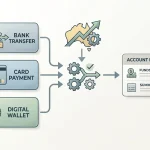
Payment availability varies by operator, and evidence for one method cannot establish support for another.

A search for an Australian casino that accepts PayID is a question about a specific payment method. Information about Amex cannot answer it: card acceptance and PayID support are separate capabilities. A casino may accept one, both or neither, and evidence for one method does not establish availability of the other.
The distinction matters because a payment option is not a general feature shared across every service. Acceptance depends on the operator’s arrangements and can differ between casinos. A claim that a casino takes Amex therefore says nothing, by itself, about whether its cashier offers PayID. The reverse is also true: a PayID claim cannot establish that Amex is accepted.
A specialist review reports that Amex deposits are available at some Australian online casinos, while other casinos do not accept Amex. These are limited statements about card acceptance, not a complete or permanent map of payment options. They do not identify a universal standard for Australian casinos, and they do not support a ranking of sites by payment access. Availability can change, so a description of a card option should not be treated as proof that the same option remains available at a particular service.
If you’re looking for a casino that accepts PayID in Australia, check that PayID is available in the cashier before depositing. The details below highlight what is known about each operator, but do not confirm PayID support.
Lucky Dreams
The listed minimum deposit is A$20 via POLi. The available details do not confirm PayID support.
DragonSlots Casino
DragonSlots Casino is listed with a Curacao Gaming Authority license through Jumpman Gaming Ltd. The available details do not confirm PayID support.
Wild Tokyo
Wild Tokyo has a listed minimum deposit of A$10, with crypto payouts stated at 30–60 minutes and fiat payouts at 1–5 days. The available details do not confirm PayID support.
MrPacho
MrPacho lists a minimum deposit of A$30, with crypto payouts stated at 30–120 minutes and fiat payouts at 24–72 hours. The available details do not confirm PayID support.
LevelUp Casino
LevelUp Casino is listed with a Curacao eGaming OGL/2023/174/0082 license through Dama N.V. and a minimum deposit of A$15. The available details do not confirm PayID support.
Playfina Casino
Playfina Casino is listed with a Curacao eGaming license through Hollycorn N.V., held since 2017, and a minimum deposit of A$20–30 depending on the offer. The available details do not confirm PayID support.
Roby Casino
Roby Casino is listed with a Curacao eGaming license through Roby Games Ltd. The available details do not confirm PayID support.
GoldenCrown
GoldenCrown is listed with a Curacao Gaming Control Board OGL/2023/176/0095 license through Hollycorn N.V. The available details do not confirm PayID support.
7Bit Casino
7Bit Casino is listed as operating under a Curacao license through Dama N.V. The available details do not confirm PayID support.
Kingmaker
Kingmaker lists a minimum deposit of A$30, with crypto payouts stated at about 90 minutes and fiat payouts at 1–5 days. The available details do not confirm PayID support.
That distinction is especially important when considering searches for a PayID casino or a mobile casino supporting PayID. The device does not change what the payment claim means: mobile access is not evidence of a particular transfer method. Nor does the word “Australian” in a service description establish that it accepts a payment method commonly associated with Australian bank-linked transfers. The claim must be specific to the method being discussed.
Amex evidence can still show why payment claims need to be read narrowly. If a source reports that some casinos accept the card and others do not, that variation demonstrates that acceptance is not automatic across the market. But it cannot be extended to PayID, a bank transfer, a wallet or any other method. Payment systems use different arrangements, and their availability has to be established separately.
The same limit applies to descriptions such as “best casino” or “best site” when the deciding feature is PayID. A general statement about a casino’s payment options is not enough to establish that it supports PayID. Likewise, the presence of Amex in a payment list does not provide a basis for recommending a service to someone specifically seeking PayID. A method-specific claim needs method-specific support; otherwise, the reader is left to infer something the claim does not say.
 Casinos That Accept POLi in Australia: What to CheckLearn how to verify whether a casino cashier lists POLi for Australian customers, and why deposit support alone does not confirm withdrawals…
 Bitcoin Casinos That Accept BTC in AustraliaLearn how Bitcoin deposits move from network detection to casino credit, and what to check about payments, withdrawals, bonuses and game rules.
Treat the terms precisely. “Accepts Amex” refers to a card option. “Accepts PayID” refers to a different payment option. “Accepts deposits” does not automatically describe other payment functions, and a reference to one method cannot be converted into evidence about another. Keeping those statements separate prevents a common error: taking a narrow card claim and reading it as a wider guarantee about how a casino can be funded.
For a reader focused on PayID, Amex information is therefore background only. It shows that card acceptance can vary among online casinos, but it cannot identify which services offer PayID or establish that any particular service does. The practical meaning is straightforward: do not substitute one payment method for another when interpreting a casino’s payment claims.
A payment label on a casino website is a claim about a particular service, not proof that the method will work for every customer. The cashier and the site’s terms are the relevant places to check what the operator says it supports. Even then, the wording needs to be read carefully: a method might be mentioned without being available to every account, or the claim may apply only to a particular transaction type.
That distinction matters when assessing PayID claims. A page that uses the word “PayID” does not, by itself, establish that you can deposit by PayID. Nor does it establish that the option is currently active, available to Australian customers, or supported for every account. Treat claims about PayID as unconfirmed unless the operator’s own current information clearly specifies the method and its conditions.
Start with who made the claim. A statement in an operator’s cashier or terms is different from a payment logo, an old article, or a third-party review. A review can be useful as a lead, but it may not reflect a current cashier setting. One specialist review has reported that Visa may be accepted more broadly at Australian online casinos than Amex; that is a limited, time-sensitive comparison, not a guarantee about any specific site and not evidence about PayID.
Look for precise language. “PayID accepted” could refer to a payment option offered under certain conditions, while a broad phrase such as “bank payments available” does not necessarily identify PayID at all. A logo may show that a payment brand is discussed or supported somewhere, but it does not explain eligibility, restrictions, or whether the method is available in the cashier. Avoid treating a vague phrase as an operational promise.
Check when and where the claim applies. Payment pages and terms can change, and a statement may relate to another country, a different product, or an earlier version of the service. The operator’s own current cashier and terms are more relevant than a copied description elsewhere, but their wording still needs to be specific enough to interpret. If the page does not clearly identify PayID and the circumstances in which it is available, the claim remains unclear.
A deposit method is only one part of a payment arrangement. A page that refers to a way to add funds does not automatically describe how other transactions are handled. Do not infer wider support from a single mention of a method, and do not assume that a payment logo means every function is available. Each claim should be read narrowly, according to what it actually says.
The same care applies to account conditions. Online casinos commonly ask customers to complete a Know Your Customer assessment before allowing financial transactions. That requirement is separate from whether a particular payment method is listed. A statement that a method is supported does not establish that an account has passed the operator’s checks or that a transaction will be permitted. Payment availability and account eligibility are distinct questions.
This is also why terms matter alongside the cashier. The cashier can indicate which options are presented to an account at a given time; the terms can explain conditions or restrictions attached to them. If those sources conflict, or if the wording leaves an important point unresolved, there is no sound basis for assuming the more favourable interpretation. A general promotional phrase should not override a narrower condition in the operator’s own rules.
“Best” is not a payment feature. It does not establish that a site offers PayID, that the option is currently accessible, or that its conditions suit a particular person. A ranked list can make an unverified claim look settled simply by repeating it across several entries. Repetition is not independent confirmation when the entries rely on the same description or outdated material.
A useful assessment is therefore narrower than a recommendation. Identify the exact statement, its source, whether it names PayID explicitly, and whether the operator’s current information supports that reading. If one of those points is missing, record the uncertainty rather than filling it with an assumption. This approach does not produce a dependable list of “best” PayID casino sites; it shows what can and cannot be concluded from a payment claim.
For a PayID-specific claim, the key test is directness: does the operator’s current information explicitly identify PayID as an available payment method for the relevant account and transaction? If not, terms such as “instant bank transfer” or “bank-linked payment” should not be treated as synonyms. The method’s name matters because different services can use different rails and conditions. A reader should not have to guess whether an unnamed option is PayID.
Keep a record of what the page actually states and when you checked it, especially if another page makes a broader promise. This is not proof that a transaction will succeed; it simply prevents a vague or outdated statement from being mistaken for a confirmed feature. Where the operator does not give a clear answer, the accurate conclusion is that the claim has not been established—not that the method is definitely available or definitely unavailable.
A payment flow is the sequence of choices and details required to submit a deposit. For an Amex deposit, the described sequence is straightforward: select Amex in the cashier, enter the card details and the deposit amount in Australian dollars, then submit the payment. Deposits made this way are processed instantly.
That sequence shows what the user is asked to do for this particular card method. It does not establish how a deposit via PayID works. The two methods should not be treated as interchangeable merely because both can be discussed as ways to pay. The Amex steps do not tell you whether a cashier offers PayID, what details a PayID transaction would require, or whether a casino accepts PayID deposits.
The distinction matters when you read a payment claim. A statement that a service supports deposits does not, by itself, describe the steps involved. A working payment flow has to identify the method in the cashier and provide a way to submit the transaction. For Amex, the stated steps include selecting the method, entering card information and an AUD amount, and submitting. Those details belong to the Amex process; they should not be transferred to a PayID casino deposit without direct information about PayID.
The amount is entered in AUD in the described Amex flow. That is a concrete detail about how this particular deposit is submitted, not evidence about the currency, instructions or fields that might appear for another method. Likewise, the fact that Amex deposits are processed instantly applies to Amex. It does not establish the processing time for a casino deposit via PayID.
A payment-method label and a complete payment flow also answer different questions. A label can indicate that a method is presented as an option; the sequence tells you what information the user must enter and what action submits the payment. Even then, the Amex example only describes the user-facing steps and stated processing speed. It does not provide a basis for assuming that another method uses the same screens or timing.
Amex Deposit Flow
Select Method
Select Amex in the casino cashier.
Enter Details
Enter the card details and the deposit amount in Australian dollars.
Submit
Submit the payment for instant processing.
If you are trying to understand a PayID deposit, the relevant details would be the PayID option and instructions shown for that method in the cashier. Do not infer those details from an Amex sequence. In particular, the Amex process does not reveal whether a PayID payment is initiated by entering card details, entering an amount in the same way, or following some other instruction. Those would be claims about PayID, not consequences of the card example.
This keeps the scope of the information clear: the described flow is for submitting an Amex deposit, with the amount entered in AUD and instant processing stated for that method. It explains neither the availability nor the mechanics of PayID. A casino with a PayID deposit would need to present PayID-specific information; the Amex steps alone cannot show that such an option exists or explain how it would work.
In Australia, the legal question and the payment question are separate. A website might describe a payment option, but that description does not determine whether the service may legally offer online casino gambling to people in Australia. Nor does a payment method, by itself, establish that a particular casino accepts it.
The Interactive Gambling Act 2001 makes it illegal for operators to provide real-money online casino games to people located in Australia. The prohibition covers casino-style services such as poker, table games and pokies. The Australian Communications and Media Authority (ACMA) oversees enforcement of the Act. Offshore availability or a payment page that appears accessible does not change the rule applying to operators.
The Act does not explicitly make an individual player’s use of an offshore site a criminal offence. That distinction is not an endorsement of offshore gambling or a guarantee that a service is lawful, reliable or accessible. The law places the prohibition on providing the service to people in Australia, while the treatment of the player is a separate issue. You should not read the absence of an explicit player offence as evidence that Australian consumer protections apply.
They do not: Australian consumer law does not protect players who use offshore casinos. If a dispute arises with an offshore operator, you cannot assume the protections available in a domestic consumer transaction will help you. A website’s claims, terms or payment instructions are not a substitute for those protections, and a familiar payment method does not make the operator a local service.
This is why claims about a casino that accepts PayID need careful interpretation. A claim about PayID is a statement about payment functionality; it is not proof that the operator is entitled to provide online casino games to Australian residents. Conversely, the legal status of online casino services does not establish whether PayID can be used on a particular payment page. The two questions have different answers and require different evidence.
For the payment question, a statement on a site would need to be checked against the operator’s own current information. Even then, it would establish only what the operator says about its payment arrangements, not the legal status of the gambling service. For the legal question, the relevant point is the rule in the Interactive Gambling Act: operators must not provide real-money online casino games to people in Australia. A PayID label, transfer instruction or claim in an advertisement cannot override that rule.
Legal Risk
The Interactive Gambling Act 2001 makes it illegal for operators to provide real-money online casino games to people located in Australia.
The distinction matters when a site presents itself as serving Australian customers or describes itself as an Australian casino. Such wording does not establish that it is an authorised domestic provider. A payment option may be mentioned without demonstrating either local authorisation or protection under Australian consumer law. Treating payment access as a sign of legal approval confuses a transaction mechanism with the rules governing the service.
Accordingly, there is no reliable legal conclusion to draw from a general claim that a casino takes PayID. That claim alone cannot confirm that PayID is available to you, and it cannot make an offshore online casino lawful for operators to offer in Australia. Keep the payment and legal questions distinct, and do not treat a payment method as evidence of consumer protection.
A payment method and a service’s content answer different questions. A payment option describes how money might be transferred; it does not tell you what the service offers, whether you can access it, or whether its operation is lawful in Australia. The same distinction applies to PayID: a reference to PayID, by itself, cannot establish what casino content is available or that a particular service accepts PayID.
Payment processing and content delivery are separate parts of an online service. The payment layer handles a transaction between accounts or payment providers. The content layer determines what the operator makes available to users. A connection between the two may exist in a service’s design, but one does not prove the other. For instance, a payment label cannot show which content is offered, and a description of content cannot show which payment methods a service supports.
That separation matters when interpreting phrases that link a payment method with casino games. The wording may sound as if PayID identifies a particular kind of game or determines what can be played. It does neither. PayID is a payment term, not a category of casino content. Nor does a payment option establish that a service is available to people in Australia.
The legal position is also separate from payment functionality. Under the Interactive Gambling Act 2001, operators must not provide real-money online casino services to people physically located in Australia. The Australian Communications and Media Authority is responsible for enforcing the Act. The prohibition concerns the operator’s provision of the service; it is not changed by the payment channel used. A bank-linked transfer, card, wallet or other method cannot make a prohibited service lawful.
This distinction does not mean that a payment label proves a transaction will be processed. Payment availability and the content or legality of a service are independent matters, and each would require separate assessment. In particular, a reference to PayID is not evidence that PayID casino payments are accepted, and it cannot establish anything about the content offered by a service.
Consumer Protection
Australian consumer law does not protect players who use offshore casinos, regardless of the payment method used.
Australian consumer law does not protect players who use offshore casinos. The fact that a site is reachable, displays a payment option or describes its content does not create that protection. The law’s restriction on operators also remains in place regardless of how a payment is described.
For a reader, the practical boundary is simple: do not infer game availability from payment information, or payment acceptance from descriptions of casino content. A payment method is not a catalogue, and a catalogue is not proof of a working payment route. Neither can be used as a substitute for the other, and neither overrides the Australian legal position.
In Australia, contactless payments are a familiar part of everyday spending. Credit and debit cards with contactless capability are accepted almost everywhere, and mobile wallets such as Google Pay and Apple Pay are also widely accepted. This describes the broader payment environment; it does not establish that a particular online service accepts any of these methods.
Many consumers are also comfortable moving between cards, mobile wallets and services connected to bank accounts, including PayPal. That familiarity can make different payment types feel interchangeable in everyday use, but the underlying systems are not the same. A card payment, a wallet payment and a bank-linked service can each involve different providers, checks and conditions.
PayID belongs in a separate consideration from general familiarity with bank-linked payments. Knowing that Australians use bank-connected services does not show that an online casino offers PayID, or that a payment made through one such service would be processed as a PayID transaction. The method needs to be identified specifically rather than inferred from broad descriptions such as “bank transfer” or “instant payment”.
This distinction matters when you are trying to establish whether a service supports PayID. A payment option being common in Australia does not make it available in every online setting. Likewise, a service’s ability to accept cards or mobile-wallet payments says nothing by itself about whether it supports bank-linked payments. Each method is a separate capability.
The same caution applies when a payment brand appears in general information about Australian spending. Broad acceptance in shops and other everyday settings is not evidence of acceptance by an online gambling service. You need service-specific information to establish what is offered; general payment habits cannot fill that gap.
Australian payment habits provide useful context: people are accustomed to contactless cards, mobile wallets and bank-linked services. But familiarity describes what consumers use across the market, not which payment routes an individual site has enabled. Treating those as separate questions avoids mistaking a familiar payment environment for confirmation of a particular PayID option.
A payment method can work in one direction without being available in the other. Depositing moves funds from your card or account to the casino; withdrawing requires the operator to send funds through a route it permits for payouts. The cashier may therefore show a method for deposits while its withdrawal rules exclude that same method.
Attention: A method available for deposits may be excluded from withdrawal rules or may require a prior deposit to be used for payouts.
For Amex, a specialist review reports that a player must have deposited with Amex before using it for a casino withdrawal. That prior-deposit condition does not, by itself, guarantee that Amex will be available when you request a payout: the same type of review notes that not all Australian online casinos permit withdrawals to Amex. The practical distinction is between having used a method and being eligible to receive funds through it. The operator’s current cashier and withdrawal terms determine what applies to an account.
The reported processing time also differs from a deposit. A specialist review says an Amex casino withdrawal can take up to five days to clear. Treat that as a reported timeframe, not a promise for every operator or transaction. A payout may be subject to the casino’s own processing and eligibility rules, so the time associated with a card deposit cannot be used to predict how quickly winnings will arrive.
This distinction matters when assessing claims about a casino withdrawal through PayID. A payment label on a deposit page would not establish that the same route can receive withdrawals, nor would it establish that a payout is instant. Deposit availability, withdrawal eligibility and processing time are separate details; each needs to be stated for the relevant method.
Before relying on a payment option, check the withdrawal information as well as the deposit information. Confirm whether the method is listed for payouts, whether a prior deposit through it is required, and what timing the operator gives. If the cashier and terms do not clearly match, do not infer that a deposit method can also be used to withdraw.
A payment option shown in a casino’s materials does not, by itself, establish that a real-money transaction will be available to you. Account checks and the payment provider’s rules can affect whether a transaction proceeds. A claim about PayID acceptance should not be treated as confirmation of a working deposit or withdrawal route unless the service’s current terms and cashier support it.
Identity checks are a separate part of the process. Online casinos commonly ask customers to complete a Know Your Customer assessment before carrying out financial transactions. This check concerns the customer’s identity; it does not prove that a particular payment method is accepted, nor does acceptance of a deposit method establish that withdrawals can use it.
Amex illustrates how a transaction can be interrupted outside the casino’s cashier. Australian banks may block gambling-related Amex payments at the issuer level. As a result, a payment option could appear in a casino’s information while a transaction is still declined by the bank that issued the card. The cashier’s display and the issuer’s decision are distinct parts of the payment chain.
Keep those checks separate when evaluating claims about PayID: verify what the operator says it supports, whether the relevant transaction is available in its cashier, and what account checks apply. A general statement that a casino accepts a method does not answer every question about access to real-money transactions. It also does not establish that PayID is accepted for deposits, withdrawals, or a promotion.
Do not infer a PayID route from information about Amex, bank-linked services, or identity verification. These describe different parts of the process. Where a claim is unclear, the useful distinction is between an advertised option, a method actually presented for the transaction, and a payment that the issuer allows to proceed.
A card payment can fail before the operator records a deposit. A specialist review reported that Amex may block payments to a particular website. If that happens, submitting the card details does not make the transaction complete: the issuer’s decision can prevent the payment from going through. A declined transaction is therefore not, by itself, proof that the card details were entered incorrectly.
The same review described possible charges, but its figures should not be treated as universal terms. It reported that a casino may add a 1.5% surcharge to Amex transfers. A separate general statement in specialist coverage is that Amex deposits often carry no fee, while charges depend on the casino and withdrawals may incur fees. Those points can coexist: a charge may depend on the operator and transaction, so a broad claim that deposits are free does not settle the cost at a particular service.
Before any payment is authorised, the amount shown at checkout matters. A surcharge can change the total charged from the amount you intended to deposit. The relevant comparison is the displayed transaction total against the amount entered, along with any fee wording shown before submission. If a payment is declined, the transaction has not necessarily reached the stage where an operator-side charge would apply; the issuer’s response and the operator’s terms affect different parts of the process.
These Amex examples do not establish how a PayID transfer behaves. A bank-linked payment and a card transaction are different routes, so an issuer’s card decision or an Amex surcharge cannot be used to predict whether a PayID payment will be accepted or completed.
For any payment service, distinguish a successful submission from a completed transaction, and distinguish the payment amount from any fee added to it. The displayed terms are the practical reference for the specific transaction; broad descriptions of a method cannot replace them.
A payment method and a promotion are separate features. A reference to PayID alongside a casino offer does not, by itself, show that using PayID qualifies you for a bonus. The connection needs to be stated in the offer’s own terms; otherwise, the two details may simply appear together without one causing the other.
Read promotional wording as a set of conditions, not as a headline. Check whether the offer explicitly names PayID, who can qualify, and what action is required. Also distinguish a deposit offer from a no-deposit offer: the labels describe different eligibility conditions, and neither label proves that a particular payment method is involved.
Pay attention to the difference between “PayID accepted” and “bonus available.” The first is a claim about a payment option; the second is a claim about an incentive. Neither statement establishes the other. Even where promotional text mentions both, the written terms determine whether the payment route is actually a condition.
Treat vague phrases such as “PayID bonus” as incomplete until the conditions are clear. A headline may omit restrictions or use broad wording that does not match the detailed rules. Do not assume that an offer applies to every customer, every transaction, or every payment option merely because the page places those ideas together.
Promotions can also have requirements unrelated to how a deposit is made. The payment label alone cannot tell you whether an offer is available to you or what obligations it carries. If the terms do not clearly explain the relationship between the payment method and the promotion, do not rely on the headline to fill in the gap.
This distinction matters because a bonus is not a feature of PayID itself. It is a separate promotional claim, with its own conditions and eligibility. Treating the two as interchangeable can lead you to misunderstand what an offer requires.
Check the casino’s current cashier and payment terms for American Express. If it is offered, select it there, enter your card details and deposit amount in AUD, then submit the payment.
Yes, at casinos that accept American Express, but gift cards can be used for deposits only.
Check whether American Express is listed in the casino’s current cashier and terms. Jackpot City Casino, Spin Palace, Ruby Fortune, Ignition Casino, Joe Fortune and PlayAmo are listed as accepting Amex deposits for Australian players.
Some casinos do not accept Amex, and Amex or your Australian bank may block gambling payments to a particular website. Check the casino’s cashier and contact your card issuer if the method is listed but the payment is declined.
Amex casino deposits are processed instantly. Withdrawals to Amex can take up to five days to clear, and may require you to have deposited with Amex first.
Yes, some Australian online casinos accept Amex deposits, but not all do. The cashier should show whether it is available at the casino you use.
Amex deposits typically have no fee, but a casino may add a 1.5% surcharge, and currency conversion can incur a 3% fee. Withdrawal fees may also apply.