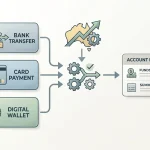
Card availability can vary by brand, account and transaction, and a deposit method may not be available for withdrawals.

A claim about one card brand cannot establish acceptance of another. A specialist review reports that some Australian online casinos accept Amex deposits, but that statement concerns Amex alone. It does not show that the same casinos accept Mastercard, or that any particular Australian online casino accepts Mastercard.
That distinction matters because “card accepted” is not a single, universal status. A payment method may be shown in a cashier for one brand and not another. Even where a casino supports one card type, you cannot infer support for Mastercard from that fact. Nor does a general reference to card deposits answer whether Mastercard is available for a particular account or transaction.
For someone looking for an Australian online casino that accepts Mastercard, the key point is therefore narrow: the Amex claim does not provide a verified Mastercard match. It cannot support a list of Australian sites that accept Mastercard, a ranking of the best options, or a claim that Mastercard is accepted for mobile casino payments. Those are separate claims and should not be treated as interchangeable with Amex acceptance.
If you’re looking for casinos that accept Mastercard in Australia, check each casino’s cashier before depositing: the details available here do not confirm Mastercard acceptance. Use these entries as a starting point and consider the stated licensing, deposit and payout details.
Lucky Dreams
You’ll find a stated minimum deposit of A$20 via POLi. The available details list a Curacao license but do not confirm Mastercard acceptance.
DragonSlots Casino
You’ll find a licensing detail for DragonSlots Casino: it is licensed by the Curacao Gaming Authority and operated by Jumpman Gaming Ltd. The available details do not confirm Mastercard acceptance.
Wild Tokyo
You can deposit from A$10, with stated payouts taking 30–60 minutes for crypto and 1–5 days for fiat. Wild Tokyo is listed as Curacao-licensed; Mastercard acceptance is not confirmed.
MrPacho
You can deposit from A$30; stated payout times are 30–120 minutes for crypto and 24–72 hours for fiat. The available details do not confirm Mastercard acceptance.
LevelUp Casino
You’ll find a stated minimum deposit of A$15 and a Curacao eGaming OGL/2023/174/0082 license held by Dama N.V. Mastercard acceptance is not confirmed in the available details.
Playfina Casino
You’ll find a stated minimum deposit of A$20–30, depending on the offer. Playfina Casino is listed as licensed by Curacao eGaming, with Hollycorn N.V. since 2017; Mastercard acceptance is not confirmed.
Roby Casino
You’ll find a licensing detail for Roby Casino: it is listed as licensed by Curacao eGaming, with Roby Games Ltd. The available details do not confirm Mastercard acceptance.
GoldenCrown
You’ll find a licensing detail for GoldenCrown: it is listed under Curacao Gaming Control Board OGL/2023/176/0095, with Hollycorn N.V. Mastercard acceptance is not confirmed in the available details.
7Bit Casino
You’ll find a licensing and operator detail: 7Bit Casino is listed as Curacao-licensed and operated by Dama N.V. The available details do not confirm Mastercard acceptance.
Kingmaker
You can deposit from A$30; stated payouts take about 90 minutes for crypto and 1–5 days for fiat. Mastercard acceptance is not confirmed in the available details.
The same applies to wording such as “Australian pokies that accept Mastercard.” A page or statement about Amex deposits may sound relevant because both are card brands, but it establishes only what it says about Amex. It does not tell you whether Mastercard appears as a payment option, whether the option applies to Australian customers, or whether it is available in the cashier at the time you check. Adding a location or device to the wording does not change the underlying distinction: evidence about Amex is not evidence about Mastercard acceptance.
This also limits what can be said about “best” or “new” Mastercard pokies in Australia. Those descriptions imply that particular casinos have been checked against Mastercard-specific criteria. An Amex deposit claim does not establish that comparison. It provides no basis for naming a best Mastercard casino, identifying a newly available Mastercard option, or treating a group of casinos as a confirmed selection. Naming operators in that context would turn an unverified payment claim into a recommendation.
A careful reading separates three ideas: that a specialist review has reported Amex deposits at some Australian online casinos; that an individual casino accepts Mastercard; and that Mastercard is available to a particular customer. The first is a limited, time-sensitive report. It cannot establish the second or third. Moving from one to another would require a separate Mastercard-specific basis, rather than an assumption that card brands work alike.
 Casinos That Accept MiFinity in AustraliaLearn how to verify MiFinity in a casino cashier, compare payment claims, and distinguish deposit availability from withdrawal support for Australian accounts.
 Casinos That Accept POLi in Australia: What to CheckLearn how to verify whether a casino cashier lists POLi for Australian customers, and why deposit support alone does not confirm withdrawals…
The distinction is especially important when a claim uses broad wording such as “accepts cards.” That phrase may leave the card brand unstated. It should not be read as confirmation of Mastercard unless Mastercard itself is named and the claim applies to the relevant casino and market. Likewise, an Amex reference cannot be recast as a Mastercard claim simply because both appear under a card-payment heading.
So the defensible scope is limited: a specialist review has reported Amex deposit availability at some Australian online casinos. That statement should not be expanded into a claim about Mastercard, a named-site list, or a “best” selection. For Mastercard specifically, the Amex report gives no operator-level confirmation. It offers no sound basis for concluding that an Australian casino accepts Mastercard, either on desktop or on mobile.
This is not a technical distinction in wording. It changes what a reader can reasonably conclude. If a statement names Amex, its subject is Amex. If the question concerns Mastercard, the statement does not answer it. Treating those as equivalent would create confidence without establishing the card brand in question.
A card deposit has two separate parts: the details entered in the cashier and the payment’s handling after submission. For an Amex deposit, the stated process is to choose Amex as the payment option, enter the card details and deposit amount in Australian dollars, then submit the payment. That describes an Amex transaction; it should not be treated as confirmation of how a Mastercard deposit works or whether a particular cashier supports Mastercard.
Amex Deposit Process
Selection
Choose Amex as the payment option in the cashier.
Details
Enter the card details and the deposit amount in Australian dollars.
Submission
Submit the payment for processing.
The amount is entered in AUD, but the currency shown at that step does not by itself settle every cost question. A fee may depend on the casino, and a specialist review reports that Amex deposits are typically fee-free while noting that charges can vary. Treat that as a qualified description, not a fixed rule for every transaction. Before submitting any card payment, check the cashier’s displayed terms and the card issuer’s conditions. If a fee is stated, the relevant question is whether it applies to the deposit itself, rather than to a different transaction.
Amex casino deposits are described as processing instantly. In practical terms, this concerns the deposit transaction: it is processed without a stated waiting period. It does not establish that every card payment will be approved, nor does it mean that all card brands follow the same timing. A processing description is not a promise about a specific transaction’s outcome.
It is also useful to distinguish processing from the information shown before submission. The cashier presents a payment method and asks for the required card and amount details; submitting those details initiates the transaction. The stated instant processing time applies to Amex deposits, not automatically to Mastercard deposits. A reader comparing the two should avoid assuming that a shared label such as “card” makes the payment route, fee treatment or timing identical.
For Mastercard, the same care applies to statements about a small deposit, including a deposit described as $10. The amount alone does not establish that Mastercard is accepted, that the transaction will be processed instantly, or that no fee applies. Those points depend on the payment option and terms actually presented for the transaction. Do not infer them from an Amex description.
A fee can arise independently of the time taken to process a deposit. The specialist review’s description of Amex deposits as typically having no fee is qualified: it also notes that fees depend on the casino. That distinction matters because “no fee” should not be read as a universal condition attached to the card brand. The payment method, the casino’s terms and the transaction being made all need to be considered.
The fee information should be checked before the payment is submitted, when the cashier displays the applicable terms. If the amount entered is in Australian dollars, that alone does not prove that every part of the payment will be treated without charge. Nor does an Amex fee description establish Mastercard’s fee arrangements. Card-brand terms should be read as distinct rather than carried over from one method to another.
A clean comparison therefore separates three questions: which card method is offered, how that method is processed, and what fee conditions apply. A statement about one of these does not answer the others. An Amex deposit’s reported instant processing does not confirm Mastercard processing speed; a reported absence of an Amex deposit fee does not establish that Mastercard is fee-free; and a cashier’s display of a card option is not, by itself, a statement about costs beyond the terms shown for that transaction.
When you review a payment screen, focus on the selected method, the amount and currency requested, and any fee notice before submission. Keep those details tied to the payment route displayed rather than assuming that all card deposits behave alike. For Amex, the described steps are selection in the cashier, entry of card details and an AUD amount, then submission; the deposit is described as processing instantly, while fee treatment can vary. Mastercard-specific timing and fee conditions cannot be derived from those Amex details.
A statement that a casino accepts cards does not identify which card brands it accepts. Visa, Mastercard and American Express are separate payment options, so evidence about one cannot establish acceptance of another. If you are checking whether a casino site takes Mastercard, a comparison involving Visa and Amex does not answer that question.
A specialist review has reported that Visa may be accepted more broadly at Australian online casinos than Amex. That is a limited, time-sensitive comparison between those two brands. It should not be treated as a confirmed market-wide pattern, and it says nothing about Mastercard’s coverage. In particular, it does not show that Mastercard is more widely accepted than Amex, less widely accepted than Visa, or supported by any specific casino.
This distinction matters because payment claims can sound more comprehensive than the information behind them. “Card payments are accepted” could describe one card brand, several brands, or a general category without specifying the options available to a particular customer. Likewise, a comparison between two brands should not be read as a complete account of every card option. The safe interpretation is the narrow one: the reported comparison concerns Visa and Amex only.
To decide whether an acceptance statement answers your question, check what it actually names. A useful claim about Mastercard should identify Mastercard directly rather than using a broad label such as “cards” or relying on a comparison with Visa or Amex. If the brand is not named, the claim leaves the central point unresolved.
The wording also needs to distinguish the activity being described. A reference to a payment method may concern a deposit, a withdrawal, or both. Those are not interchangeable claims. If the question is whether you can fund an account with Mastercard, a statement about card payments in general does not tell you whether Mastercard is included. If the question concerns a withdrawal, deposit acceptance alone does not answer it either.
This is a way to read claims precisely, not a suggestion that any particular site supports a particular route. The same discipline applies to phrases such as “Mastercard casino” or “casino sites that take Mastercard”: the words are meaningful only if they refer to a current, explicit statement about Mastercard, rather than a generic card label.
A reference to a payment method may concern a deposit, a withdrawal, or both; these are not interchangeable claims.
A comparison can support a conclusion only within the brands it compares. If a specialist review says Visa may be more broadly accepted than Amex, that gives a relative claim about Visa and Amex. Mastercard is outside that comparison. It cannot be placed between them, grouped with one of them, or assigned a level of acceptance from that statement.
The same limit applies to claims about a “best” Mastercard casino or a site described as ideal for Mastercard users. Such descriptions require evidence that directly establishes Mastercard acceptance and supports the particular judgement being made. A Visa-versus-Amex comparison does neither. Without direct support, ranking or recommending sites would turn a narrow observation into a broader claim.
The word “best” adds another issue: it implies that options have been assessed against some standard. Card acceptance alone would not explain what that standard is. A claim might be about availability, ease of use, or another feature, but none follows from the reported comparison. Treating a brand comparison as a recommendation would therefore go beyond what it establishes.
Separate each statement into three questions: which brand is named, what transaction is covered, and how broad the claim is. Here, the named brands are Visa and Amex; the comparison is about relative acceptance; and the wording is cautious rather than a guarantee about every site. Mastercard is not named in that comparison, so no Mastercard-specific conclusion follows.
That does not prove Mastercard is unavailable. It means only that this comparison cannot establish availability. Avoid both directions of overstatement: do not infer acceptance from silence, and do not infer non-acceptance from silence. A direct, current statement naming Mastercard is needed to support either conclusion about a particular site.
A withdrawal has two separate questions: whether the casino permits payment to a particular route, and how long an approved transaction takes to clear. A route being available for deposits does not, by itself, establish that it can receive withdrawals. Likewise, a stated clearing time only describes a route where the withdrawal is allowed; it does not confirm that every casino offers it.
For American Express, a specialist review reports that withdrawal availability differs between Australian-facing casino services: some may not allow winnings to be sent to an Amex card. The same type of review describes Amex withdrawals as taking as long as five days to clear. Treat that timing as a reported estimate, not a standard that applies to every operator or transaction. The casino’s own cashier and withdrawal terms determine whether the route is offered and what timing it quotes.
The distinction matters when you compare a card’s deposit function with its withdrawal function. A card shown in a cashier for adding funds is not necessarily a route for receiving funds. Before relying on a card for a payout, check the withdrawal options separately and confirm whether the card brand and account are eligible. If the cashier does not offer the route, a fast clearing estimate for that route is irrelevant: there is no permitted transaction to time.
Attention: A card shown in a cashier for adding funds is not necessarily a route for receiving funds.
“Instant withdrawal” can also describe different points in the process. It might refer to how quickly a casino handles a request, while clearing refers to when the funds reach the destination and become available. Those are not interchangeable measures. A request that is handled promptly can still take longer to clear, and a route’s advertised speed cannot override the casino’s rules about which destinations it accepts. For Amex, the reported clearing estimate is not a promise that a request will be approved or completed within that period.
When checking a withdrawal route, read the cashier information for the specific transaction rather than relying on a general payment-method label. Confirm whether the card is listed for withdrawals, whether any route-specific conditions apply, and what the stated clearing period means. If the wording only describes deposits, it does not establish withdrawal eligibility. If the casino lists a withdrawal route but gives a separate processing or clearing estimate, keep those stages distinct when judging how soon funds may be usable.
Do not infer a Mastercard payout time from a card’s acceptance for deposits, from the performance of another card brand, or from a general claim of instant withdrawals. A payment method’s name alone does not tell you whether a casino permits it for payouts or how long funds would take to clear. The useful comparison is the specific route and timing stated for the transaction you are considering, with permission and clearance treated as separate conditions.
A payment card’s technical ability to send money does not determine whether the service receiving it may lawfully offer online casino gambling in Australia. The Interactive Gambling Act 2001 prohibits operators from providing real-money online casino games to people located in Australia. This applies to casino-style services offered over the internet, including when an operator is based overseas. A Mastercard logo or a successful card transaction would not change that legal position.
The Act is directed at the service provider, not at making an Australian player’s use of an offshore site an explicit criminal offence. That distinction matters: the fact that players are not expressly criminalised does not mean offshore casino services are lawful to offer, locally regulated or protected by Australian consumer rules. Nor does it make a particular casino site an approved or safe place to pay.
The Australian Communications and Media Authority (ACMA) administers enforcement of the Act. Its role is to act against prohibited interactive gambling services, including offshore services that offer online casino games to people in Australia. Offshore availability should therefore not be mistaken for local authorisation. A website may be accessible, or may display payment methods in its cashier, without having permission to provide casino gambling to Australians.
Australian consumer law does not protect players who use offshore casinos. If a dispute arises over a payment, account balance or the handling of funds, you cannot assume that Australian consumer protections or local complaint processes will apply to the overseas operator. The operator’s location and the jurisdiction governing its terms may affect what remedies are available. A payment card network is not a substitute for those protections, and its involvement does not make the underlying gambling service locally regulated.
Legal Prohibition
The Interactive Gambling Act 2001 prohibits operators from providing real-money online casino games to people located in Australia.
This is relevant when you encounter claims about casinos accepting Mastercard in Australia. A listed payment option describes a possible transaction route; it does not establish that the operator may lawfully provide online casino services to Australian residents. Likewise, a card payment being accepted by an issuer or processed by a merchant does not establish regulatory approval. Payment availability and legal status are separate questions.
For an Australian resident, the legal issue is therefore not resolved by comparing card brands or finding a cashier that displays Mastercard. The relevant distinction is between a payment mechanism and the operator’s authority to offer the service. Under the Interactive Gambling Act 2001, operators may not provide real-money online casino games to people in Australia, while ACMA is the regulator responsible for enforcing that restriction. The absence of explicit criminal liability for players does not turn offshore casino use into a locally protected consumer transaction.
Before an online casino processes a financial transaction, it may require you to complete a Know Your Customer (KYC) assessment. This is an account-level check: it concerns the customer associated with the account, rather than the card brand selected for a payment. Mastercard details alone therefore do not establish that the account has completed the required assessment.
The order matters. A payment attempt and a KYC assessment are separate parts of the process. If the assessment is required but remains incomplete, the transaction may not be ready to proceed. Completing the account check addresses that condition; it does not, by itself, determine whether a particular payment method is available or whether a payment will be accepted.
This distinction helps explain why entering payment details is not the only step that can affect a transaction. A cashier can present a payment option, but the account may still need to pass the operator’s customer checks before financial activity can continue. Treating these as separate checks avoids assuming that a visible Mastercard option means the account is cleared for a transaction.
KYC is often used as shorthand for identity and customer verification. The exact assessment can depend on the operator, so you should not assume that every service asks for the same information or follows an identical process. The important point is the timing: the check can be required before financial transactions, not merely after a payment has been attempted.
If a transaction does not proceed, the account’s verification status is one possible part of the explanation. That is different from a card being unsupported or a payment being rejected for another reason. Looking at the account status and the transaction status separately can help you identify which stage needs attention, without treating every unsuccessful payment as a Mastercard problem.
For Australian readers, this explanation is about how an account check may affect a transaction; it is not an endorsement of offshore online casino services. Australian law prohibits operators from providing real-money online casino games to people in Australia. KYC completion does not change that legal position, and it should not be read as evidence that a service is authorised to operate locally.
If a KYC assessment is required but remains incomplete, the transaction may not be ready to proceed. Completing the account check addresses that condition but does not determine if a specific payment method is available.
Everyday payment habits provide useful context for understanding why a card brand alone does not describe the full range of ways Australians pay. Contactless credit and debit cards are accepted almost everywhere in Australia. That makes tapping a physical card a familiar option across many kinds of purchases, but it does not establish whether a particular online service accepts Mastercard or any other card.
Mobile wallets are also widely encountered. Google Pay and Apple Pay are accepted almost everywhere in Australia, allowing consumers to make payments through a phone or another compatible device rather than presenting a physical card. A wallet may draw on a payment card, but using the wallet is a distinct payment route from entering card details directly. Acceptance of a wallet therefore should not be treated as proof that every card brand can be used through it, or that a service accepts the underlying card when presented separately.
Australians are comfortable moving among cards, mobile wallets and services linked to banks, including PayPal. The choice can depend on which method is available at the point of payment and how the consumer prefers to complete the transaction. This flexibility is part of the wider payment landscape; it does not make the methods interchangeable. Each route still depends on the service supporting it.
That distinction matters when you are trying to understand whether an Australian online casino accepts Mastercard. General familiarity with contactless cards, or broad acceptance of mobile wallets in everyday settings, cannot answer that specific question. Nor does the fact that consumers use bank-linked services show that a casino supports those services. The relevant method must be identified directly rather than inferred from a broader pattern of Australian payment use.
In practical terms, Australia’s payment habits mean you may encounter several ways to pay, not that every merchant or online service offers all of them. A physical card, a mobile wallet and a bank-linked service each represent a separate route. Treating them separately keeps general payment familiarity from being mistaken for confirmation of Mastercard acceptance at an individual service.
A card appearing as a deposit option does not, by itself, establish that the same card can receive a withdrawal. The two transactions have separate rules: a cashier may accept a card for incoming funds while restricting which routes can be used to return funds.
For Amex, a specialist review describes a prior-deposit condition: a player must have deposited with that card before requesting a withdrawal to it. This is a route-eligibility rule, not a guarantee that every withdrawal can be sent back to the card. A casino may not offer Amex withdrawals at all, so the deposit and withdrawal rules need to be considered separately.
For American Express, some services may require a player to have deposited with the card before requesting a withdrawal to it.
That condition should not be treated as evidence about Mastercard. The Amex information does not establish whether a casino supports Mastercard withdrawals, whether it requires a previous Mastercard deposit, or whether a card deposit can be paid out through another route. Brand names are not interchangeable in payment rules. A claim about one card cannot reliably answer what happens with another.
Limits are also set at the individual casino level. A specialist review reports that Amex deposit and withdrawal limits can vary between online casinos; it does not establish a shared limit for the market. A deposit cap and a withdrawal cap may be separate conditions, so knowing one does not determine the other. Nor does a card’s presence in the cashier tell you what those limits are.
For any payment route, the relevant details are the permitted withdrawal methods, any prior-deposit condition, and the separate limits that apply to deposits and withdrawals. These rules should be read as distinct requirements rather than inferred from a card logo or from another operator’s policy. In particular, an Amex-specific condition cannot confirm the availability or eligibility rules of a Mastercard withdrawal.
A card payment can fail outside the casino cashier. The cashier may offer a card option, but the card issuer can still refuse the transaction. That distinction matters when you are trying to work out why a payment did not go through: seeing a card brand listed does not mean the issuer has approved a particular gambling payment.
Australian banks may block gambling-related transactions made with Amex at the issuer level. In that case, the refusal comes from the bank’s decision about the transaction, rather than from a problem entering card details in the cashier. Repeated attempts may not change the outcome if the issuer is applying a block. Contacting the bank is the direct way to ask whether it has declined the payment.
A separate restriction can come from the payment network. A specialist review has reported that Amex may block payments to a particular website, which could result in a declined deposit even when the player’s card details are correct. This is different from an issuer-level block: the restriction described is associated with the network and a particular website, rather than the bank’s general handling of gambling transactions.
These examples concern Amex. They do not provide a basis for assuming that Mastercard payments are blocked in the same way, or that a Mastercard transaction will succeed whenever the cashier displays that option. The relevant decision can depend on the card brand and the parties handling the transaction. If a payment is declined, check whether the refusal came from the issuer or another payment intermediary before treating it as a cashier error.
A payment card and a casino promotion are separate parts of a transaction. The fact that a cashier lists a card as a deposit option would not, by itself, show that a bonus is available for deposits made with that card. Promotion eligibility can depend on the operator’s own terms, so the card brand alone is not a reliable guide.
Treat claims about a Mastercard-linked casino bonus with care. Before relying on an offer, read its current terms on the operator’s website and check whether the promotion names Mastercard deposits as eligible. Pay attention to any stated conditions, exclusions and expiry rules; do not assume they match those for other payment methods. If the terms do not clearly cover the card and transaction you intend to use, the offer should not be treated as confirmed.
This distinction also prevents a common inference: an advertised welcome offer does not mean every deposit method qualifies, and a listed payment method does not imply that a promotion accompanies it. The terms need to connect the offer to the relevant payment method explicitly.
A bonus should not influence a payment decision unless its eligibility and conditions are clear.
Limits are set by each casino and can vary. Check the cashier or the casino’s payment terms for the deposit and withdrawal limits that apply to you.
Check the casino’s cashier for American Express as a deposit option. Jackpot City Casino, Spin Palace, Ruby Fortune, Ignition Casino, Joe Fortune and PlayAmo are among the operators listed as supporting Amex deposits for Australian players.
Amex deposits are typically free, but a casino may charge a surcharge, and a currency conversion fee may apply. Withdrawal fees can also apply, so check the cashier’s terms before making a transaction.
Yes, some Australian online casinos accept Amex deposits. Acceptance varies by casino, and some Australian banks may block gambling-related Amex transactions.
Amex deposits are typically free, but a casino may charge a surcharge, and a currency conversion fee may apply. Withdrawal fees can also apply, so check the cashier’s terms before making a transaction.
A casino may not accept Amex, or Amex or your Australian bank may block payments to a particular gambling website. Check the casino’s cashier and contact your card issuer if the payment option is available but your deposit is declined.
You may need to complete the casino’s Know Your Customer assessment before making financial transactions. Follow the casino’s verification instructions.