Common card and wallet use does not confirm Paysafecard support, while offshore status and withdrawal routes require separate checks.

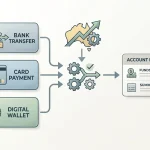
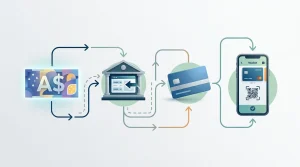
In Australia, familiar payment options can make a cashier look straightforward to interpret. Contactless credit and debit cards are accepted almost everywhere in the country, and mobile wallets such as Google Pay and Apple Pay are also widely accepted. People are comfortable moving between cards, mobile wallets and bank-linked services such as PayPal. That describes everyday payment habits; it does not show which methods a particular online gambling service accepts.
The distinction is between a payment method being common in the wider market and a specific merchant making that method available. A card accepted at many shops does not automatically work at every online service. The same applies to a mobile wallet or a bank-linked service: familiarity and broad use do not establish that a particular cashier supports it. Paysafecard cannot be inferred from the popularity of those other options either.
This matters because payment methods can look interchangeable when they appear together in a list, even though each one is a separate route. A consumer might use a card for one transaction, a mobile wallet for another, and PayPal for a service linked to a bank account. Those habits show that Australians are accustomed to having choices. They do not show that a cashier offers every familiar option, or that availability of one option predicts availability of another.
If you’re looking for casino sites that accept paysafecard in Australia, use this list as a starting point and check each site’s cashier for current payment options. The details below highlight the licensing or payment-related information available for each operator.
Lucky Dreams
Lucky Dreams lists a minimum deposit of A$20 via POLi. Its listed license is Curacao.
DragonSlots Casino
DragonSlots Casino is listed under the Curacao Gaming Authority, with Jumpman Gaming Ltd as the named operator.
Wild Tokyo
Wild Tokyo lists a minimum deposit of A$10. Its stated payout times are 30–60 minutes for crypto and 1–5 days for fiat, and it lists a Curacao license.
MrPacho
MrPacho lists a minimum deposit of A$30. Its stated payout times are 30–120 minutes for crypto and 24–72 hours for fiat.
LevelUp Casino
LevelUp Casino lists a minimum deposit of A$15. Its stated license is Curacao eGaming OGL/2023/174/0082, held by Dama N.V.
Playfina Casino
Playfina Casino lists Curacao eGaming licensing through Hollycorn N.V., dating from 2017. Its minimum deposit is A$20–30, depending on the offer.
Roby Casino
Roby Casino lists a Curacao eGaming license, with Roby Games Ltd named in connection with it.
GoldenCrown
GoldenCrown lists a Curacao Gaming Control Board license, OGL/2023/176/0095, held by Hollycorn N.V.
7Bit Casino
7Bit Casino is listed as a Curacao-licensed casino operated by Dama N.V.
Kingmaker
Kingmaker lists a minimum deposit of A$30. Its stated payout times are about 90 minutes for crypto and 1–5 days for fiat.
Contactless acceptance also has a specific meaning. It describes how a card or supported device can be presented for a payment in settings that accept contactless transactions. It is not a general statement about all online payments. An online cashier is a different point of payment, and its displayed options depend on what that service makes available. So the fact that contactless card payments are commonplace in Australia should not be read as evidence about Paysafecard or any other particular online method.
The same reasoning applies to mobile wallets. Google Pay and Apple Pay are common enough that many consumers recognise them, but recognition does not establish support at a given merchant. A wallet may be familiar in the local market while a particular service does not list it. Conversely, seeing a familiar payment method in one cashier tells you about that cashier, not about another. General adoption is context, not confirmation.
Bank-linked services add another layer to the picture. Australians are comfortable using services such as PayPal alongside cards and mobile wallets, but these options are not simply different labels for the same transaction route. Each is a distinct method that a merchant may or may not make available. The presence of a bank-linked service therefore says nothing conclusive about Paysafecard acceptance.
For someone trying to understand whether an Australian-facing online casino accepts Paysafecard, the useful starting point is to keep these categories separate. National payment habits tell you what consumers commonly use. A merchant’s cashier tells you which named methods it presents. Neither category can stand in for the other. A familiar local method is not a proxy for an unfamiliar one, and broad acceptance of cards or wallets cannot be used to fill in an unlisted Paysafecard option.
This distinction also prevents a misleading comparison. If a service mentions cards, mobile wallets and bank-linked payments, that list should not be treated as a general statement that it accepts all popular Australian methods. Payment options are specific choices, not a promise that every method used in Australia is supported. Paysafecard needs to be considered on its own terms rather than grouped with other payment types merely because consumers may use them side by side.
The phrase “Australian online casino” does not change that logic. A service’s intended audience or market label cannot establish that a particular payment option is available. Nor does it follow from a service being presented to Australian users that it supports the methods most familiar to Australian consumers. Labels and consumer habits provide context, but neither substitutes for a method-specific statement.
In practical terms, treat Australian payment habits as background, not as a shortcut. Cards, mobile wallets and bank-linked services are familiar choices in the country. Their broad use helps explain why consumers may expect to see several options, but it cannot tell you whether Paysafecard appears in a particular cashier. A claim about Paysafecard must be distinguished from general statements about how Australians pay.
A Paysafecard label beside a cashier is not enough to establish that you can use it to make a deposit. The label may refer to a payment option, but it does not by itself show whether the option is available to Australian users, whether it is enabled for casino deposits, or what conditions apply. Those details need to be checked separately before describing a Paysafecard deposit as available.
A deposit amount requires its own evidence. A stated minimum or suggested amount cannot be inferred from the payment method’s name, from a search result, or from details about a different casino. Nor can a specific amount be treated as valid merely because it appears in an article or an old screenshot. To confirm an amount, you would need current, operator-specific information showing the permitted deposit values for the relevant payment route and location.
The distinction is between a method being mentioned and a transaction being supported. A page could name Paysafecard in a general list without establishing that the casino’s cashier currently offers it. A cashier could display it for some users while presenting different options to others. Availability may also depend on the account, the user’s location, or the payment rules in effect when the cashier is checked. Without evidence that connects those details, a broad statement that a casino accepts Paysafecard deposits overstates what the label proves.
A useful confirmation identifies the operator and the exact transaction being described. It should show that Paysafecard is offered as a way to fund an account, rather than merely mentioned in general payment information. It should also make clear that the option applies to the relevant jurisdiction and customer category. An operator’s current cashier or payment terms can help establish those points, but the wording must match what the evidence actually shows.
The amount is a separate condition. To report a minimum deposit, maximum deposit, or permitted denomination, the relevant cashier or current terms would need to display that information for Paysafecard. A figure shown for another payment method does not establish Paysafecard’s limits. Neither does an amount stated without identifying the casino or explaining which transaction it applies to. If no specific amount is displayed, the accurate description is that the amount has not been established, not that a familiar or convenient figure should be assumed.
The same applies to fees and currency. A deposit route may have conditions that affect what is charged or credited, but those conditions cannot be derived from the method label. They require operator-specific terms that identify the payment method and explain any applicable charges or conversion. If the terms do not do that, a description should not imply that the transaction is fee-free or processed in a particular currency.
The practical test is whether the operator’s information traces the deposit from selection to confirmation. It should show that Paysafecard can be selected in the cashier, that the route is intended for deposits, and that the payment instructions correspond to that choice. A general reference to Paysafecard, without a deposit context, could refer to something else or be outdated.
The conditions should also be consistent across the cashier and the operator’s payment terms. If one says the method is available but the other omits it, the discrepancy needs to be resolved before making a definite claim. A promotional page or third-party summary may describe a feature, but it does not necessarily show that the current cashier will offer it to a particular user. The more precise the claim—especially one naming an amount—the more specific and current its supporting evidence needs to be.
A deposit claim should not be stretched into a claim about every account or every payment circumstance. Evidence from one route or account does not automatically establish the same availability elsewhere. Where the operator’s information does not specify who can use the option, the description should preserve that uncertainty rather than turn a limited observation into a universal statement.
For readers comparing claims about casino deposits by Paysafecard, the key questions are therefore concrete: Is the method explicitly offered for deposits? Does the information apply to the relevant location? Are any amount, currency, or fee conditions stated for that route? Do the cashier and terms agree? If those points cannot be established, neither a fixed deposit amount nor a confirmed Paysafecard deposit route should be presented as fact.
A deposit and a withdrawal move money in opposite directions, but they are not the same transaction in reverse. A deposit sends funds from you to an operator; a withdrawal sends funds from an operator back to you. Each direction can use different payment routes and has its own processing steps. Consequently, a deposit described as instant would not establish how quickly a withdrawal is approved or reaches you.
For a Paysafecard withdrawal, the first question is whether Paysafecard is offered as a way to receive funds at all. A payment method appearing among deposit options does not, by itself, confirm that it can carry withdrawals. Even a general statement that a service accepts Paysafecard says nothing about the direction of that support.
The word “instant” also needs a defined starting point and endpoint. It might refer to an operator approving a request, sending a payment, or the funds becoming accessible to the recipient. Those are separate events. Approval can occur before a transfer is issued, and an issued transfer can remain pending before funds are available. A claim that does not identify which event it measures cannot tell you when you could use the money.
A complete timing statement would identify the applicable withdrawal method, when the processing clock begins, and when it stops. It would also distinguish the operator’s handling time from any time spent in the payment network or receiving account. If a payment route is unavailable for withdrawals, none of those timing stages applies to it. If it is available, the timing still depends on the stated procedure for that route rather than on how quickly a deposit arrived.
This is why “instant Paysafecard withdrawal casino” is not a reliable description unless the underlying details support each part of the claim. “Paysafecard” identifies a method, “withdrawal” identifies the direction of the transaction, and “instant” asserts a timing outcome. Evidence for one part does not establish the others. In particular, an instant-deposit description cannot be reused as evidence for instant access to withdrawn funds.
When assessing a timing statement, look for precise wording about what happens after a withdrawal request is submitted. Does the claim cover approval, dispatch, or receipt? Does it apply specifically to Paysafecard, or to another route? Does it describe a guaranteed outcome or only a possible processing interval? If those distinctions are absent, the statement cannot support a dependable expectation about when money will be available.
An “instant withdrawal” label may also obscure conditions that affect the transaction. An operator may need to review a request before releasing funds, and a payment route may have its own handling stages. A general speed label does not tell you whether those steps are included in the quoted time. It should not be treated as a promise of immediate access unless the terms define the process and the endpoint clearly.
For Australian readers, the practical distinction is between a payment method being named and a withdrawal being demonstrably completed through it. A Paysafecard-related withdrawal claim needs to specify that the method applies to payouts, not merely deposits, and explain what “instant” measures. That is different from saying that every withdrawal is slow: it means the timing cannot be inferred from a deposit label or from the payment method’s name alone.
The legal position is determined by the service being offered and where the customer is located, not by the payment method shown on a website. Under the Interactive Gambling Act 2001, operators must not provide real-money online casino games to people physically in Australia. The restriction covers casino-style services such as poker, blackjack, roulette and pokies. A site’s description of itself as offshore, or a claim that it accepts Paysafecard, does not change that legal boundary.
The Act is directed at providers. It does not explicitly make an individual’s use of an offshore casino a criminal offence, and players are not subject to the Act’s penalties for using such a service. That distinction matters: a prohibition on operators does not mean the service is lawful to provide in Australia, nor does it create a locally regulated route for customers. The legal risk and enforcement framework apply to the provision of the prohibited service.
The Australian Communications and Media Authority, commonly known as ACMA, administers enforcement of the Act. Its role is to act against prohibited interactive gambling services, rather than to approve a casino for Australian residents. A website’s continued presence online should therefore not be read as evidence that Australian law permits its service. Offshore sites can be accessible from Australia even though supplying online casino games to people here is prohibited.
This also affects the protections available to you. Australian consumer law does not protect players using offshore casinos. If a dispute arises over an account, funds or a service, you should not assume that Australian consumer protections provide a remedy simply because you are accessing the site from Australia or using a familiar payment brand. A company’s location and the legal status of its service matter; a payment option cannot establish either.
Legal Warning
Under the Interactive Gambling Act 2001, operators are prohibited from providing real-money online casino games to people physically in Australia.
For the same reason, the phrase “casino sites that accept Paysafecard in Australia” should not be treated as a statement that those sites are authorised to provide online casino games to Australian residents. It combines a claim about payment acceptance with a claim about access to a service, but neither changes the Act’s application. A payment method is not a licence, regulatory approval or consumer guarantee.
The practical distinction is between the operator’s conduct and the player’s position. The Act prohibits operators from providing the relevant real-money games to people in Australia; it does not explicitly criminalise the player for using an offshore site. At the same time, the absence of player criminal liability does not mean Australian consumer law protects that player, or that an offshore operator is subject to the same local oversight as a domestic consumer service.
These points are important when interpreting descriptions of offshore casino services. A site may use Australian-facing language or display a payment option, but those details do not override the statutory restriction on providing online casino games here. Nor should a claim about Paysafecard acceptance be confused with confirmation that the service is lawful or that you have local consumer recourse. The legal framework concerns the supply of the gambling service; the payment label does not alter it.
A payment method and a game are different parts of an online gambling service. Paysafecard may be discussed in relation to a casino’s payments, but that does not identify any particular game or show that a particular title can be funded through that method. The connection has to be established at the game level; it cannot be inferred from the payment method’s name.
This distinction matters when a page describes Paysafecard games, games for Paysafecard users, or a casino’s game catalogue as compatible with a payment option. Such wording can refer to different things: a casino may mention a payment method generally, while saying nothing about access to a particular game. Without a clear, specific statement connecting the two, the wording does not establish that the game is available or that Paysafecard applies to it.
A list of games would need to identify the titles and explain the basis for including each one. A ranking would also need a consistent comparison method. For example, a page would need to say whether it compares access, game features or another defined property. Calling a selection “best” without stating what is being measured gives you no way to assess how the entries were chosen. A label such as “Paysafecard casino games” is not, by itself, evidence that every listed title has a distinct Paysafecard function.
The same care applies to claims about bonuses. A bonus described alongside a payment method does not necessarily attach to a specific game, and a game description does not establish that a payment-related offer applies to it. Those are separate claims. To understand the relationship, you would need terms that identify the relevant game or games and state the conditions governing the offer. A broad promotional label cannot substitute for those details.
You can assess a game-level claim by looking for a direct link between the named title and the payment method, rather than relying on nearby wording, a site-wide payment badge or a general catalogue description. The statement should make clear what it covers. If it refers only to the casino’s payment options, it does not establish anything about individual titles. If it names a title but says nothing about payment, it does not establish that Paysafecard can be used in connection with it.
This is why a “best” Paysafecard casino site cannot be judged by its game catalogue alone. A broad catalogue does not demonstrate that any title is linked to Paysafecard, while a payment-method label does not tell you which games are offered. Treat those as separate properties unless a specific, current explanation connects them. Without that connection, naming titles or recommending a game would go beyond what the claim actually shows.
A statement that an operator accepts Paysafecard and a statement that a particular game can be played using Paysafecard describe different things. The first concerns the operator’s payment arrangements. The second connects a payment method to access to a specific game. One does not prove the other.
Payment acceptance is generally an account-level question: it concerns whether the operator makes a method available for an account. A game-level claim is narrower. It implies that the method has some defined role in relation to a particular game, rather than merely being available somewhere on the account. The wording “Paysafecard casino games” can blur these meanings, so it is important to identify what the claim actually refers to.
For instance, an operator could describe a payment option without saying that it applies to every game. Conversely, a game page could mention a payment method without establishing that the operator accepts it for the account as a whole. These are logical distinctions, not confirmation that either arrangement exists for Paysafecard.
The same care applies to phrases such as “games using Paysafecard” or “Paysafecard payment options.” They can sound as if the method is attached to gameplay, when they may refer only to the operator’s general payment facilities. A label alone does not explain the scope of acceptance, and it does not establish a connection between a payment method and any individual game.
When you encounter either type of wording, separate the two claims: does it describe the operator’s payment arrangements, or does it specifically describe a game-level relationship? Then consider whether the statement clearly identifies which one it means. If the wording leaves that unclear, it should not be treated as proof of both.
That distinction matters because “casino payment” and “game payment” are not interchangeable descriptions. A claim at one level cannot fill in details at the other.
A payment method shown for deposits does not, by itself, explain how a casino handles withdrawals. The route for receiving funds is a separate part of the cashier’s rules, and it may depend on the operator’s procedures and the account’s verification status. For Paysafecard, do not treat the name of a deposit option as evidence that withdrawals can be sent to it.
Before financial transactions, online casinos typically require customers to complete a Know Your Customer (KYC) assessment. This is an identity and account review, not a payment method. Its purpose is to establish who controls the account and to assess the details needed for financial activity. The operator’s own instructions determine what information and documents are requested and how they must be submitted.
KYC Assessment
Know Your Customer (KYC) is an identity and account review used to establish who controls the account and assess the details needed for financial activity.
That distinction matters when you are assessing a casino withdrawal via Paysafecard. A cashier can show a method for putting funds into an account while the withdrawal process follows a different route. Even where a site describes Paysafecard as accepted, that wording alone does not specify whether it applies to withdrawals, what conditions attach to the route, or how long processing takes.
KYC also means that seeing a withdrawal option is not the only relevant step. The account may need to pass the operator’s identity assessment before a financial transaction can proceed. Read the verification requirements alongside the cashier’s withdrawal terms rather than assuming that payment-method availability settles the question.
For any online casino with Paysafecard withdrawal, look for explicit wording that identifies Paysafecard as an available withdrawal route, not merely as a deposit choice. The terms should also explain any eligibility conditions and the operator’s handling process. If those details are not clear, you cannot reliably infer them from a general payment-method label.
Keep the claims separate: KYC concerns identity checks; withdrawal terms describe how funds may leave an account. Neither establishes the other. This is particularly important when a page uses broad phrases such as “Paysafecard casino” without specifying whether the method applies to deposits, withdrawals, or both.
A statement that a casino accepts Paysafecard is a general claim about a payment method. It does not, by itself, tell you what transactions the operator permits or what happens after a payment is submitted. Treat the wording as a starting point, not as confirmation of a complete payment route.
Acceptance can refer to different stages. A method might appear in a cashier, be mentioned in general payment information, or be described as available to a particular group of customers. Those statements are not interchangeable. A cashier listing alone does not establish that a Paysafecard payment can be completed for your account, and a broad claim does not specify whether the method applies to deposits, withdrawals or both.
The distinction matters because a payment route has separate functions. Funding an account and receiving money from it are different operations; permission for one does not establish permission for the other. Nor does a general acceptance statement establish that any particular game can be funded through that method. These details need to be treated as separate claims rather than inferred from the word “accepted.”
Look for information that identifies the transaction type and the circumstances in which the method is available. The operator’s wording should make clear whether it refers to deposits, withdrawals, or another use, and whether the statement applies to Australian customers. If those points are not specified, the claim remains broad. Do not infer an unstated condition, processing outcome or game-level feature from a payment logo or a short label.
This is also why “Paysafecard casino” is not a precise description of a payment arrangement. It may refer merely to an operator making a general acceptance claim. It does not establish a usable deposit route, a Paysafecard payout, or access to particular games through that method. Each requires its own clear confirmation.
For a careful reading, separate what the operator explicitly says from what the wording might suggest. A named method is evidence only of the claim being made; it is not proof of every transaction or feature a reader may associate with it.
The phrase “Australian casino” can describe an intended audience, a site’s marketing, or a service that accepts Australian dollars. None of those descriptions, on its own, tells you whether Paysafecard is supported. A market label is not a payment specification: it does not identify the methods available at checkout or confirm that a particular payment route works for Australian residents.
That distinction matters when you encounter a claim about an Australian casino using Paysafecard. The wording may suggest a connection between the market and the payment method, but it does not establish the connection. Nor does calling a site an Australian Paysafecard casino establish how the service is legally positioned or what protections apply to you. Those are separate questions, and a label cannot answer them.
The legal setting is important to that distinction. Under the Interactive Gambling Act 2001, operators are prohibited from offering online casino games to people in Australia. The Act does not explicitly make players’ use of offshore sites a criminal offence. That does not make an offshore service equivalent to a locally protected service: Australian consumer law does not protect players who use offshore casinos.
Keep the claims separate when reading a description. “Australian” is a market label; “accepts Paysafecard” is a claim about payment availability; consumer protection concerns the legal relationship between you and the service. One does not verify the others. In particular, a page describing an online Australian casino that accepts Paysafecard is not, just by its wording, evidence that the payment method is available or that Australian consumer protections apply.
A precise description would need to distinguish the audience a service targets from its payment arrangements and legal status. Without that separation, “Australian casino with Paysafecard” can sound more informative than it is. Treat the words as a description, not as proof of either acceptance or protection.
Contactless credit and debit cards are accepted across almost all of Australia, and mobile wallets such as Google Pay and Apple Pay are similarly widespread. Many consumers also move between cards, mobile wallets and services linked to banks, including PayPal. That familiarity describes the broader payment environment; it does not establish that any particular online service accepts Paysafecard.
The methods are not interchangeable labels for one payment system. A card transaction, a mobile-wallet payment and a payment made through a bank-linked service each depend on the method being offered and supported by the business involved. Paysafecard must be assessed separately. Seeing familiar payment options listed somewhere does not show that Paysafecard is available there too.
This distinction matters when you encounter a statement about a casino’s payment options. A reference to cards or digital wallets is evidence only about those named methods, not about Paysafecard. Nor does widespread contactless acceptance in Australia indicate what an online operator offers. The location and payment habits of customers cannot substitute for confirmation of a specific method.
If you are comparing payment descriptions, read each method as a separate claim. A general list of payment types is not enough to establish Paysafecard acceptance unless Paysafecard itself is identified. Even then, the claim should not be stretched to mean that every transaction or service associated with the operator works through that method.
The practical rule is simple: treat cards, mobile wallets, bank-linked services and Paysafecard as distinct options. Familiarity with one does not verify another. Broad Australian use of contactless payments or digital wallets can help explain why those terms are familiar, but it cannot answer which casino accepts Paysafecard. Do not infer support from a comparison that names only other methods.
Select American Express in the casino’s cashier to see whether it is offered for your account. Jackpot City Casino, Spin Palace, Ruby Fortune, Ignition Casino, Joe Fortune and PlayAmo are among the operators listed as accepting Amex deposits for Australian players.
Each casino sets its own Amex deposit and withdrawal limits, so they vary by operator. Check the limits shown in that casino’s cashier before making a transaction.
Amex deposits typically have no fee, but a casino may charge a 1.5% surcharge, and Amex cards incur a 3% currency conversion fee. Withdrawal fees may also apply, depending on the casino.
Amex deposits are typically free, but fees can vary by casino. A casino may add a 1.5% surcharge, currency conversion costs 3%, and withdrawals may incur a fee.
Usually there is no fee for an Amex deposit, though a casino may apply a 1.5% surcharge. Amex currency conversion carries a 3% fee, and casino withdrawal fees may also apply.
Yes. Each online casino sets its own Amex deposit and withdrawal limits, and they can differ between operators. Check the limits in the casino’s cashier.