Payout timing depends on operator review and the payment or banking process that follows, with checks and offer terms potentially affecting release.

A fast payout is not one event with one clock. It is the result of two separate processes: the operator handling a withdrawal request and the payment method carrying the released funds to you. A site may approve a request promptly, while the transfer still takes time to arrive. Conversely, a payment method may move funds quickly after release, but that does not make the operator’s review quicker.
This distinction matters whenever you assess claims about a fast payout online casino. A statement about processing speed may refer only to the operator’s internal decision, not to the point when money reaches your bank or payment account. Before comparing any advertised speed, identify which part of the process the claim describes. “Approved” and “received” mark different stages.
The operator controls whether it accepts and processes a withdrawal request. The payment provider or banking system controls what happens after the funds are sent. Those stages may depend on different rules and checks, so a short operator processing time cannot by itself establish the total time to receipt. If a site does not explain what its timing claim covers, the phrase “fast payout” leaves an important part of the process undefined.
Fast payouts can make a real difference when choosing an online casino, but payment times may vary by method. Use the details below to see which operators list specific payout information and what other verified facts are available.
Lucky Dreams
Lucky Dreams lists a minimum deposit of A$20 via POLi. It is licensed in Curacao.
DragonSlots Casino
DragonSlots Casino is licensed by the Curacao Gaming Authority and operated by Jumpman Gaming Ltd.
Wild Tokyo
Wild Tokyo lists crypto payouts at 30–60 minutes and fiat payouts at 1–5 days. Its minimum deposit is A$10, and it is licensed in Curacao.
MrPacho
MrPacho lists crypto payouts at 30–120 minutes and fiat payouts at 24–72 hours. The minimum deposit is A$30.
LevelUp Casino
LevelUp Casino lists Curacao eGaming licence OGL/2023/174/0082, held by Dama N.V. Its minimum deposit is A$15.
Playfina Casino
Playfina Casino is licensed by Curacao eGaming, with Hollycorn N.V. listed as the licensee since 2017. Its minimum deposit is A$20–30, depending on the offer.
Roby Casino
Roby Casino is licensed by Curacao eGaming, with Roby Games Ltd listed as the operator.
GoldenCrown
GoldenCrown lists a Curacao Gaming Control Board licence, OGL/2023/176/0095, held by Hollycorn N.V.
7Bit Casino
7Bit Casino is licensed in Curacao and operated by Dama N.V.
Kingmaker
Kingmaker lists crypto payouts at approximately 90 minutes and fiat payouts at 1–5 days. Its minimum deposit is A$30.
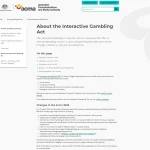
There is a more fundamental limit in Australia: payout speed is not a substitute for legal status or enforceable protection. The Interactive Gambling Act 2001 prohibits companies from providing real-money online pokies to people in Australia unless the operator holds a domestic licence. No Australian online casino licence has been issued, so there is no locally licensed online casino for a resident to select.
This is a restriction on operators, not a rule that makes an individual player criminally liable merely for playing. Offshore sites may accept Australians, but acceptance by a site does not make its service locally licensed or change the legal position of the operator. Nor does a site’s willingness to process a withdrawal create an Australian authority that can enforce payment if a dispute arises.
That distinction affects what a payout promise is worth. If an offshore casino refuses to pay winnings, Australian players have no legal recourse in Australia against it. A displayed processing policy may explain what the operator says it will do, but it is not the same as access to a domestic regulator or a locally licensed business accountable under an Australian online-casino framework. A quick payment on one occasion also cannot guarantee how a later request will be handled.
The regulator responsible for enforcing the Act is the Australian Communications and Media Authority (ACMA). It blocks access to illegal offshore gambling sites, and internet service providers must comply with its blocklist. As a result, an offshore site’s availability at a particular moment should not be taken as evidence that the service is authorised. Access, legal status and the ability to enforce a payment are separate questions.
A careful assessment therefore has two parts. First, work out what the site means by “fast”: does it describe the operator’s handling of a request, the payment provider’s delivery, or both? Second, consider the Australian context in which the service operates. A fast-payout claim does not remove the legal restriction on operators, establish local oversight or provide a route to recover unpaid winnings. These limits apply before any comparison of payment mechanics can be meaningful.
BetStop is another point that should not be mistaken for universal protection: it applies to Australian-licensed operators and does not bind offshore sites. Since no Australian-licensed online casino exists, registering with BetStop should not be treated as a way to block access to offshore casino services or control an account there.
The practical meaning of “best fast payout” is therefore narrower than the phrase can suggest. It can refer to how quickly an operator says it handles withdrawals and how quickly a chosen payment channel delivers funds. It cannot, on its own, establish that a site is licensed in Australia, that winnings will be paid in a dispute, or that a player has an Australian remedy. Keep those questions distinct: speed describes a process; legal status describes the operator’s position; recourse describes what you can do if the promised payment does not arrive.
Legal Risk
Offshore casinos are not licensed in Australia, meaning you have no local legal recourse if an operator refuses to pay your winnings.
A familiar game title does not, by itself, tell you which return setting is active. Some game providers give casinos a choice of settings for the same pokie, so the version available at one site may have a different stated return percentage from the version offered elsewhere. A specialist casino review has reported this possibility; it should not be treated as proof that every provider or casino offers multiple settings.
The distinction matters because a game’s return setting describes an overall feature of the game, not the result you should expect from a particular spin. A percentage shown in game information can help you understand the version you are looking at, but it cannot tell you whether your next spin will pay, how much it might return, or when a win will occur. To compare versions, first check that you are looking at the same game and then look for the return information attached to that particular version. The title alone is not enough.
The outcome of each pokie spin is generated randomly. Each spin is a separate event, so a previous result does not determine the next one. A run of losing spins is not evidence that a win is now due, and a recent win does not mean the game has become more likely to pay again. The same reasoning applies when you see a sequence of similar results: the sequence does not reveal what the next spin will produce.
This independence also explains why a return percentage should not be read as a personal repayment promise. It describes the game’s setting, rather than the amount a particular player will receive over a chosen session. Your results can differ from that percentage because individual outcomes vary. It does not provide a schedule of wins or a way to forecast a session’s result.
The practical limit is straightforward: a return setting can help you compare versions, but it cannot make a random outcome predictable. Neither a game’s recent history nor the fact that it has paid someone else gives you a reliable basis for expecting a particular result.
If two casinos offer a pokie with the same title, you should not assume that the games use identical return settings. Where a provider makes multiple settings available, each casino’s version may be configured differently. That is why information displayed for one site should not automatically be applied to another.
Look for return information in the game’s help or information panel, where available, and confirm that it relates to the version you can actually play. If the information is not clear, do not infer a setting from the game’s name, graphics, or popularity. Those details identify the product to a player; they do not establish which return configuration is in use.
This is also why a general claim about a game may be incomplete. It might refer to one configuration without identifying whether another casino has selected the same one. A comparison is useful only when it refers to the same game and makes the relevant version clear. If that connection is missing, treat the claimed percentage as unconfirmed for the version in front of you.
Return information can answer a narrow question: which stated setting is associated with a particular game version? It cannot answer whether a site is trustworthy, whether a withdrawal will be processed promptly, or whether a player will win. Those are separate matters, and the game’s return setting is not evidence about them.
Nor does a higher stated return setting remove randomness from individual spins. It does not mean that a win is imminent or that a session will follow the percentage shown. The setting and the random outcome operate at different levels: one describes the game configuration, while the other determines the result of each spin.
For a careful comparison, verify the information for the exact version rather than relying on a shared title. Then keep the conclusion proportional to what that information establishes. You can identify a difference between settings if it is documented; you cannot use that difference to predict your next result.
A minimum deposit is the smallest amount an operator will accept when you add money to an account. It is an entry condition, not a measure of how long a transfer takes or how quickly a later withdrawal will be handled. A low threshold can reduce the amount needed for an initial transfer, but it does not establish that a site is reliable, that a payment will be accepted, or that winnings will be paid promptly.
A specialist review reports that many operators set minimum deposits between AU$10 and AU$20, while some accept AU$5. These figures describe a range of reported entry thresholds, not a universal rule: the amount can depend on the operator and the payment option selected. Check the deposit terms shown for the particular option before initiating a transfer. If the displayed minimum is higher than the amount you intended to add, the transaction may not meet the operator’s stated condition.
The distinction between a minimum and a sensible spending limit matters. The minimum tells you how little the account may accept; it does not tell you how much you should deposit. Decide what amount you can afford to lose before transferring money, and do not increase it simply to meet a preferred offer or to continue playing. Deposit limits and loss limits can help keep spending within boundaries, but they do not change the financial risk of gambling.
You can use the stated minimum to calculate the amount required to begin, but treat that calculation as a threshold check rather than a recommendation. If the minimum is AU$10 and you planned to add AU$5, the planned transfer would not meet that threshold. If the minimum is AU$5, the same amount would meet it. The point is not that the lower threshold makes play safer or more favourable; it only changes the amount the operator says it will accept.
A minimum may also be only one condition attached to a deposit. The payment option can have its own rules, and an operator’s account terms may impose further conditions. Read the deposit page and relevant terms before transferring funds, and confirm that the amount and method displayed at checkout match what you intend to use. Do not assume that a minimum shown for one option applies to every option.
Minimum deposits are entry conditions that vary by operator and payment method; they do not indicate the site's reliability or payout speed.
Most importantly, the amount accepted into an account is separate from the amount you might later be able to withdraw. Depositing a small sum does not guarantee that a balance can be withdrawn without other conditions, and depositing more does not make a later payment faster. A site’s minimum deposit therefore cannot serve as a shortcut for judging fast payouts. It answers a narrow question about the amount needed to fund an account, not what happens when money leaves it.
For a clear decision, identify the stated minimum, compare it with your pre-set spending limit, and stop if meeting the threshold would require spending more than you can afford. If the terms are unclear, do not transfer funds until you understand them. A lower minimum changes the entry amount alone; it does not remove the need to assess the risks and conditions attached to gambling.
A withdrawal request is not the same as money received. The request first has to pass the operator’s checks and be approved; only then does the transfer proceed. A payment estimate that starts after approval therefore does not describe the full time from clicking “withdraw” to seeing funds in your account. The finance team’s approval is followed by a transfer that typically takes one to three business days, but that interval does not include any wait before approval.
Identity checks can be one reason a request remains pending. A specialist review reports that casinos may ask for identity verification before a first withdrawal. The documents can include a photo of your identity document and proof of address; some operators may also ask for a selfie with the identity document. These checks are intended to confirm that the account holder and the person requesting payment are the same. If information is missing, unclear or inconsistent, the operator may need to resolve that issue before approving the request.
Prepare to provide the documents requested through the operator’s stated process, and check that the details on your account match them. A name or address mismatch can create an additional question even when the account belongs to you. Do not assume that depositing successfully means verification is complete: a payment accepted into an account and a withdrawal approved from it are separate decisions.
The operator’s rules can also limit how much you may withdraw during a set period. A specialist review reports that some casinos impose weekly or monthly withdrawal ceilings. That condition affects the amount released, not merely the time taken to process one request. If the amount you request exceeds the applicable ceiling, the balance may need to be paid in instalments rather than in one transfer. Read the withdrawal terms for the relevant period and confirm how a limit applies before treating an account balance as money you can receive at once.
Keep three stages distinct when assessing a delay: verification, approval and transfer. A request awaiting documents has not reached the approval stage. An approved request may still be in the transfer stage. A payment that arrives later than expected does not, by itself, show which stage caused the wait; check the account status and ask the operator to identify the outstanding step. Record the request date, any document submission and the approval notice so you can compare the operator’s explanation with the sequence of events.
Assessing a Delay
Check Verification
Confirm if the operator has requested identity documents and if you have provided them.
Confirm Approval
Determine if the finance team has reviewed the request and officially approved the withdrawal.
Track Transfer
Monitor the transfer stage, which typically takes one to three business days after approval.
There is also a legal risk specific to Australia. The Interactive Gambling Act 2001 prohibits operators from providing real-money online casino games to people in Australia, and no Australian online casino licence has been issued. The law targets operators rather than individual players, but a player has no Australian legal recourse if an offshore casino refuses to pay winnings. A fast processing statement cannot remove that risk or make a withdrawal enforceable.
BetStop applies to Australian-licensed operators; it does not bind offshore casino sites. Do not treat a payment method, a completed identity check or an approved withdrawal as proof that an operator is licensed, that its terms are transparent, or that funds are protected. Before sending identity documents or making a withdrawal request, read the terms that govern verification, approval and withdrawal ceilings. If the rules are unclear, the uncertainty itself matters: you cannot reliably estimate when, or in what instalments, the balance may be paid.
A bonus can increase the balance displayed in your account without making the full amount available to withdraw. The restriction may be a wagering requirement: a turnover multiplier applied to the bonus, or to the combined deposit and bonus. Until the required amount of qualifying bets has been placed, the offer’s terms can prevent a cash-out.
The calculation depends on what the multiplier applies to. If it applies to the bonus alone, multiply the bonus value by the stated requirement. A specialist review uses a $500 bonus with a 40x requirement to illustrate the result: $500 × 40 means $20,000 in qualifying bets before winnings can be withdrawn. That is the amount staked over time, not the amount you must lose. The outcome of those bets is uncertain, so reaching the turnover figure does not ensure that money will remain in your balance.
If the requirement applies to the deposit plus bonus, both amounts form the calculation base. For a $500 deposit and a $500 bonus at 35x, the base is $1,000, and the turnover required is $35,000. The multiplier is lower than 40x, but the required betting is higher than in the bonus-only example because it applies to a larger total.
This is why a multiplier cannot be assessed in isolation. Check the terms for the calculation base, which games or bets count, and whether any bet limits apply while the bonus is active. A lower multiplier can still demand substantial turnover if it covers the deposit as well as the bonus. A specialist review suggests treating requirements of 35x or lower as a point of comparison and describes anything above 40x as punishing; that is an assessment, not a universal rule. The actual offer terms determine the obligation.
A no-deposit offer does not automatically mean that any winnings can be withdrawn immediately. The relevant question is whether the offer imposes wagering conditions and what happens to winnings if those conditions are not completed. Read the cash-out rules alongside the headline offer: a balance shown on screen may include funds that remain restricted.
Free spins have a separate detail to check. A specialist review notes that an offer may limit the winnings eligible for cash-out. In that case, completing any stated wagering requirement does not necessarily make every amount won from the spins withdrawable. The cap and the turnover condition affect different parts of the offer: one can limit the amount eligible to be paid, while the other sets how much qualifying betting must occur first.
Before accepting a bonus, identify the base used for turnover, calculate the required bets, and find any cash-out cap. If the terms do not state these clearly, the value of the offer cannot be judged from its headline amount alone. These conditions concern bonus eligibility, not how quickly a payment provider or operator processes a withdrawal. And an advertised bonus does not change the Australian legal status of real-money online casino services: the Interactive Gambling Act 2001 prohibits operators from providing them to people in Australia.
A win is the amount credited to an account; a payout is the amount actually transferred out. Those figures can differ when an operator sets a withdrawal ceiling. If the balance exceeds that ceiling, the excess does not necessarily disappear, but it may remain in the account until it can be requested in a later period, subject to the operator’s rules.
A specialist review reports that some casinos set weekly or monthly withdrawal caps between $5,000 and $10,000. On those terms, a $50,000 jackpot could require five to ten cap-sized payments. The time needed would depend on whether the limit is weekly or monthly and how the operator applies it. A monthly cap can spread the same balance over a much longer period than a weekly cap. The example describes the effect of a limit; it does not establish that every operator uses those figures or follows the same schedule.
The practical point is that a large account balance is not evidence that the same amount can be withdrawn at once. A cap may govern the amount eligible for payment during a stated period, rather than the total winnings you can hold. Read the wording closely: check whether the ceiling applies per account, per payment request, or across all withdrawals during the period. Also check when the period begins and ends, and whether unused capacity carries forward. These details determine how the cap affects the number and spacing of payments.
Keep the cap separate from the time taken to process an individual withdrawal. A transfer might be handled promptly once it is within the permitted amount, while the overall balance still takes multiple periods to leave the account. Conversely, a high cap does not itself show how quickly a payment will be processed. The two measures answer different questions: the cap concerns how much can be paid within the stated period; processing time concerns how long a particular payment takes.
For Australian readers, this is a contractual condition offered by an offshore operator, not a protection supplied by an Australian online casino licensing system. Real-money online casino services are prohibited for operators under Australian law, and players have no Australian legal recourse if an offshore casino refuses to pay. A stated cap should therefore be understood as a limit on the operator’s payment terms, not as assurance that the balance will be paid.
Attention A large account balance does not guarantee an immediate full payout if the operator imposes weekly or monthly withdrawal ceilings.
A cryptocurrency label does not establish that a site accepts crypto deposits, pays withdrawals in crypto, or processes either transaction quickly. Those are separate questions: a payment option may be available for funding but not for cashing out, and the time taken to move funds depends on the steps involved. Calling a service a fast-payout crypto casino therefore says little about what happens when you request money.
The payment method also does not establish what protections apply. It does not show that an operator is licensed to serve Australian residents, that a balance can be recovered if a withdrawal is refused, or that the site’s rules are clear. PayID or crypto support should not be treated as proof of licensing, fairness or transparent game settings.
There is no Australian-licensed online casino. Under the Interactive Gambling Act 2001, operators are prohibited from providing real-money online casino games to people in Australia. The law targets operators rather than individual players, but Australian players have no legal recourse in Australia if an offshore casino withholds winnings. A crypto payment does not change that position.
Before any first withdrawal, verify the operator’s identity-check requirements. Be prepared to provide proof of identity and address; a payment method does not remove those checks. Read the withdrawal terms before depositing, and do not assume that a crypto balance can be withdrawn merely because crypto is mentioned on a payment page.
BetStop applies to Australian-licensed operators and does not bind offshore sites. It should not be treated as a safeguard that makes an offshore gambling account safe or recoverable.
The practical test is not whether a site advertises crypto, but whether its terms specify which crypto transactions it supports, how withdrawals are handled, what checks apply, and what happens when a payment is disputed. If those conditions are unclear, the label “fast payout” gives you no reliable basis for predicting when funds will arrive.
PayID is an alias layer for transfers on Australia’s New Payments Platform (NPP). Instead of entering bank account details, a sender can use an email address, mobile number or ABN linked to the recipient’s account. The NPP is supported by all major Australian banks and uses end-to-end encryption. Those features describe the payment network; they do not establish that a gambling site is licensed, fair or transparent about its games.
For a real-money transfer involving an online casino, PayID must first be linked to a bank account. This is a necessary setup step, not a guarantee that the bank will approve a particular payment. A transfer may be stopped at the bank’s end even when the PayID details are correct and the payment network is available.
A specialist gambling-payment review reports that some Australian banks, including members of the Big Four, sometimes block PayID transfers to gambling merchants they recognise. That is a source-specific report, not a promise that every bank will block a transfer or that another bank will accept it. A declined payment therefore does not, by itself, show whether the issue is the PayID link, the bank’s controls or the merchant’s payment arrangements. Contact your bank through its official channels to ask why a transaction was declined; do not keep retrying with altered details.
Some Australian banks may block PayID transfers to recognised gambling merchants regardless of whether the payment network is functioning.
PayID’s presence also does not make an online casino an Australian-licensed operator. The Interactive Gambling Act 2001 prohibits operators from providing real-money online casino games to people in Australia, and no Australian online casino licences have been issued. The fact that the NPP is a bank-supported payment system does not change that legal position.
BetStop applies to Australian-licensed operators and does not bind offshore sites. Since no Australian-licensed online casinos operate, do not treat BetStop as a control that will prevent an offshore casino from accepting your account or payment. If you are assessing a payment option, separate three questions: whether your bank supports PayID, whether it permits the specific transfer, and what legal protections apply to the service receiving it.
A newly encountered site may explain its registration process clearly while leaving the first withdrawal requirements difficult to find. Check the account or payment terms before depositing: the important question is not only which documents may be requested, but whether you can provide them and whether the details will match your account.
A specialist review reports that most casinos require identity checks before a first withdrawal. The documents may include a photo of your identity document and proof of your address; a selfie holding the identity document may also be requested. Treat these as possible requirements, not a complete checklist for every operator. Read the site’s own instructions and confirm which documents it accepts before you put money into an account.
Check that the name and other personal details used to register are accurate. If the operator asks for documents that you cannot supply, or its instructions do not explain what counts as acceptable proof, that uncertainty can become a practical obstacle when you try to access funds. Do not assume a newly launched site has a simpler process, or that a claim about fast payments means verification will be completed quickly.
There is also a wider legal risk. The Interactive Gambling Act 2001 prohibits operators from providing real-money online casino games to people in Australia, and no Australian online casino licences have been issued. Australians are not penalised simply for playing on an offshore site, but they have no Australian legal recourse if an operator refuses to pay. A polished website or accessible registration process does not change that position.
BetStop is limited to Australian-licensed operators and does not bind offshore sites. Before depositing, establish what identity and address evidence the operator demands, and consider whether you are willing to accept the legal and practical risks of using an offshore service.
A card payment has two separate decision points: the merchant or payment processor must accept it, and your bank or card issuer must approve it. A payment can fail at either stage. A specialist payment review reports that Australian banks and card companies are increasingly blocking transactions to recognised gambling sites. That is a changing practice, not a guarantee that every bank will decline every transaction; an approval on one occasion does not establish that later payments will be accepted.
The description shown by the merchant may not determine how your card issuer classifies the transaction. A specialist review also warns that a gambling deposit made with a credit or debit card may be processed as a cash advance. If that happens, the issuer may charge a fee of 3–5% and begin charging interest immediately. The treatment depends on the issuer and transaction, so check your card terms or ask the issuer how gambling payments are classified before proceeding. Do not assume that a declined transaction can be resolved by trying a different card: the issuer may apply its own restrictions.
These issues concern whether money can be sent and what the card transaction costs. They do not show how quickly a casino approves or sends a withdrawal. A payment method described as suitable for fast payout casinos in Australia may still be unavailable for deposits, or may carry costs set by the card issuer. Treat deposit acceptance and withdrawal timing as separate questions, and check the relevant payment terms before making a transaction.
E-wallets such as Skrill and Neteller are popular for their speed. Remember that the casino’s withdrawal processing and the payment method’s delivery time are separate parts of the payout.
Compare the bonus with the amount you must wager before withdrawing. For example, a $500 bonus with a 40x requirement means $20,000 in bets; if the requirement applies to a $500 deposit plus a $500 bonus at 35x, it means $35,000 in bets.
You must be at least 18 years old to gamble online in Australia.
You can legally play on offshore sites that accept Australians, but companies cannot legally offer real-money online pokies to Australian residents without a domestic licence, and no such licences have been issued.
It is the number of times you must turn over a bonus amount in bets before you can withdraw. For example, a 40x requirement on a $500 bonus means wagering $20,000.